
Gezicht van de Raamgragt op de Molen de Hoop te Haarlem — History & Facts
Can paint confess what words never could? In the gentle stillness of the early 19th century, landscapes emerged as silent witnesses to time, capturing truths otherwise unspoken. Look closely at the lower right corner, where the warm hues of sunset reflect on the calm waters beneath the windmill. Notice how the delicate brushstrokes create a soft rippling effect, inviting your gaze to meander along the serene surface. The juxtaposition of the windmill's sturdy structure against the ephemeral quality of the sky evokes a quiet harmony between nature's resilience and its fleeting beauty.
Each detail, from the lush greenery to the muted tones of the distant horizon, frames a moment holding both tranquility and promise. Yet, beneath the surface lies a poignant contrast: the solid mill stands as a symbol of progress and industry, while the tranquil waters below resonate with stillness — a reminder of the unchanging essence of nature. This balance evokes a sense of longing for the past, contrasting the march of modernization that began to define the era. The artist captures the tension between human ambition and the natural world, inviting the viewer to reflect on their own relationship with these themes. In 1802, Wybrand Hendriks created this work in Haarlem, a vibrant hub of artistic activity in the Netherlands.
At this time, the neoclassical movement was in full swing, and natural landscapes were gaining prominence, reflecting a broader societal shift toward appreciating the beauty and simplicity of rural life. Hendriks, influenced by both traditions and contemporary developments, sought to articulate a vision that resonated with the complexities of his time.
More Artworks by Wybrand Hendriks
Browse all →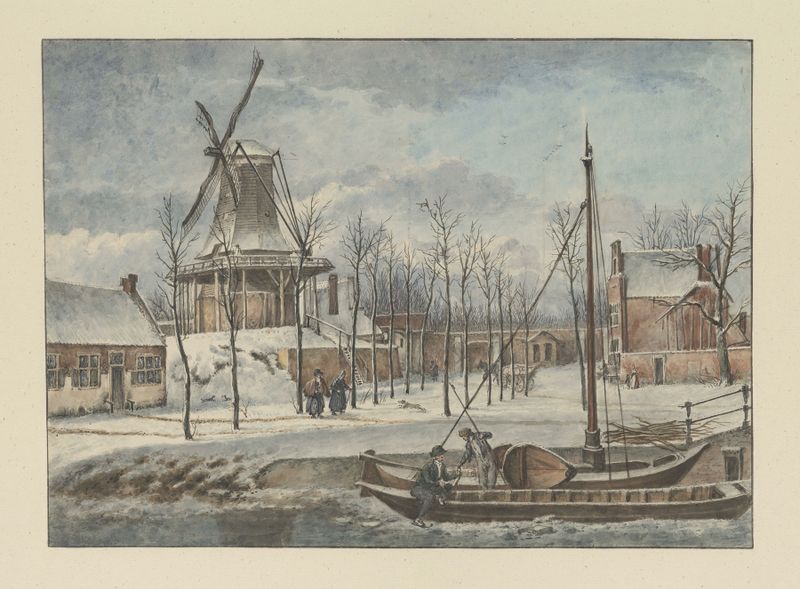
De Doelmolen, de Raampoort, de Stadswal en de huizen aan de Korte Geusestraat (nu; Wilsonsplein) vanaf de Raamgracht in de sneeuw.
Wybrand Hendriks
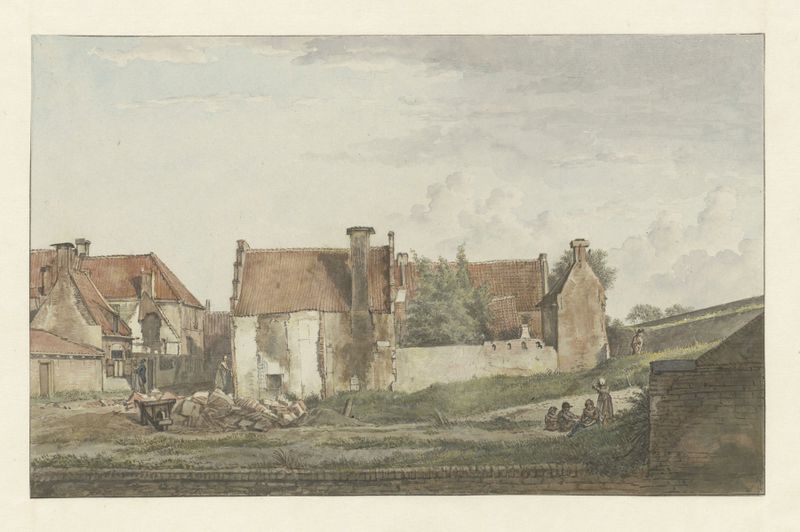
Gezicht op de Raamgragt op de Lange Geusestraat na ‘t wegbreeke van eenige huisen in 1809
Wybrand Hendriks
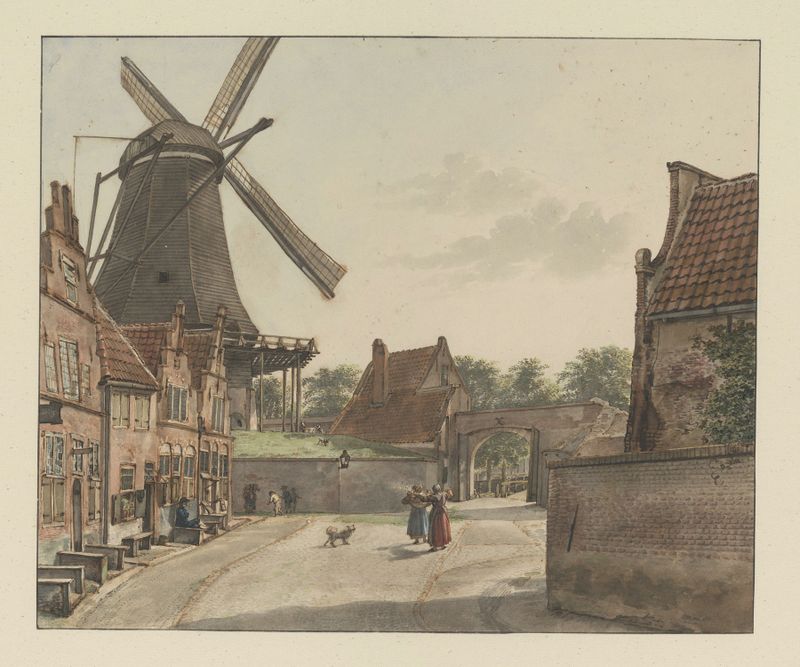
Gezicht vanuit de Bereiderstraat, tegenwoordig Sophiastraat, op de oostzijde van de Raampoort en de Doelmolen
Wybrand Hendriks
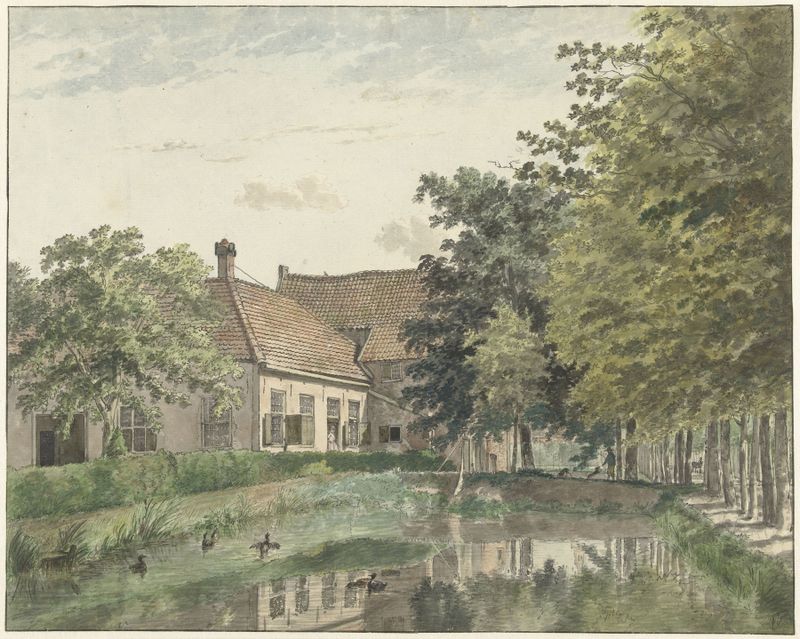
Gezicht op de buitenplaats Watergoor bij Nijkerk
Wybrand Hendriks
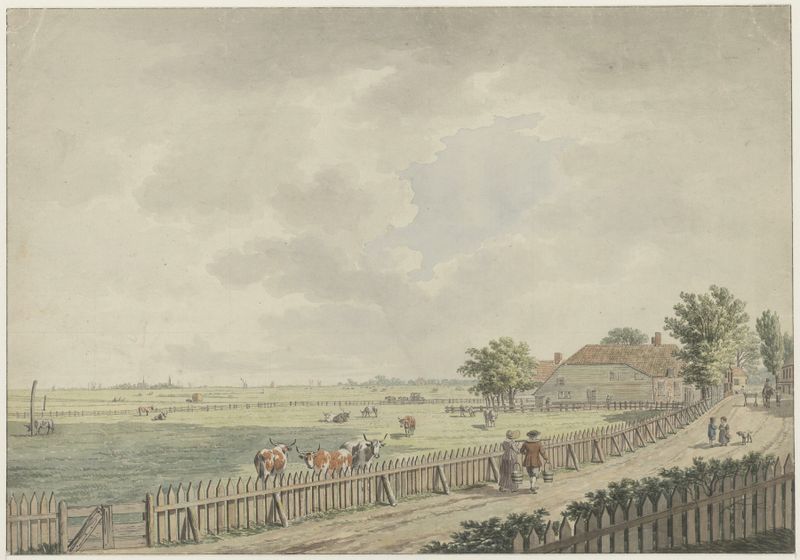
Gezicht in de Hoofdstraat, de weg naar Haarlem, in Santpoort, ziende naar het Zuiden.
Wybrand Hendriks
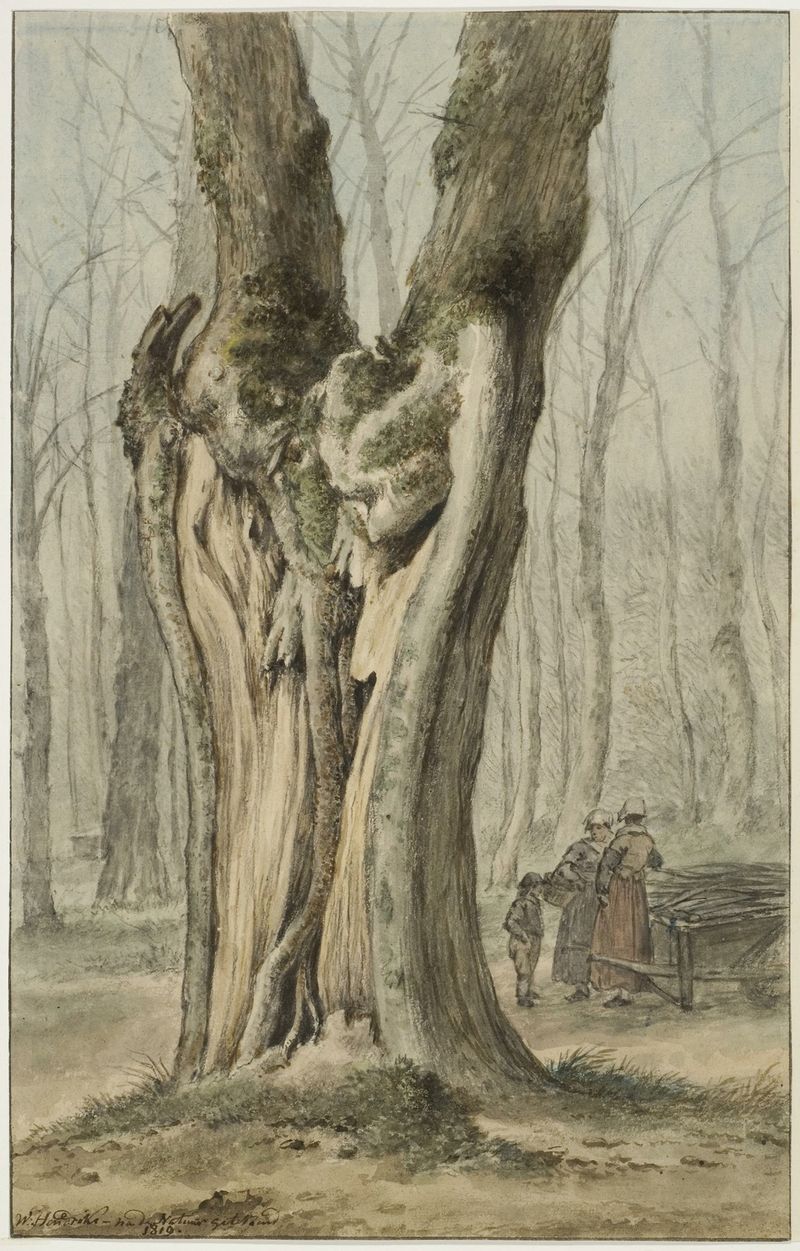
De wonderboom in de Spanjaardslaan in de Haarlemmerhout te Haarlem
Wybrand Hendriks
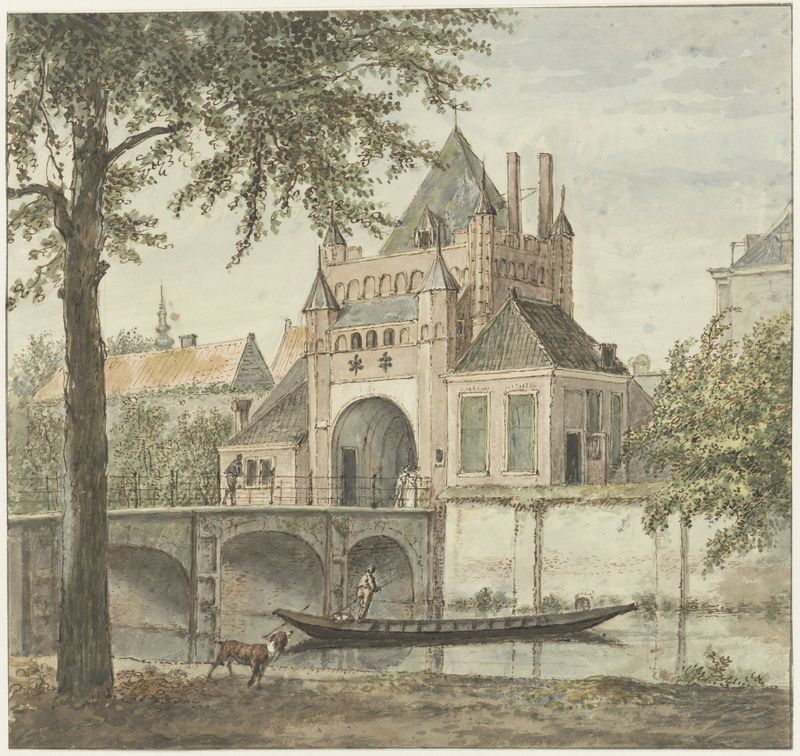
Grote Houtpoort van de zuidoostzijde
Wybrand Hendriks
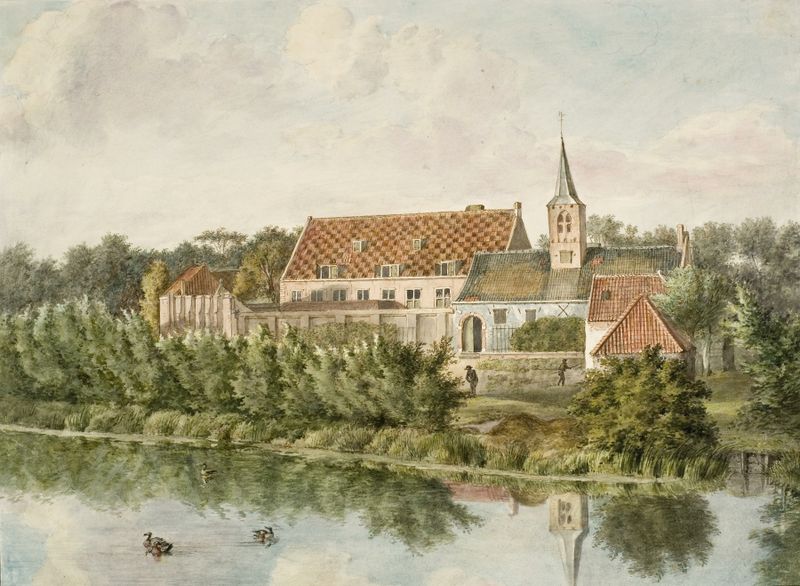
t Buyten Proveniershuis te Haarlem; van de hoogte van de wal te zien
Wybrand Hendriks
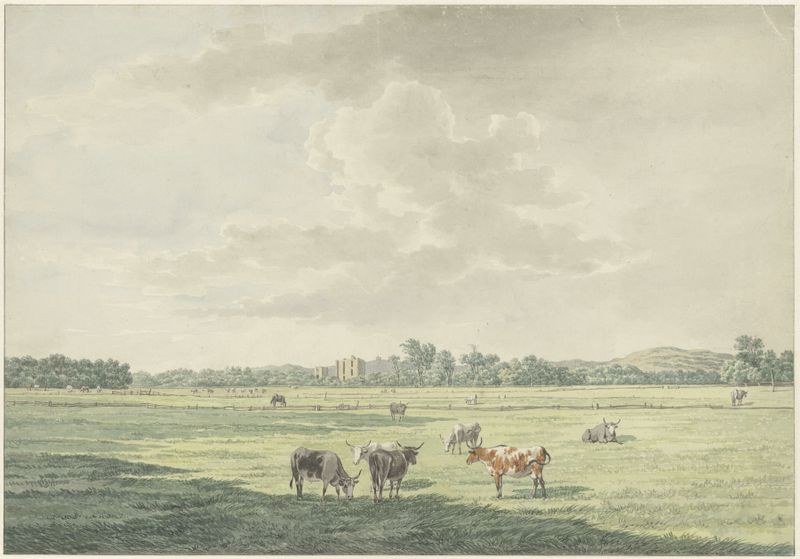
Landschap met weiland en koeien op de voorgrond en in de verte de ruIne van Brederode
Wybrand Hendriks
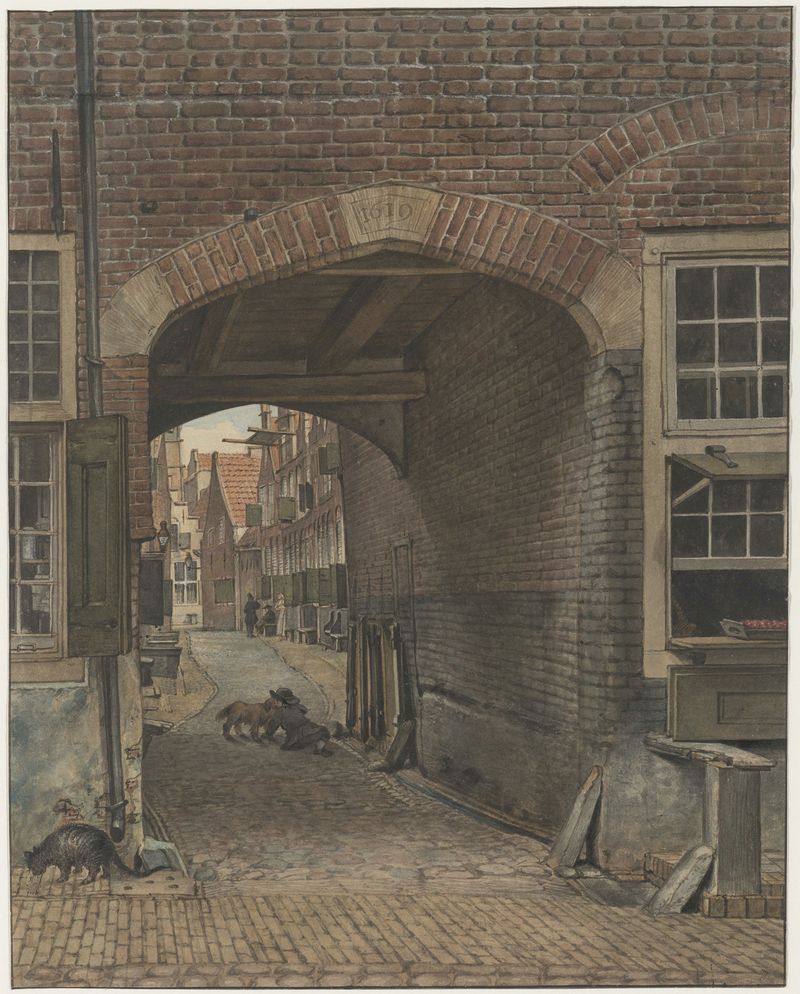
Gezicht in het Nieuw Heiligland door poort aan het Klein Heiligland
Wybrand Hendriks





