
Grote Houtpoort van de zuidoostzijde — History & Facts
In a world ever-changing, the act of creation stands as a defiance against the fleeting nature of existence. Look closely at the foreground, where the towering structure of the Grote Houtpoort looms with majesty, its bricks bathed in the warm hues of a late afternoon sun. The artist’s meticulous brushwork captures the rough textures of the ancient stones, inviting the viewer to run their fingers along the timeworn surfaces. Notice how the vivid greens of the surrounding foliage frame the gateway, creating a striking contrast that emphasizes both the vitality of nature and the permanence of manmade structures. The interplay of light and shadow reveals deeper tensions within the piece.
The archway, a symbol of transition and passage, stands defiantly against the encroaching shadows, whispering of journeys undertaken and stories untold. In the distance, fragments of the landscape blur together, suggesting a world that exists beyond the confines of the gate, hinting at the infinite possibilities that lie ahead. This duality of permanence and transience plays a pivotal role, urging us to contemplate our own pathways and how history shapes our identities. In 1824, the artist created this work amidst a burgeoning interest in romanticism and the exploration of landscape painting in the Netherlands.
During this time, Hendriks was influenced by the evolving art scene, which sought to capture not only the physical form of structures but their emotional resonance as well. The painting reflects a moment in which artist and viewer alike sought to connect with the past, framing a dialogue that resonates through time.
More Artworks by Wybrand Hendriks
Browse all →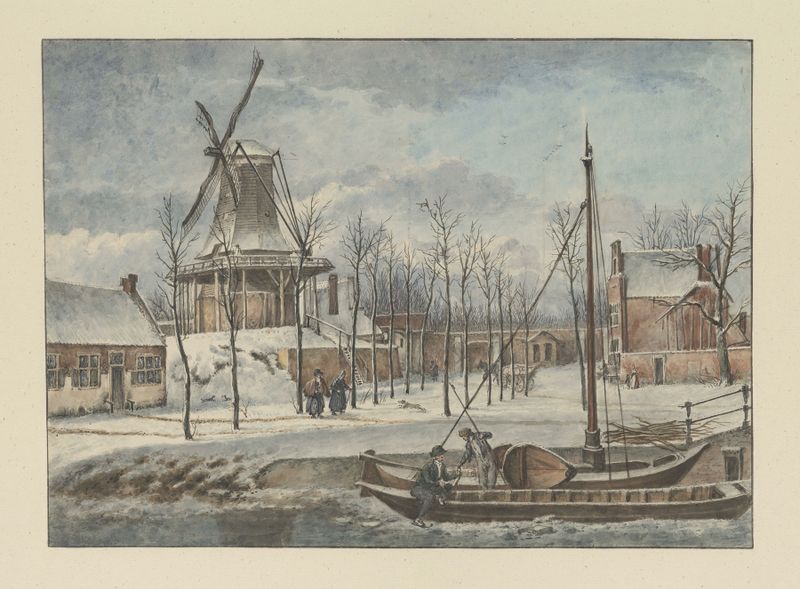
De Doelmolen, de Raampoort, de Stadswal en de huizen aan de Korte Geusestraat (nu; Wilsonsplein) vanaf de Raamgracht in de sneeuw.
Wybrand Hendriks
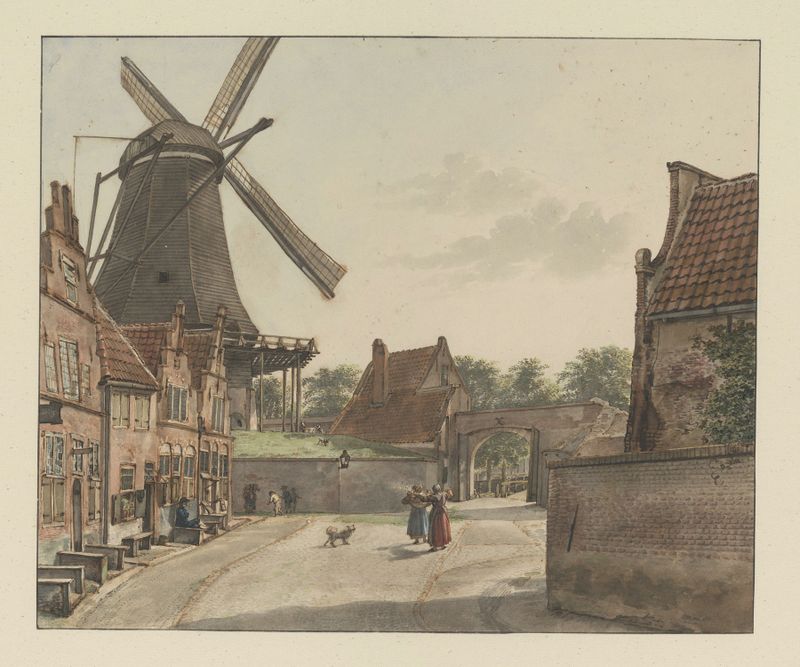
Gezicht vanuit de Bereiderstraat, tegenwoordig Sophiastraat, op de oostzijde van de Raampoort en de Doelmolen
Wybrand Hendriks
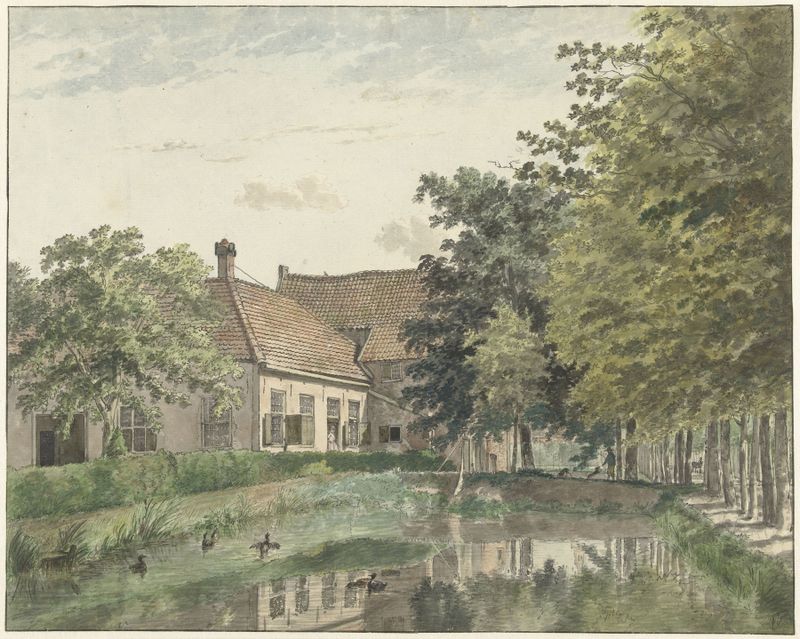
Gezicht op de buitenplaats Watergoor bij Nijkerk
Wybrand Hendriks
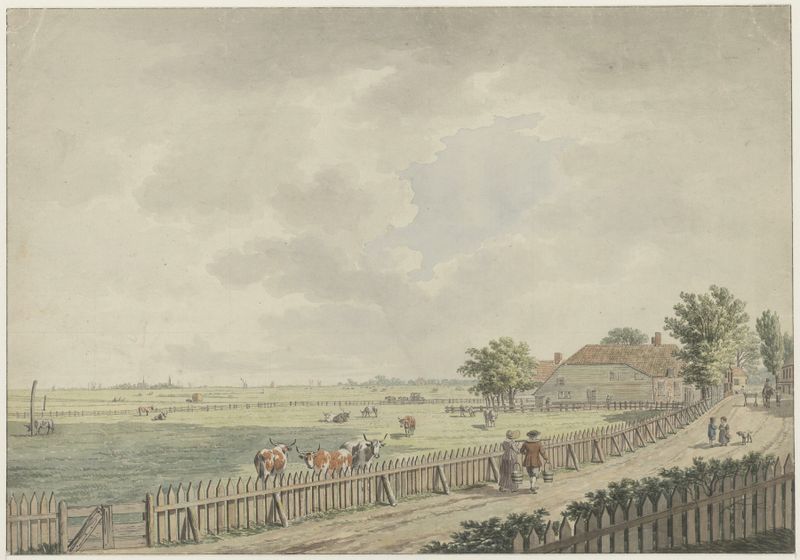
Gezicht in de Hoofdstraat, de weg naar Haarlem, in Santpoort, ziende naar het Zuiden.
Wybrand Hendriks
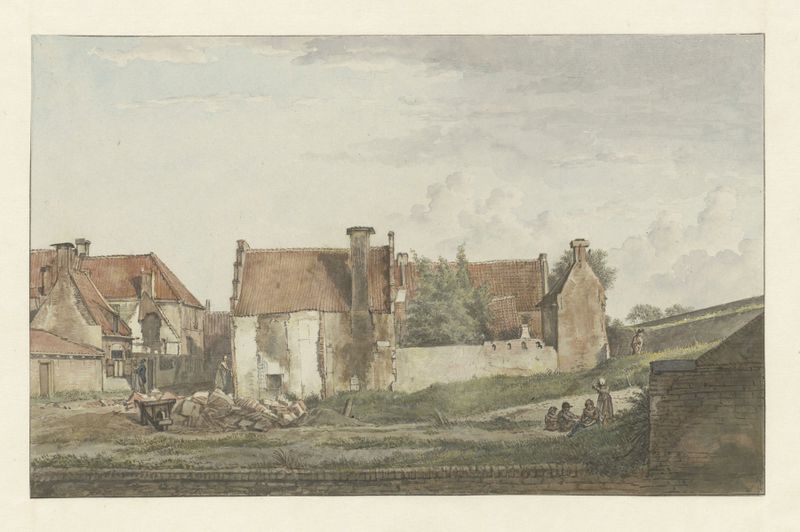
Gezicht op de Raamgragt op de Lange Geusestraat na ‘t wegbreeke van eenige huisen in 1809
Wybrand Hendriks
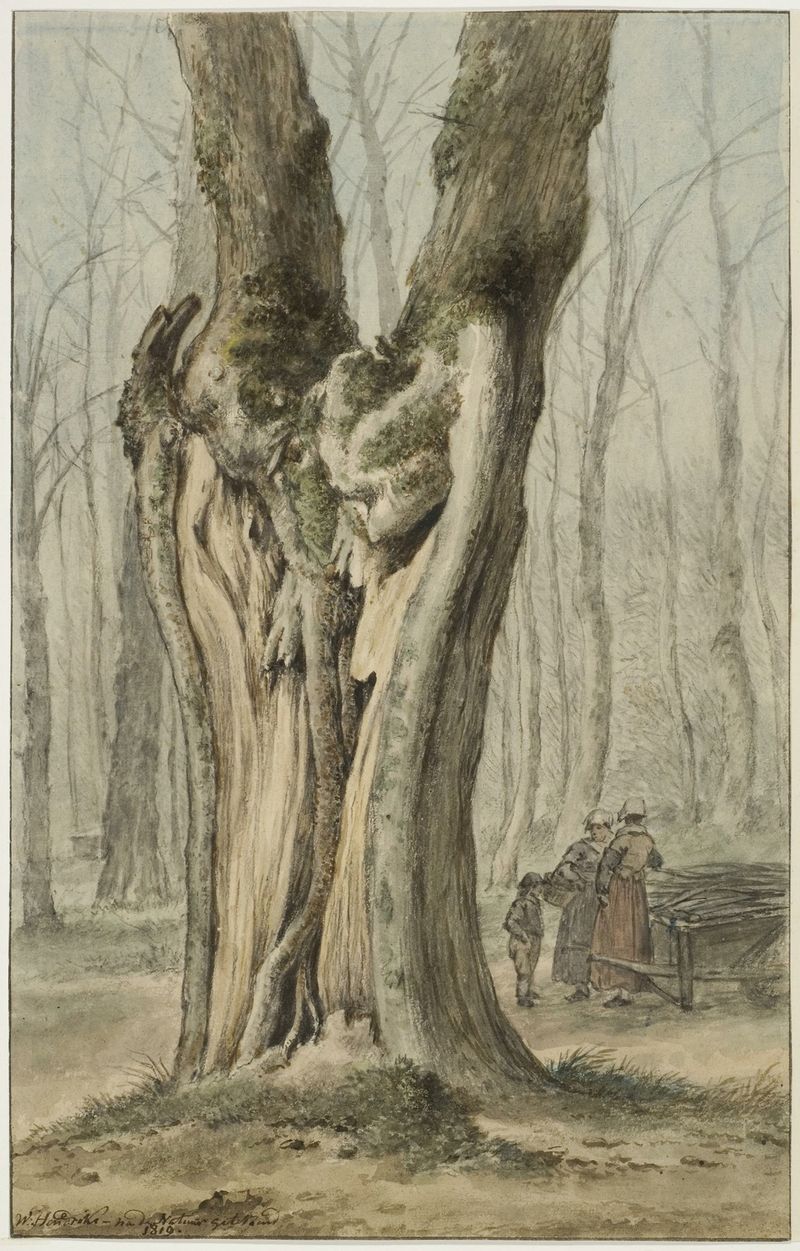
De wonderboom in de Spanjaardslaan in de Haarlemmerhout te Haarlem
Wybrand Hendriks
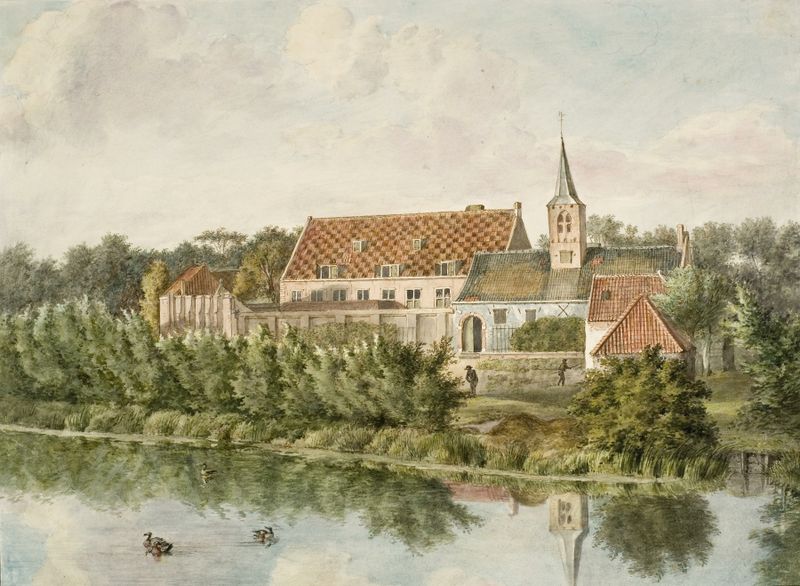
t Buyten Proveniershuis te Haarlem; van de hoogte van de wal te zien
Wybrand Hendriks
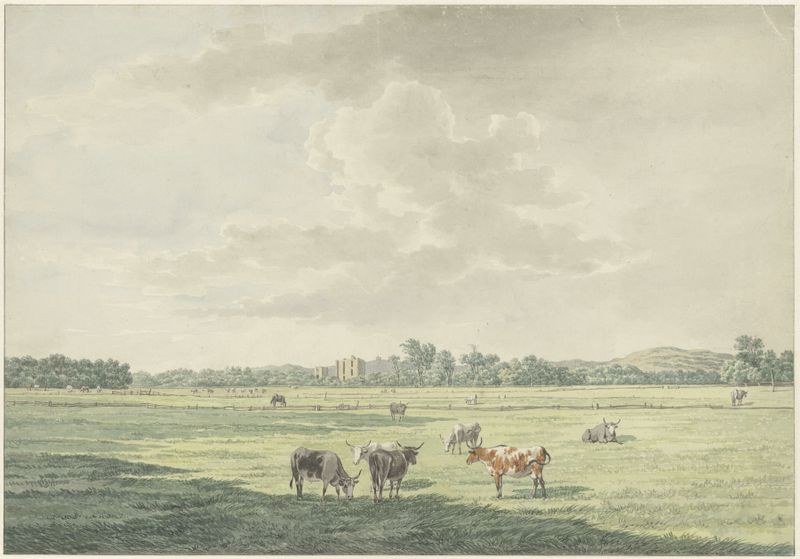
Landschap met weiland en koeien op de voorgrond en in de verte de ruIne van Brederode
Wybrand Hendriks
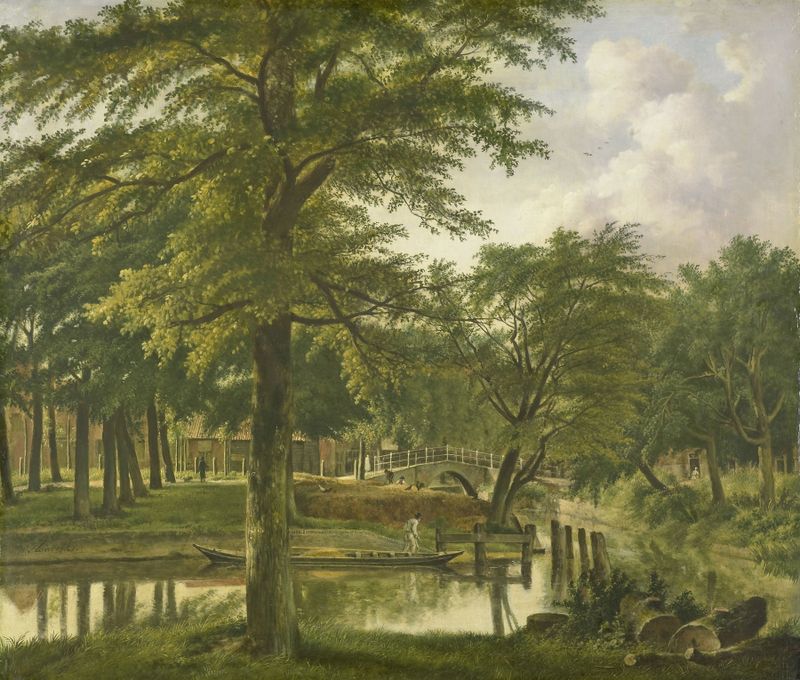
View of the Nieuwe Gracht near the Bolwerk, Haarlem
Wybrand Hendriks
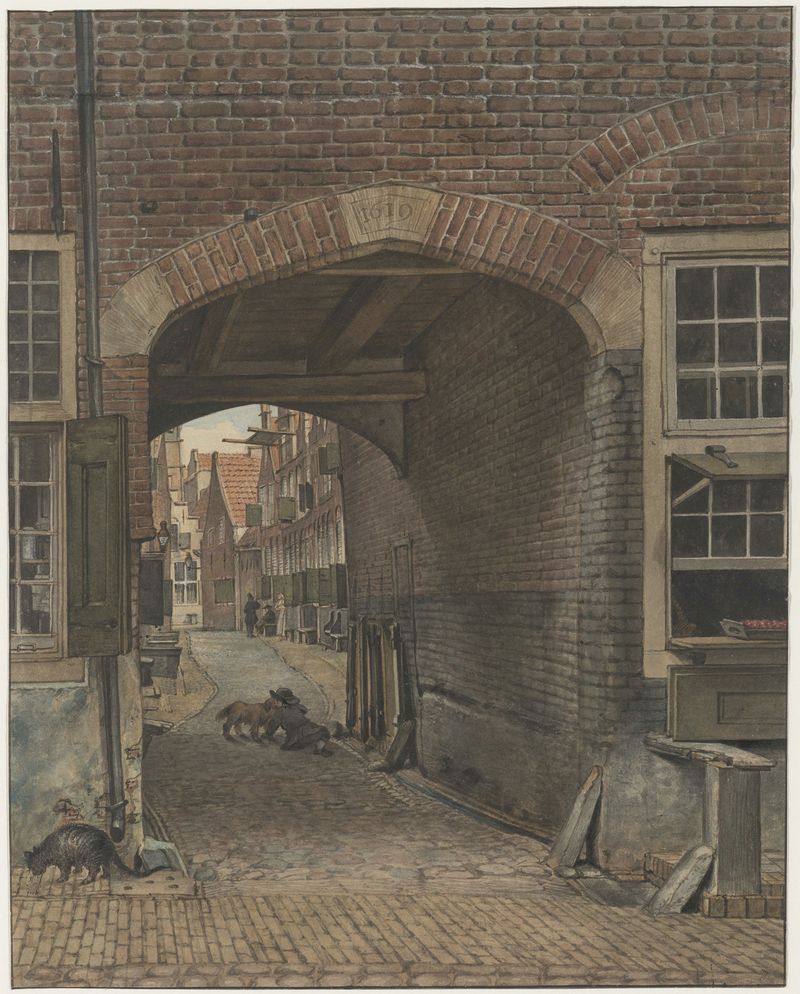
Gezicht in het Nieuw Heiligland door poort aan het Klein Heiligland
Wybrand Hendriks
More Architecture Art
Browse all →
The statue of Liberty
Frédéric Auguste Bartholdi

View of Houses in Delft, Known as ‘The Little Street’
Johannes Vermeer

View of Houses in Delft, Known as ‘The Little Street’
Johannes Vermeer

The Cathedral in Rouen. The portal, Grey Weather
Claude Monet

The yellow house
Vincent van Gogh

The Church in Auvers-sur-Oise, View from the Chevet
Vincent van Gogh