
Gibraltar, The Signal House — History & Facts
Did the painter know this moment would outlive them? In Gibraltar, The Signal House, the essence of mortality is captured within a timeless landscape, where land and sea become eternal witnesses to human endeavor. Focus on the distant mountains, their majestic silhouettes rising against a vast expanse of sky. The rugged cliffs on the left anchor the composition, while the soft blues and greens of the sea invite your eyes to wander. Notice how the gentle brushstrokes convey both the texture of the rocky terrain and the rippling water, intertwining nature and architecture in a harmonious dance.
The signal house stands resolute, a beacon of history amidst the shifting tides, as sunlight bathes the scene in an ethereal glow. Amidst the natural beauty, the juxtaposition of the solid structure and the ephemeral sea evokes a tension between permanence and transience. The signal house, a man-made monument, offers a stark contrast to the vastness of the ocean, symbolizing human aspirations against nature’s infinite horizon. This duality sparks contemplation on the fragility of life and the legacy left behind, as the lighthouse stands vigilant and unwavering, silently guarding the passage of time. John Thomas Serres painted this work during a period in the early 19th century when maritime exploration and romanticism were at their peak.
Living in London but drawn to coastal scenes, he captured the allure and drama of the natural world against the backdrop of a rapidly changing society. In a time marked by both discovery and industrialization, he sought to immortalize moments that spoke to humanity's relationship with nature and the elements.
More Artworks by John Thomas Serres
Browse all →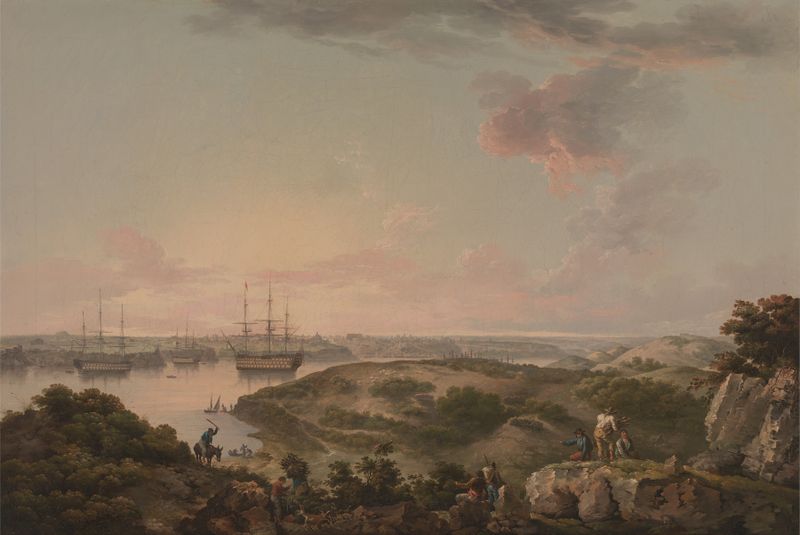
Port Mahon, Minorca with British Men-of-War at Anchor
John Thomas Serres
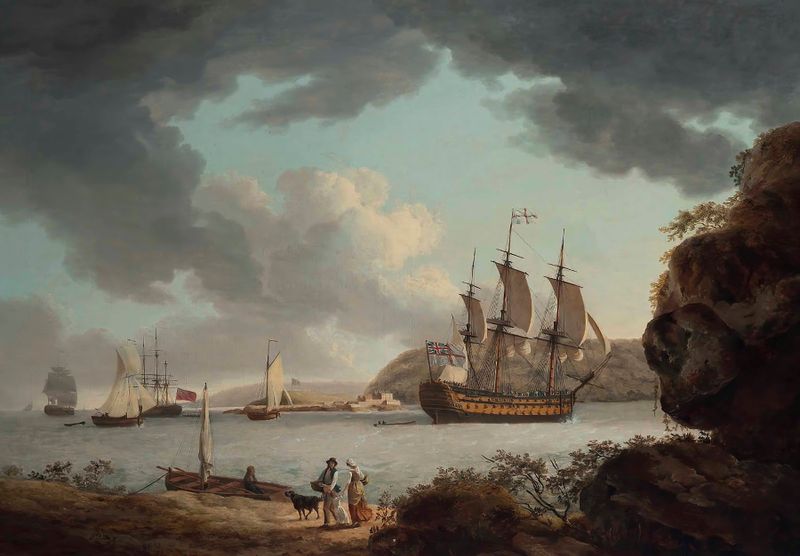
A Flagship Of The White Entering The Hamoaze And Approaching Plymouth Dock With Drake’S Island Off Her Port Quarter
John Thomas Serres
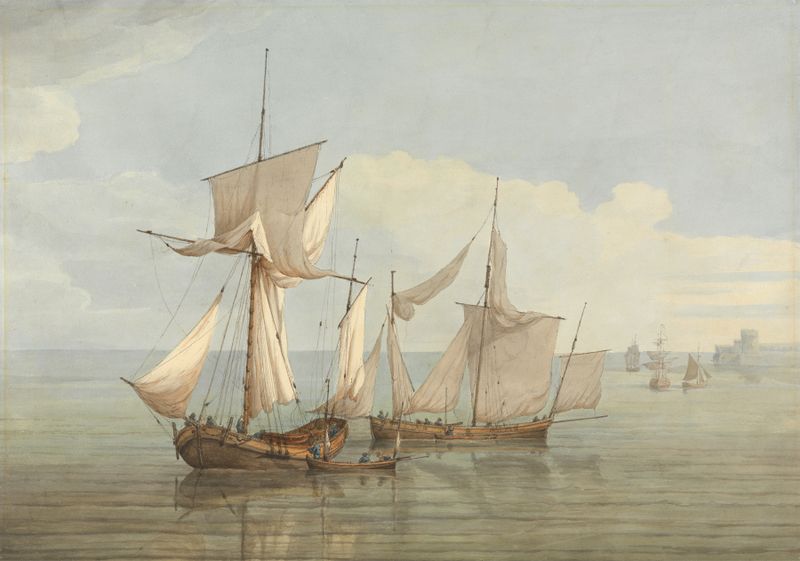
A Hoy and a Lugger with other Shipping on a Calm Sea
John Thomas Serres
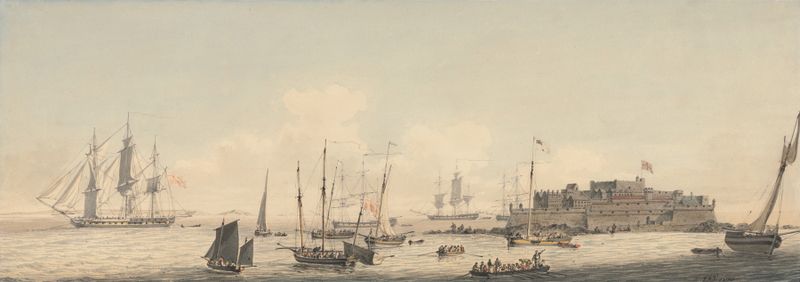
View of Castle Cornet, Guernsey, Channel Islands, with Shipping
John Thomas Serres
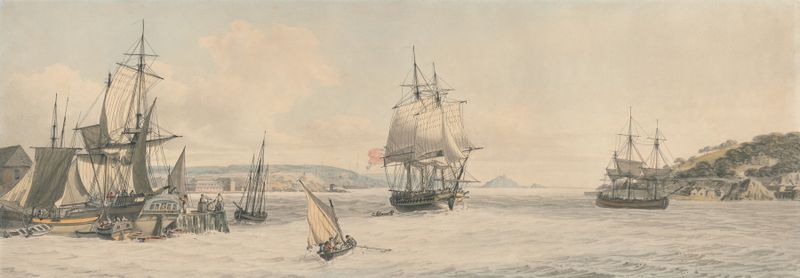
Plymouth Roads
John Thomas Serres

Gibraltar, South West by West
John Thomas Serres
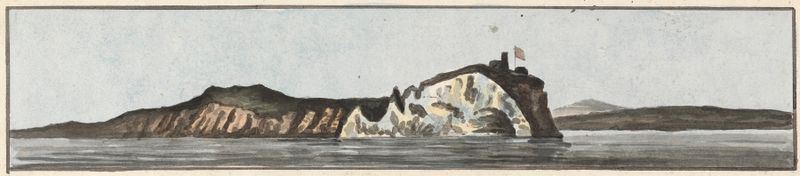
The Needles Bearing East
John Thomas Serres

The South Foreland and Shakespeare’s Cliff
John Thomas Serres

The North Foreland
John Thomas Serres

Old Harry, Swanage Bay
John Thomas Serres





