
The South Foreland and Shakespeare’s Cliff — History & Facts
Where does light end, and longing begin? The interplay of illumination and shadow in the landscape evokes an ethereal revelation, inviting contemplation on the boundaries of existence. Look to the horizon where the soft azure of the sky meets the rugged cliffs, bathed in a gentle glow. The artist expertly captures the essence of the South Foreland, where the white chalk cliffs rise majestically, almost like sentinels overlooking the sea. Notice how the warm hues of the fading sun cast elongated shadows, imbuing the scene with a sense of tranquility yet hinting at the passage of time.
The meticulous brushwork and delicate blending of colors draw the viewer’s eye across the canvas, creating a seamless transition from the solid earth to the vastness above. Yet, beneath the serene beauty lies a tension between permanence and the transitory. The cliffs, steadfast and enduring, contrast sharply with the fleeting moments of light that seem to dissolve into the waves below. Each brushstroke conveys a longing for connection, not just with the land but with the eternal dance between nature and humanity.
The waves crashing against the shore whisper secrets of the past, hinting at stories long forgotten, while the sky speaks to aspirations yet to be realized. In this undated work, the artist created a poignant representation of nature's grandeur during a time when Romanticism still deeply influenced British art. Serres, known for his maritime subjects, reflected on the sublime power of the English coastline, capturing a moment of stillness amidst the tumult of life. His canvases echoed the broader artistic movement, where light and emotion converged in a celebration of the natural world, revealing the deep connections between the observer and the landscape.
More Artworks by John Thomas Serres
Browse all →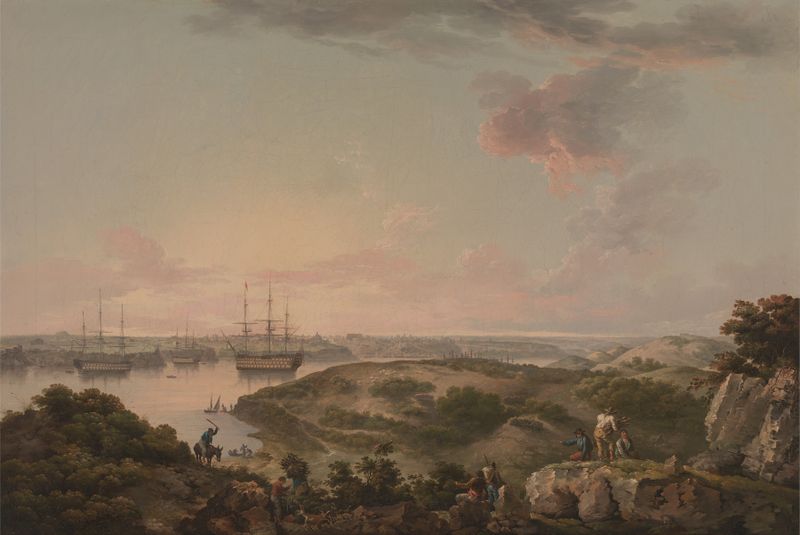
Port Mahon, Minorca with British Men-of-War at Anchor
John Thomas Serres
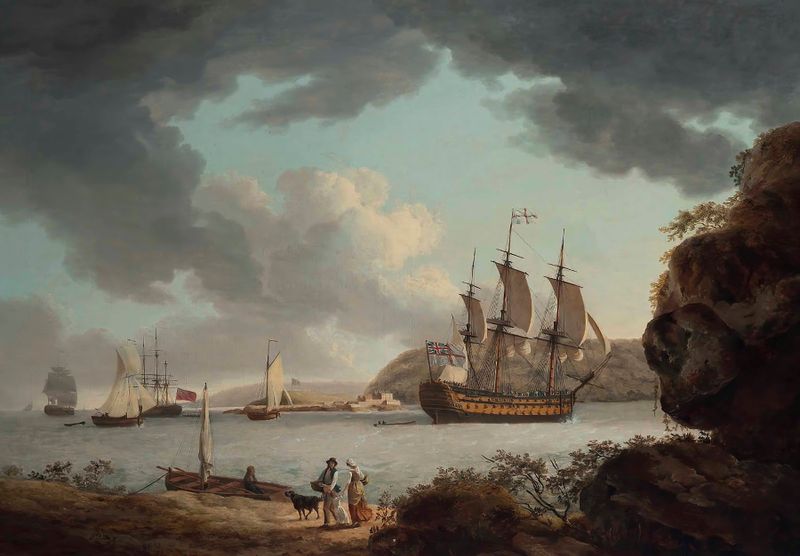
A Flagship Of The White Entering The Hamoaze And Approaching Plymouth Dock With Drake’S Island Off Her Port Quarter
John Thomas Serres
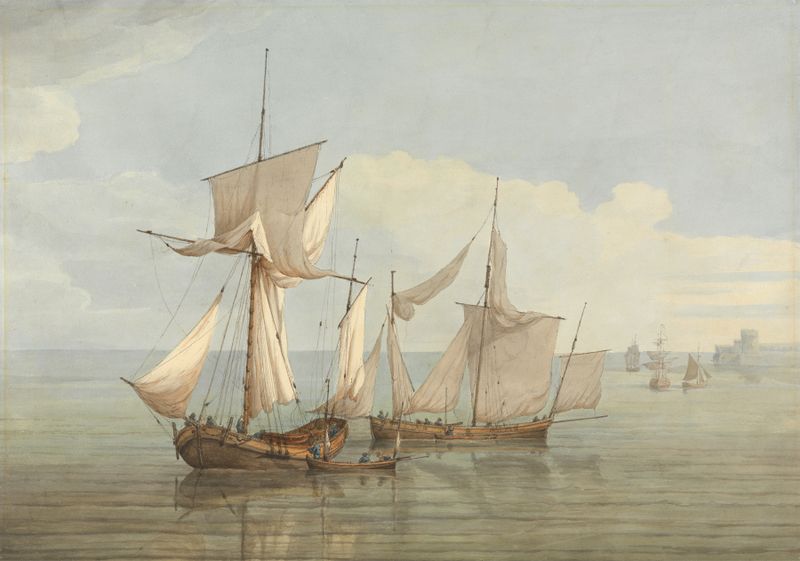
A Hoy and a Lugger with other Shipping on a Calm Sea
John Thomas Serres
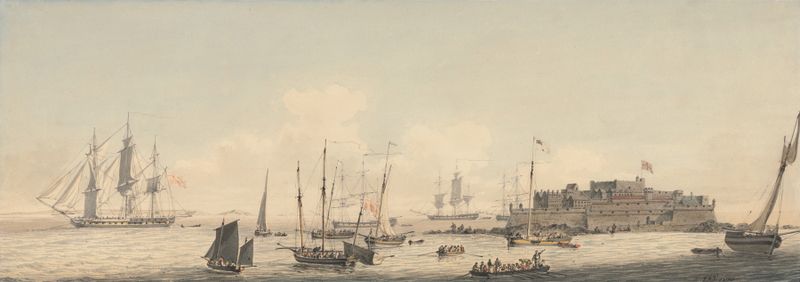
View of Castle Cornet, Guernsey, Channel Islands, with Shipping
John Thomas Serres
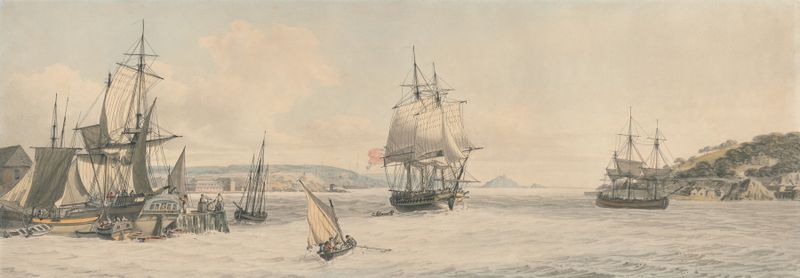
Plymouth Roads
John Thomas Serres

Gibraltar, South West by West
John Thomas Serres
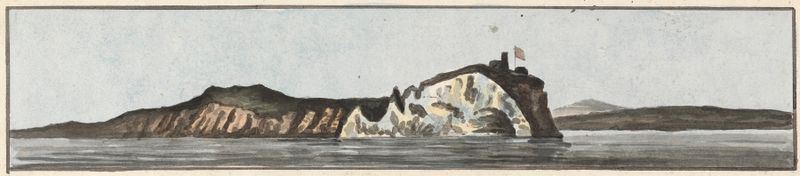
The Needles Bearing East
John Thomas Serres

The North Foreland
John Thomas Serres

Gibraltar, The Signal House
John Thomas Serres

Old Harry, Swanage Bay
John Thomas Serres





