
Girl with red hood — History & Facts
What first catches the eye in Girl with red hood is the way the child's gaze seems to hover just beyond the viewer, as if caught between curiosity and caution. The red hood, trimmed with a delicate ruffle, frames her pale face and draws attention to the thoughtful expression and luminous skin. The artist’s brushwork captures the soft, almost downy texture of her hair and the subtle flush in her cheeks, while the muted background throws all attention onto her quiet presence.
The ochre shawl, striped with lavender, wraps her in warmth, its folds painted with a care that suggests both protection and modesty. Every detail, from the stitching of the bonnet to the faint shadow under her chin, works to create a sense of intimacy and stillness. Painted around 1866, this portrait belongs to a world in which artists like Albert Anker turned their attention to everyday life and the dignity of ordinary people, especially children. In the mid-19th century, such works were cherished for their honesty and their ability to capture fleeting moments of childhood, often commissioned by families or collectors eager to preserve the innocence of youth.
Little is recorded about the journey of this particular painting, which surfaced at Koller Auktionen in Zürich in 2011, but its quiet realism and gentle humanity speak to the period’s fascination with the inner lives of its subjects. The longer you look, the more the girl’s silence invites you to imagine her story, suspended in the hush of her own thoughts.
More Artworks by Albert Anker

Portrait Of A Girl
Albert Anker
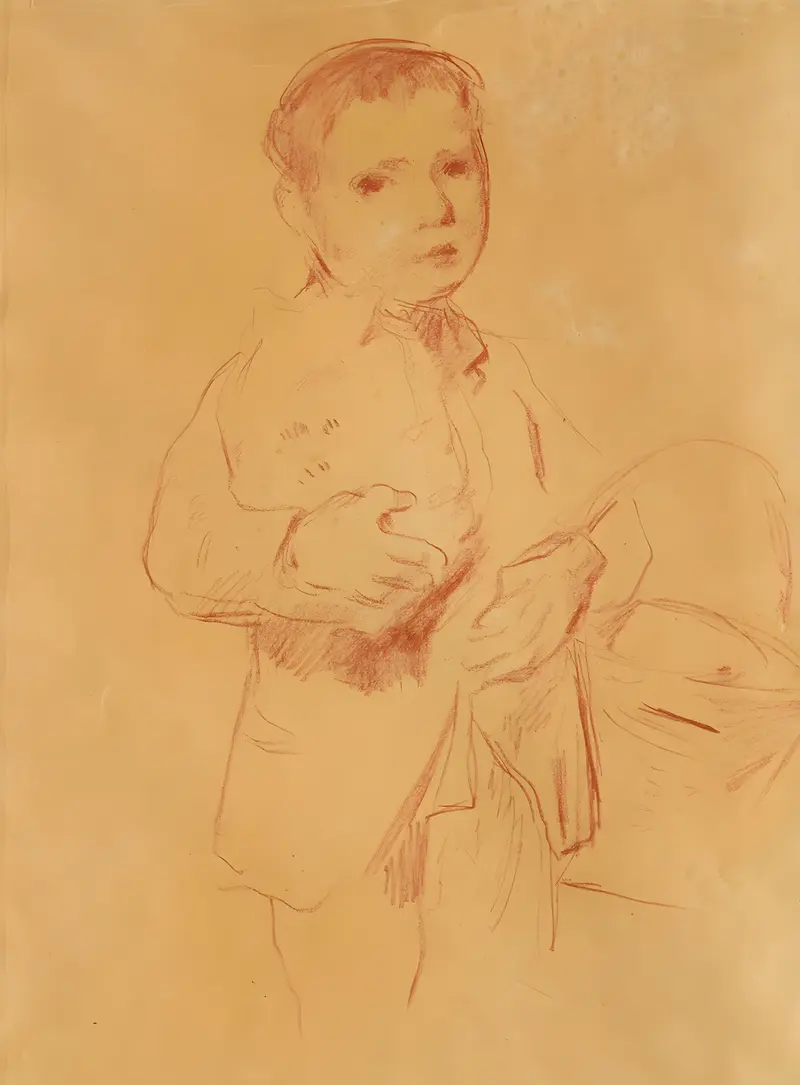
Boy with a basket
Albert Anker
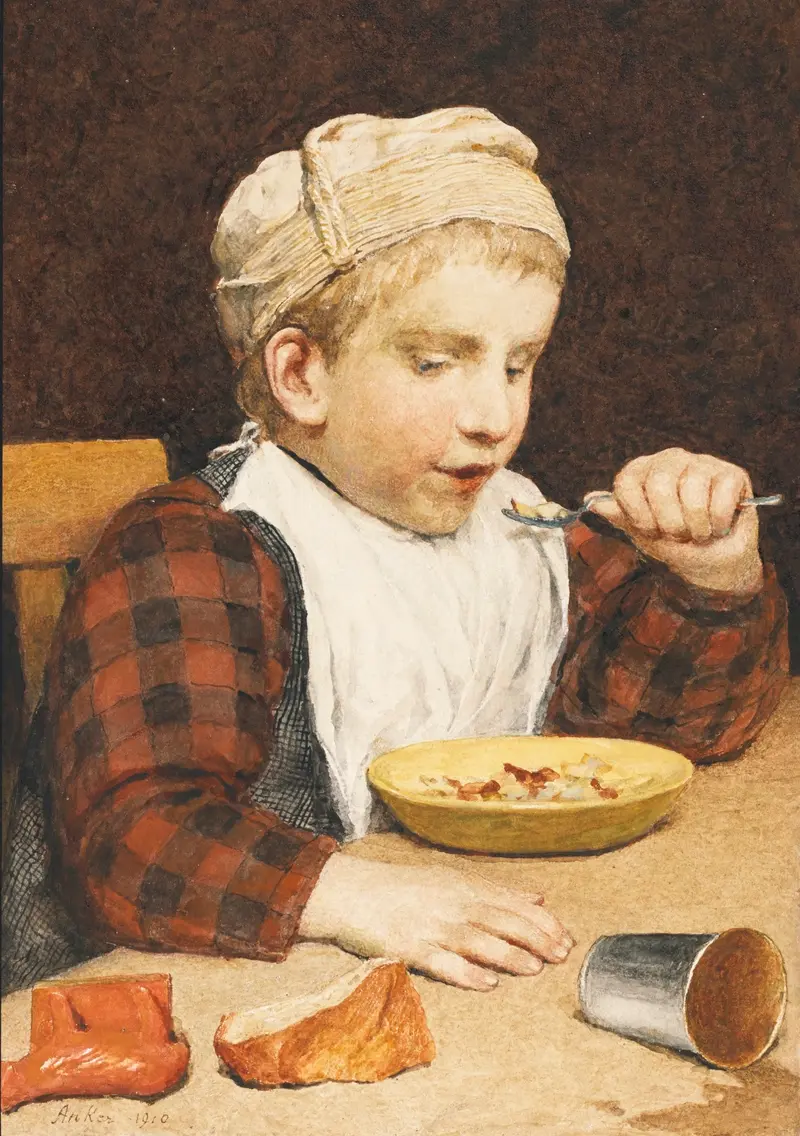
Knabe Mit Mütze Beim Essen
Albert Anker
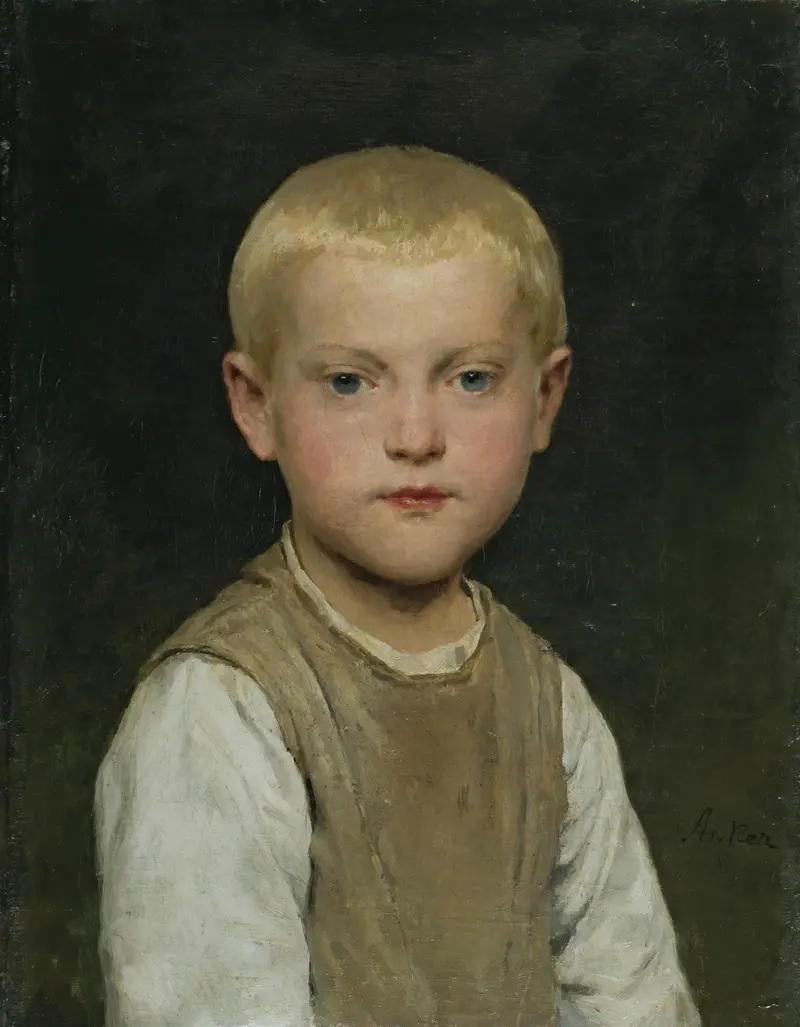
Knabenbildnis (Dr Heiri)
Albert Anker
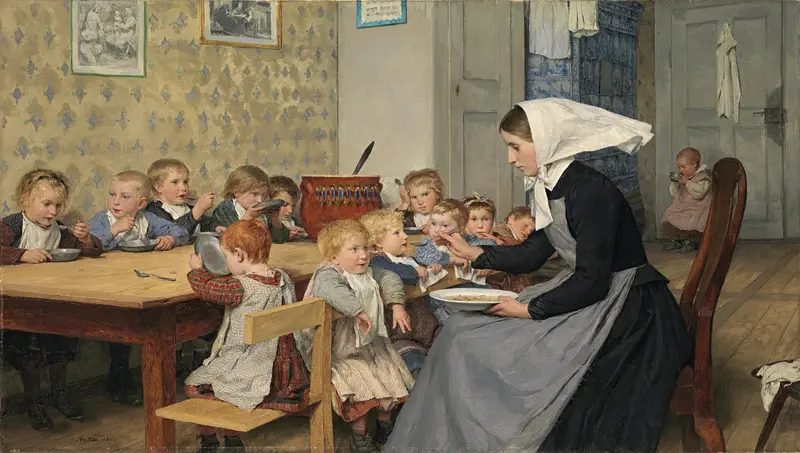
Die Kinderkrippe I
Albert Anker

L’instituteur et le pasteur
Albert Anker
Bauernmädchen (Farm Girl)
Albert Anker
Farmer Reading on the Stove Bench
Albert Anker
Flusslandschaft in Wasen (Emmental)
Albert Anker
School Boy
Albert Anker





