
Gletscherlandschaft — History & Facts
Could beauty survive in a century of chaos? In Gletscherlandschaft, Herzog invites us to ponder the transience of nature amid the harsh inevitabilities of existence. Look to the left at the towering glacier, its icy facade glinting in the sunlight. The brilliant whites and soft blues create a stark contrast against the earthy browns of the craggy mountains, leading your gaze toward the gentle hues of the distant sky. Observe the meticulous brushwork that conveys the texture of the ice, shimmering with vitality yet underscored by an inevitable decay.
Each stroke seems to whisper of fragility, challenging the viewer to consider the duality of beauty and the encroaching decay that looms behind it. The composition balances both grandeur and intimacy, evoking a sense of reverence for the natural world. In the foreground, small, sparse vegetation fights for survival against the cold, highlighting the struggle between life and the impending doom of the ice’s gradual retreat. The expansive landscape serves as a reminder of resilience, yet it subtly hints at the relentless march of time — a metaphor for the decay that accompanies all forms of beauty. In 1860, Herzog painted this piece while residing in Germany, deeply influenced by the Romantic movement’s embrace of nature.
This period was marked by industrialization and societal upheaval, prompting artists to seek solace in landscapes untouched by human hands. Herzog's work embodies this quest, capturing not only the serene splendor of glaciers but also an awareness of their fragility in the face of an ever-changing world.
More Artworks by Hermann Ottomar Herzog
Browse all →
Snow-Capped Peaks
Hermann Ottomar Herzog
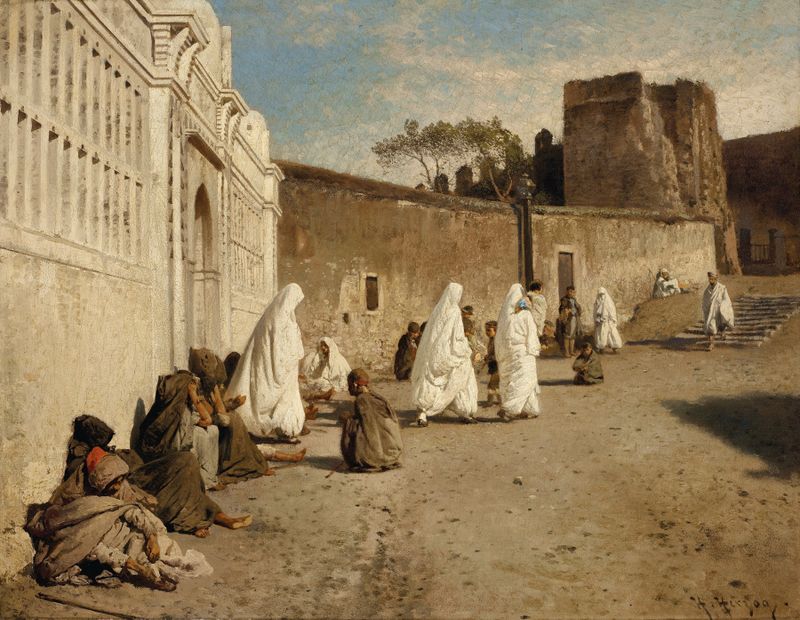
Entrance into the Alhambra, Spain
Hermann Ottomar Herzog

Hafen in Ostende
Hermann Ottomar Herzog
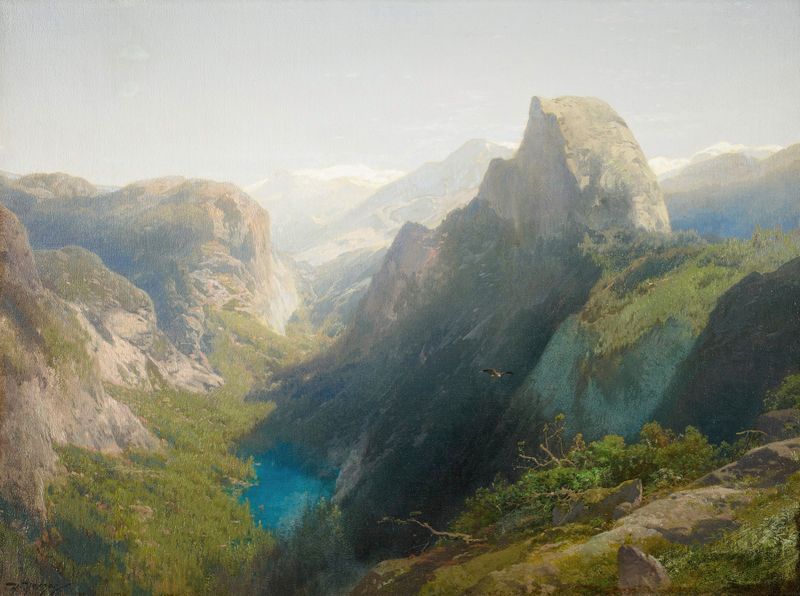
Mirror Lake, Yosemite
Hermann Ottomar Herzog
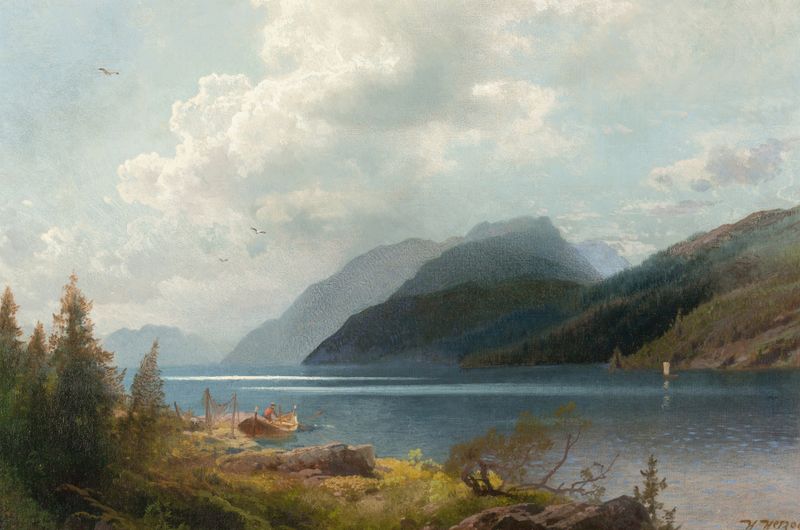
Mountain Lake, Sagne Fjord, Norway
Hermann Ottomar Herzog
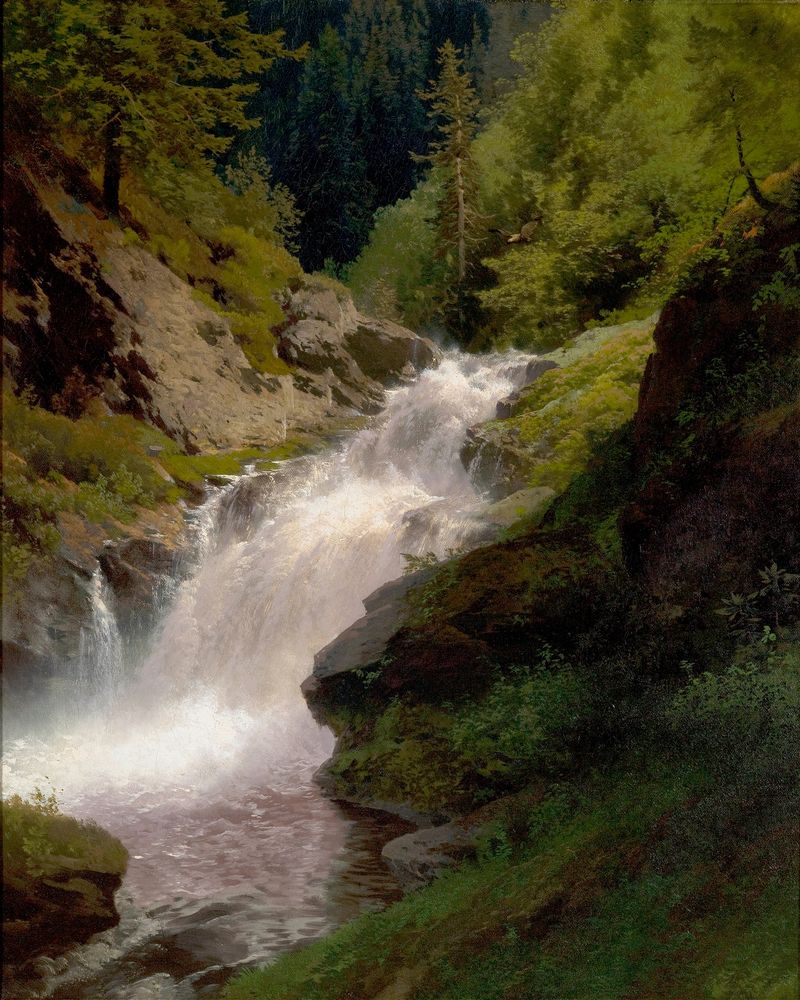
Winona Falls
Hermann Ottomar Herzog
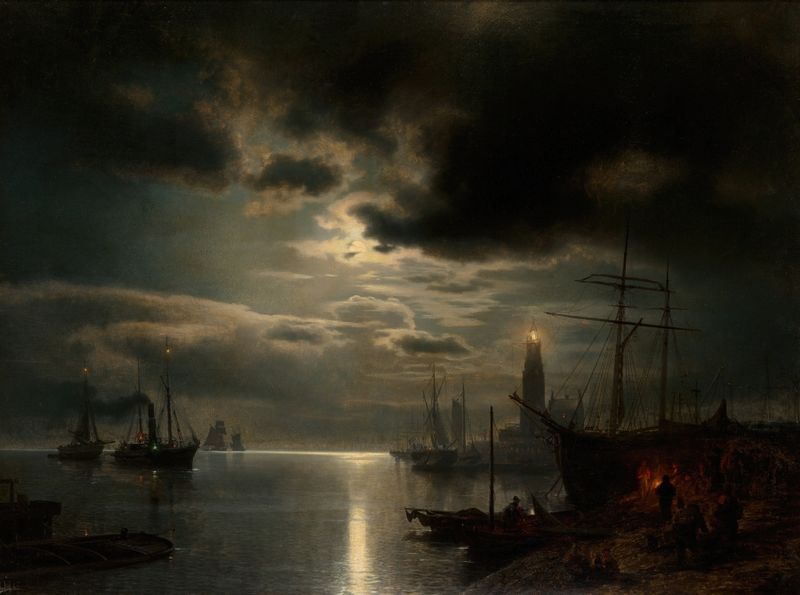
A Moonlit Harbor
Hermann Ottomar Herzog
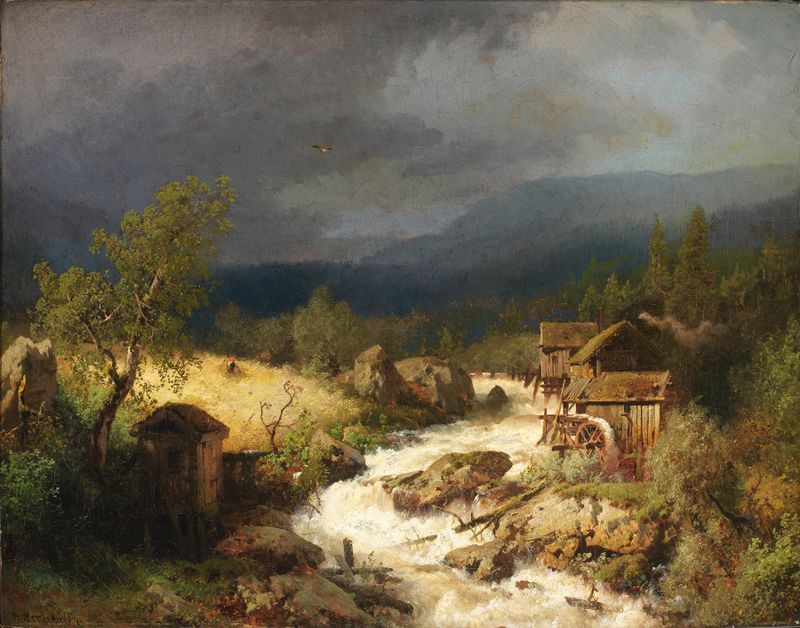
Mill on a Torrent
Hermann Ottomar Herzog

The Rippling River
Hermann Ottomar Herzog

Alpine Landscape Mountain Hut
Hermann Ottomar Herzog





