Going for the Herd — History & Facts
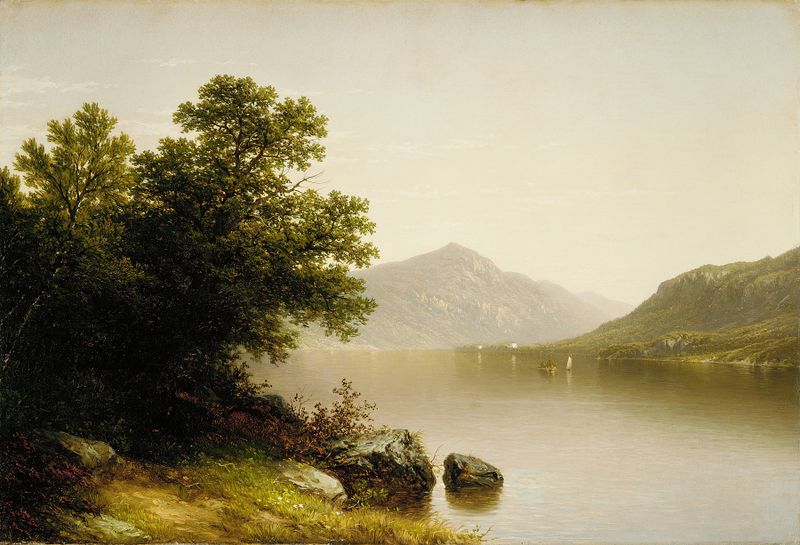
Could beauty survive in a century of chaos? John William Casilear’s Going for the Herd invites us to ponder this haunting question, encapsulating a serene moment that feels dreamlike against the backdrop of a turbulent age. Look to the center where a lone figure strides confidently toward a distant cluster of cattle, framed by a sweeping landscape that unfolds in layers of soft greens and browns. The light, gently diffused by clouds, bathes the scene in a warm glow, contrasting the cool shadows that stretch across the ground. Notice how the brushwork is both delicate and deliberate, each stroke inviting you to linger on the vivid textures of the foliage and the gentle undulations of the land. As you explore further, the tension between the solitude of the figure and the expansive wilderness becomes palpable.
The distant herd symbolizes both a source of sustenance and a connection to nature, while the vast sky looms overhead, hinting at the uncertainty of the future. This juxtaposition reveals an emotional complexity, where hope and isolation coexist, echoing the artist’s own reflections on society at the time. Casilear painted Going for the Herd in 1872, during a period marked by rapid industrialization and change in America. Living in New York and deeply influenced by the Hudson River School, he sought to capture the beauty of the natural world amidst the encroaching chaos of modern life.
This work reflects his commitment to preserving the pastoral landscape, a serene refuge from the tumult of contemporary existence.