Gondola, Venice — History & Facts
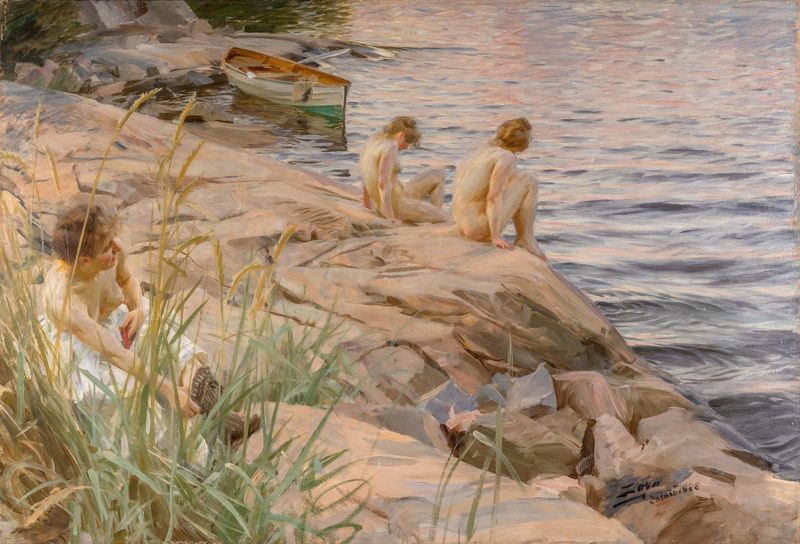
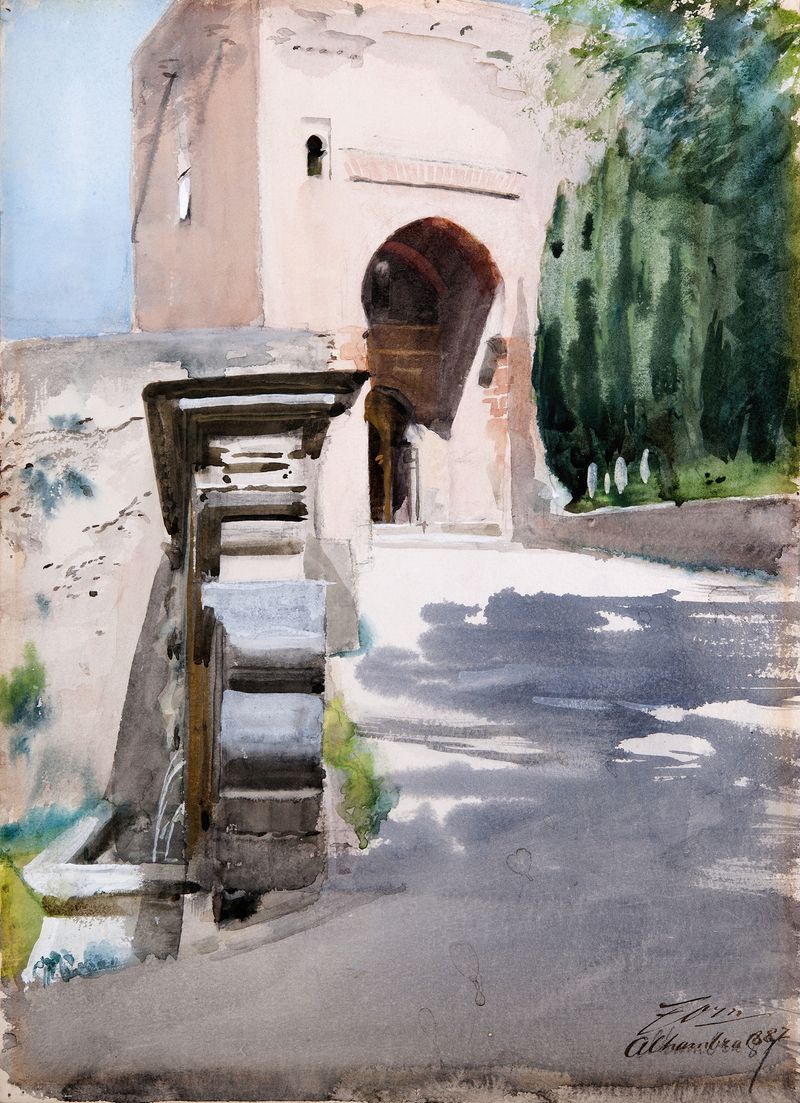
Could beauty survive in a century of chaos? In Gondola, Venice, the answer resonates through a tranquil, yet profound stillness. Focus on the soft, golden light cascading across the water’s surface, illuminating the gondola and its serene occupants. Notice how Zorn masterfully captures the delicate play of shadows, with rich blues and earthy browns blending seamlessly in the background. The gentle reflection of the gondola in the water draws the eye, inviting the viewer to explore the subtleties of the scene.
Here, every brushstroke communicates intimacy, as if the artist is inviting us into a fleeting moment between two people. The emotional tension lies in the juxtaposition of the serene gondola ride against the backdrop of a world teetering on the brink of change. While the figures bask in quietude, their expressions remain enigmatic, hinting at stories left untold. The surrounding architecture looms as a silent observer, a reminder of Venice's rich history and the inevitable passage of time.
Here lies the void—an absence of noise, yet a profound richness in emotional resonance. In 1894, Anders Zorn was in Venice, a city that inspired many artists of the time. His work reflected both a personal exploration of light and shadow and the broader currents of artistic experimentation. During this period, Zorn was transitioning into a more impressionistic style, aligning with the rising movement that sought to capture the beauty of the everyday amidst a rapidly industrializing world.
His brushwork in Gondola, Venice embodies this shift, striking a balance between tradition and modernity.