
Grad Fiľakovo — History & Facts
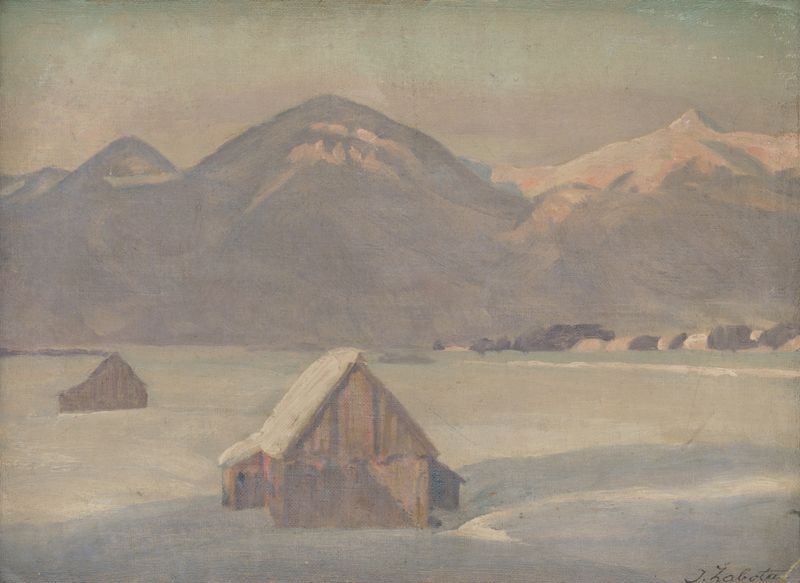
In this intricate tapestry of hues, the interplay of light speaks volumes, revealing profound narratives beneath its surface. Look to the left where vibrant reds and deep blues collide, creating a gradient that draws the eye into the depths of the canvas. Notice how the light dances over the facades of each building, illuminating their textures and casting dramatic shadows. The brushwork, a blend of loose and precise strokes, invites you to feel the energy of the scene, while cooler tones suggest a fleeting twilight, heightening the emotional resonance of the composition. Delve deeper into the heart of the piece, where the juxtaposition of warmth and coolness reflects more than just the setting sun.
The scattered figures, rendered with a sense of motion, embody the human experience that thrives in this town; their anonymity speaks to the solitude we often feel within community. This contrast between the vibrancy of life and the quietness of twilight evokes a sense of longing and introspection, urging us to ponder our place within the broader narrative of existence. In 1930, Ivan Žabota created this work amid a rising tide of modernism sweeping through Europe. Living in a period marked by social upheaval and artistic experimentation, he sought to capture not just the physical landscape of Fiľakovo, but its very spirit.
This painting reflects a transition in art, embracing both tradition and innovation, as the artist explored new ways to express depth, emotion, and the transient beauty of light.
More Artworks by Ivan Žabota
Browse all →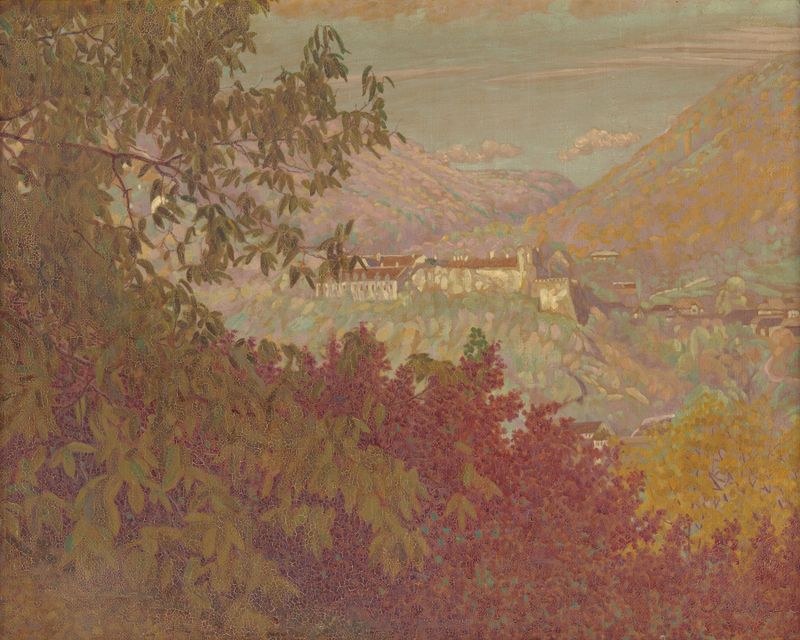
More Architecture Art
Browse all →
The statue of Liberty
Frédéric Auguste Bartholdi

View of Houses in Delft, Known as ‘The Little Street’
Johannes Vermeer

View of Houses in Delft, Known as ‘The Little Street’
Johannes Vermeer

The Cathedral in Rouen. The portal, Grey Weather
Claude Monet

The yellow house
Vincent van Gogh

The Church in Auvers-sur-Oise, View from the Chevet
Vincent van Gogh