Tatre pozimi — History & Facts
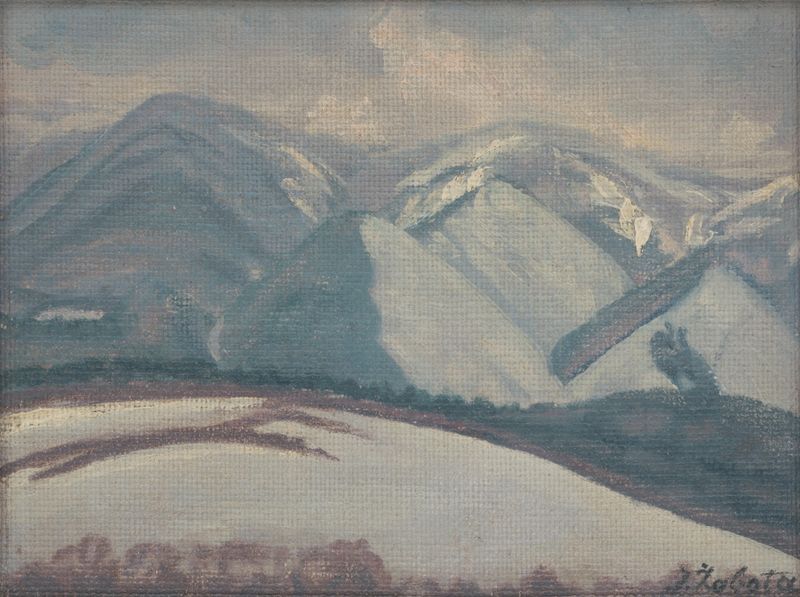
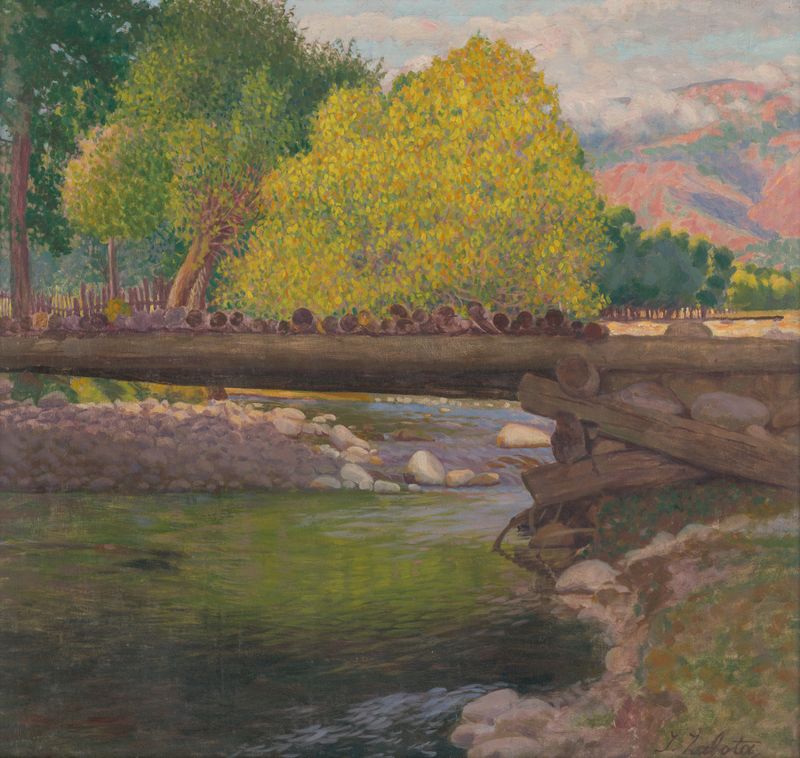
In the depths of winter, when the world shivers beneath a dense blanket of snow, the mind dances on the edge of madness. Here, in this frozen realm, beauty and despair intertwine with each brushstroke, revealing the fragility of sanity amid a chaotic landscape. Look to the center of Tatre pozimi, where jagged peaks rise sharply against a pale sky, their rugged silhouettes etched in stark contrast. The palette is dominated by cool blues and whites, evoking a chill that seeps into the viewer's bones.
The fragmented light glimmers off the snow, creating an illusion of warmth, while shadows creep into the valleys, hinting at secrets buried in the depths. This delicate interplay of light and dark pulls the eye, guiding it through the crisp air of a winter's day. The painting encapsulates a profound tension between isolation and beauty. Notice the solitary tree on the left, its gnarled branches reaching for the sky, a silent witness to the chaos of existence.
The swirling clouds above seem to echo the turmoil of the mind, suggesting that madness is not far from the surface. Each element in this work speaks to the struggles of the spirit, reminding us that within the stark landscape, there lies an intensity of feeling that cannot be ignored. Ivan Žabota painted Tatre pozimi in 1920, during a tumultuous period in European history marked by the aftermath of World War I. At this time, artists were grappling with the emotional weight of loss and disillusionment.
Living in Slovenia, Žabota sought to express the raw beauty of his homeland while reflecting on the inner conflicts that resonated deeply with the human experience. His work stands as a testament to the complexity of emotion during an era of transformation.