
"Grandstand Fresco" (after a wall painting at Knossos, Crete) — History & Facts
Could beauty survive in a century of chaos? Look closely at the intricate figures gilded in vibrant hues, dancing across the surface of the fresco. Focus on the delicate lines tracing their limbs, the careful brushwork that breathes life into their poses. Notice how the deep, shadowy blues contrast with the fiery reds and oranges, creating a dynamic interplay that draws the eye from one figure to the next, revealing the rhythm of ancient festivities. As you observe, the abundance of details offers insights into the cultural heritage of Minoan civilization, yet also reflects a timeless struggle between light and darkness.
The shadows cast behind the figures hint at the ephemeral nature of beauty, as if to remind us that even within grand celebrations, a sense of melancholy looms. Each character's expression—joyful yet tinged with a hint of introspection—cements the tension between exuberance and the inevitable passage of time. Emile Gilliéron painted this masterpiece in the early 20th century, a period marked by a revival of interest in ancient civilizations and their artistic expressions. Working in Crete, he was inspired by the archaeological findings at Knossos, where the remnants of Minoan culture sparked his imagination.
In a world grappling with the devastating effects of war and upheaval, Gilliéron’s work serves as a bridge between the past and present, infusing beauty into an era desperate for hope.
More Artworks by Emile Gilliéron
Browse all →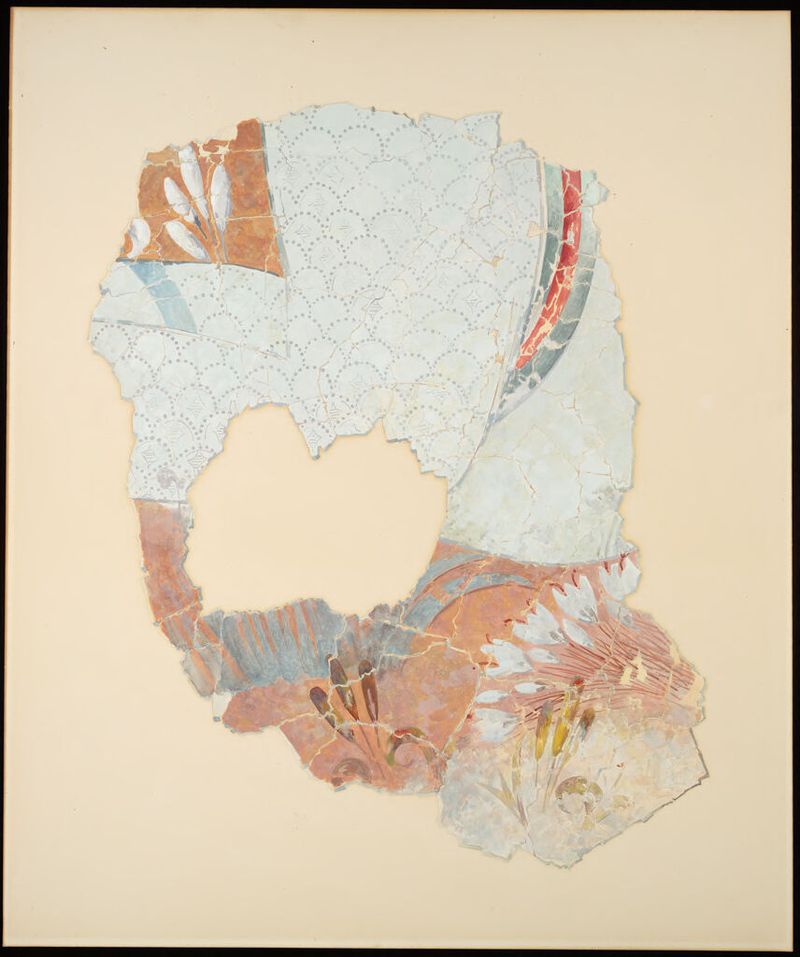
Part of a Kneeling Figure after a Late Minoan Fresco from the Palace of Hagia Triada, Crete
Emile Gilliéron
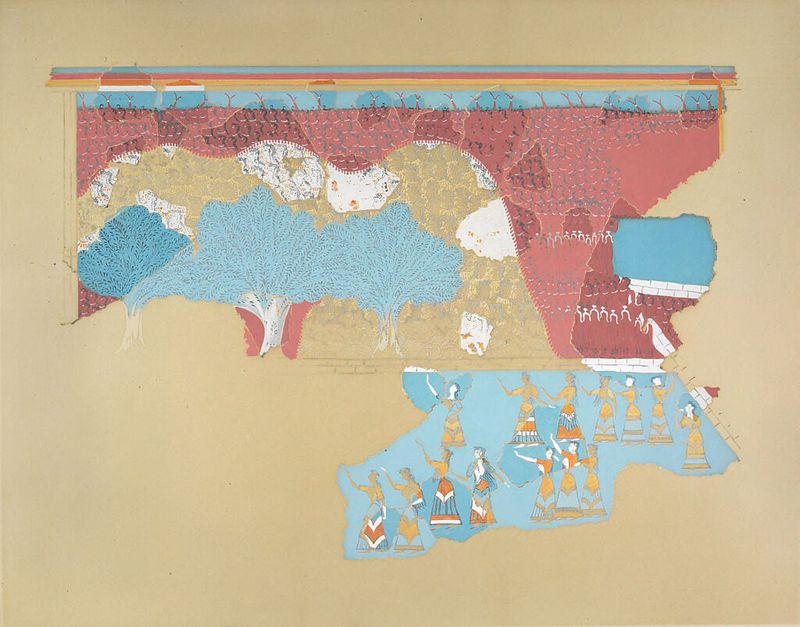
"Sacred Grove and Dance" (after a wall painting from the Palace at Knossos, Crete)
Emile Gilliéron
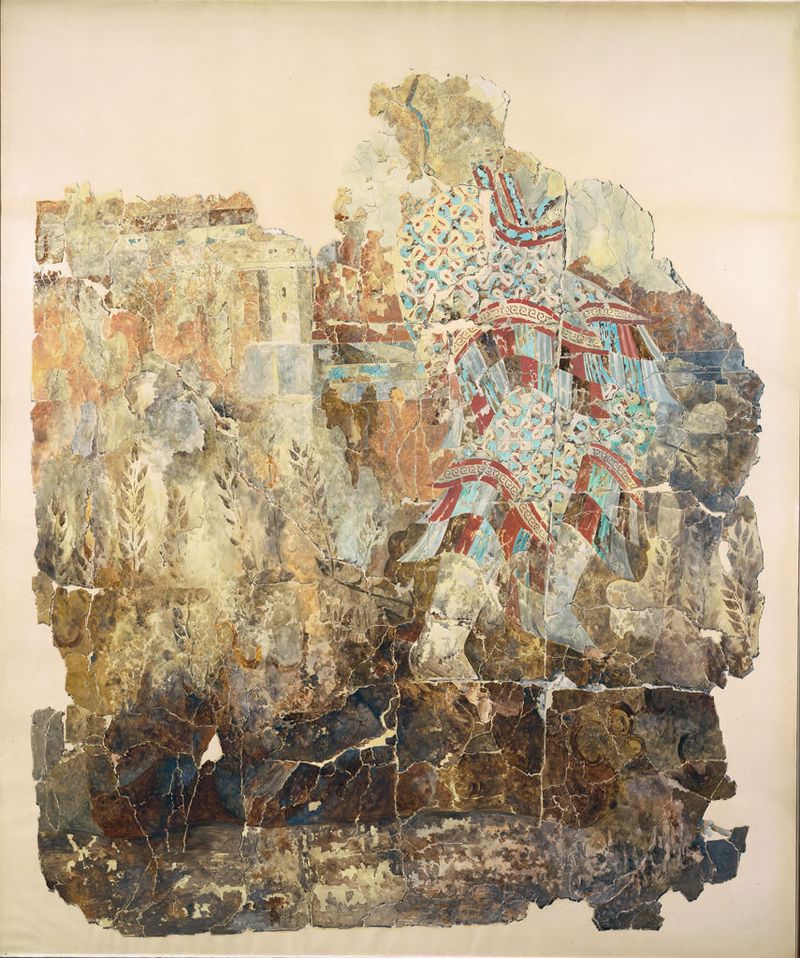
"Woman beside Shrine"; Watercolor of the Wall Painting from Room 14 of the Villa at Hagia Triada by Emile Gilliéron
Emile Gilliéron





