
Part of a Kneeling Figure after a Late Minoan Fresco from the Palace of Hagia Triada, Crete — History & Facts
In a fleeting moment of madness, the essence of humanity is distilled into form and color, capturing the fractured echoes of ancient lives. What tales lie hidden within the strokes and shadows of a kneeling figure, eternally poised in a silent dialogue with oblivion? Look to the dynamic outline of the figure, where the curves of the body suggest both reverence and despair. Notice how the vibrant blues and reds of the fresco infuse the scene with emotional intensity, contrasting with the muted earth tones that anchor it in time.
The delicate detailing, reminiscent of a bygone era, draws the eye to the intricacies of the figure’s posture, evoking a sense of longing that transcends the millennia. Beneath the surface, the figure’s posture speaks volumes—a conflicted gesture between devotion and subjugation, betraying the duality of human experience. The vivid colors may reflect the chaos of the mind, where madness dances hand in hand with beauty. Each brushstroke not only captures physicality but also suggests the psychological weight of cultural memory, leaving the viewer to ponder the rituals that defined an ancient civilization. Created in the early 20th century, this work by Emile Gilliéron drew inspiration from the rich tapestries of Minoan culture, particularly the frescoes unearthed at the Palace of Hagia Triada in Crete.
At this time, Gilliéron was immersed in the revival of classical forms, seeking to bridge the gap between past and present, a pursuit fueled by the archaeological fervor sweeping Europe. His meticulous attention to detail reflects both an admiration for antiquity and a desire to reawaken forgotten narratives in a modern context.
More Artworks by Emile Gilliéron
Browse all →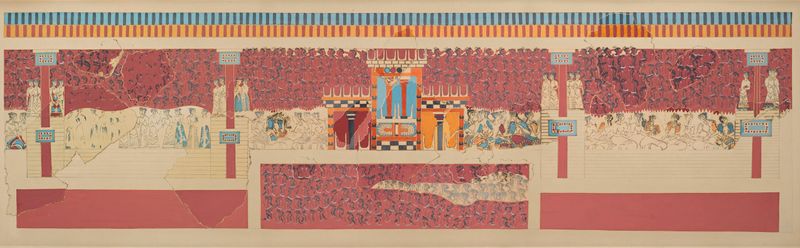
"Grandstand Fresco" (after a wall painting at Knossos, Crete)
Emile Gilliéron
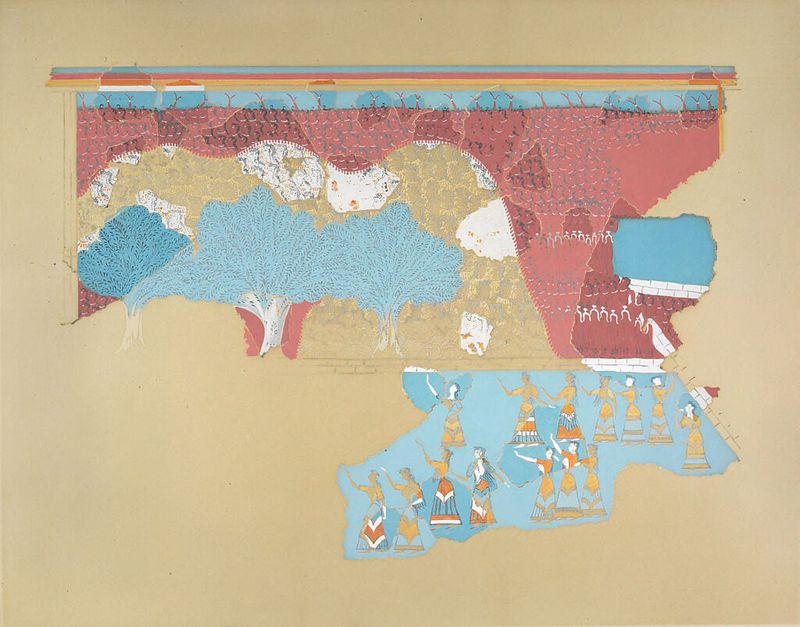
"Sacred Grove and Dance" (after a wall painting from the Palace at Knossos, Crete)
Emile Gilliéron
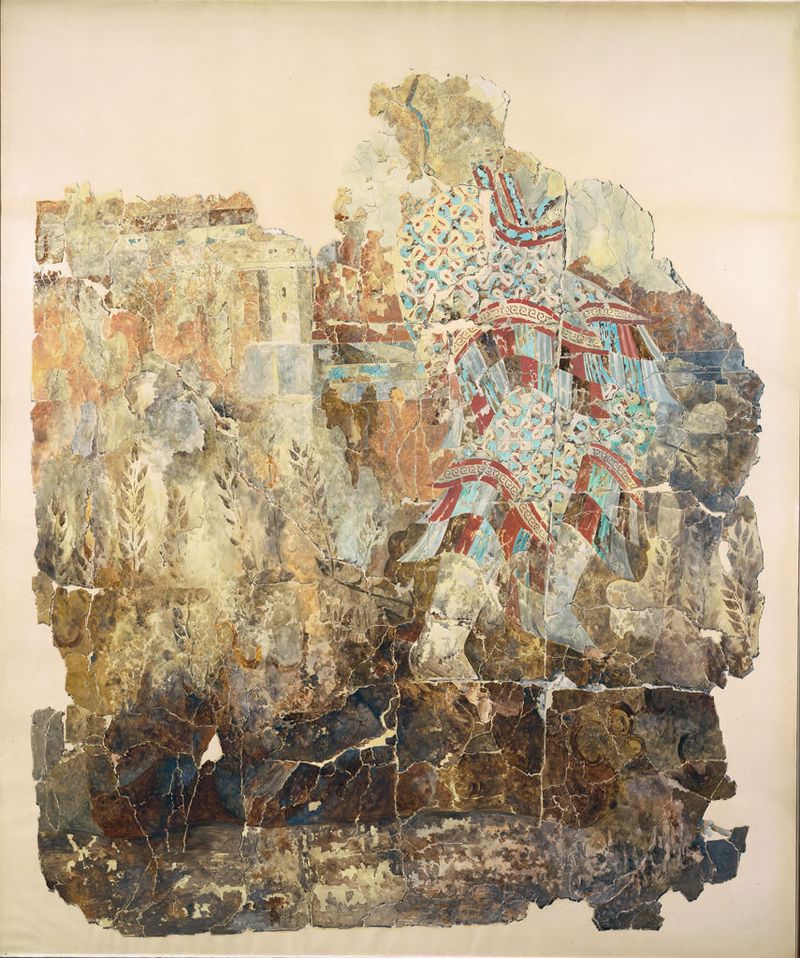
"Woman beside Shrine"; Watercolor of the Wall Painting from Room 14 of the Villa at Hagia Triada by Emile Gilliéron
Emile Gilliéron





