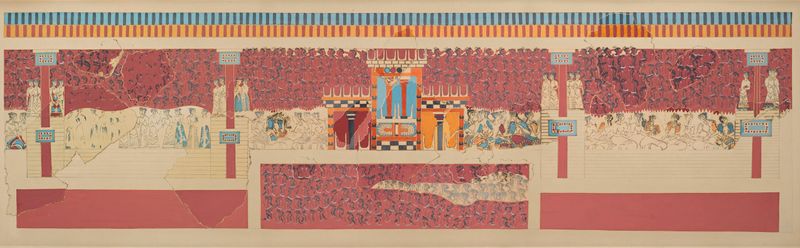
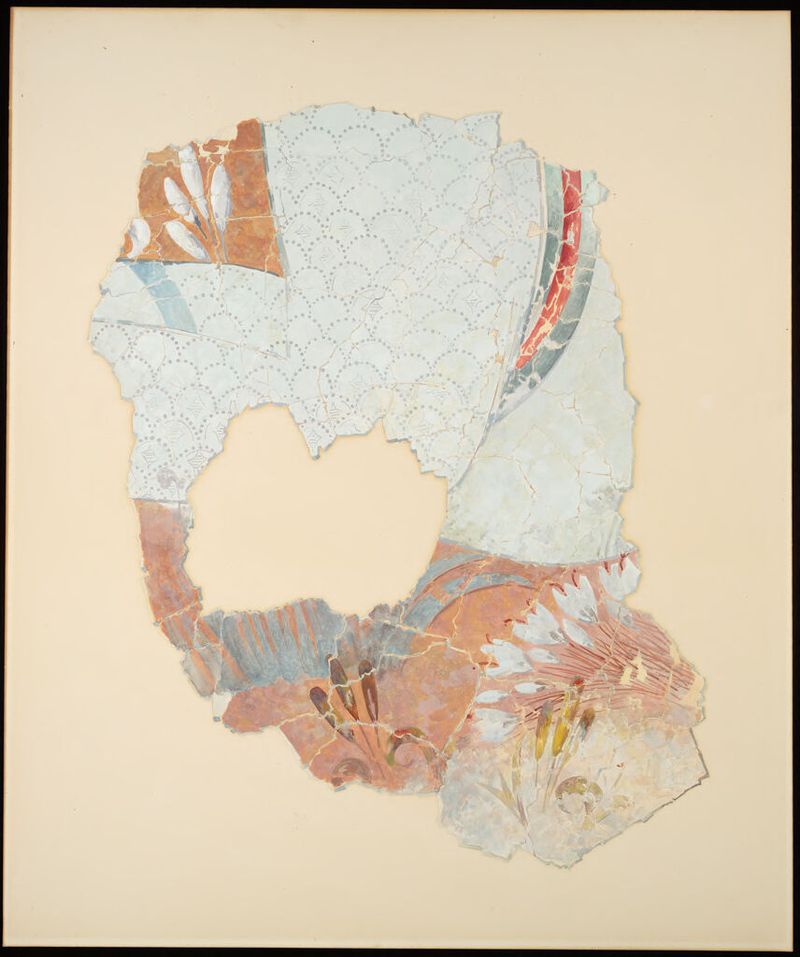
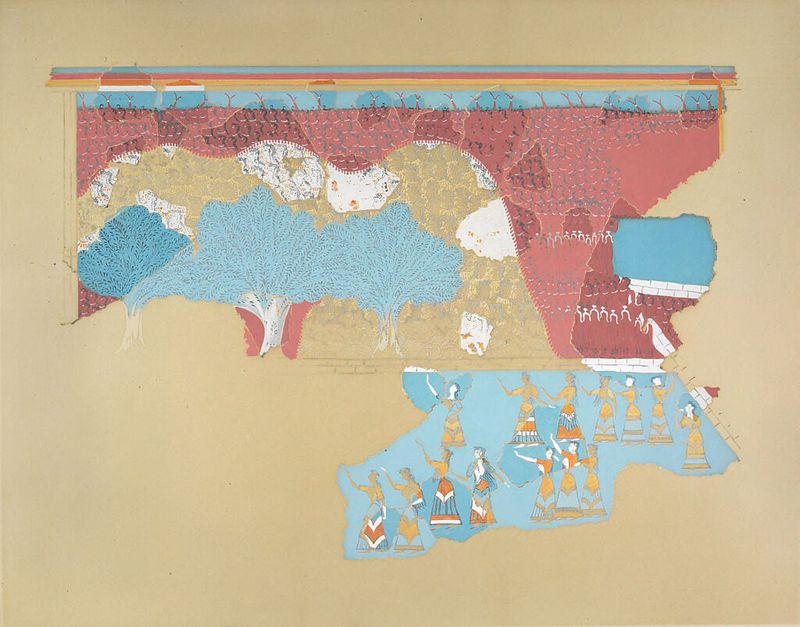
"Woman beside Shrine"; Watercolor of the Wall Painting from Room 14 of the Villa at Hagia Triada by Emile Gilliéron — History & Facts
In the delicate world of watercolor, layers of emotion seep through as rivulets of paint intertwine with whispers of memory, evoking the quiet ache of loss. Look closely at the foreground, where a solitary woman stands beside a shrine, her figure draped in soft hues that meld with the ethereal background. The muted tones of the wall painting guide your gaze, leading you to the intricate details of the shrine, where every brushstroke seems to pulsate with reverence. The careful gradation of colors, from the gentle blues to the earthy browns, creates an atmosphere of stillness—a moment suspended in time, inviting reflection. The woman’s posture, slightly bowed and contemplative, embodies the emotional weight of grief.
The contrast between her serene expression and the vibrant altar suggests a poignant dichotomy—the tranquility of remembrance against the tumult of sorrow. The delicate floral motifs that surround her serve as a reminder of life's transient beauty, while the shrine stands as a monument to what has been lost, intertwining loss with the sacred. In the early 20th century, Emile Gilliéron was deeply engaged in the revival of ancient art forms, particularly those of the Minoan civilization. Creating works like this watercolor from Room 14 of the Villa at Hagia Triada, he sought to bridge the past with contemporary understanding.
This piece emerged during a time when archaeological discoveries were reshaping perceptions of ancient cultures, allowing Gilliéron to explore themes of memory, heritage, and the enduring human experience of grief.