Granville — History & Facts
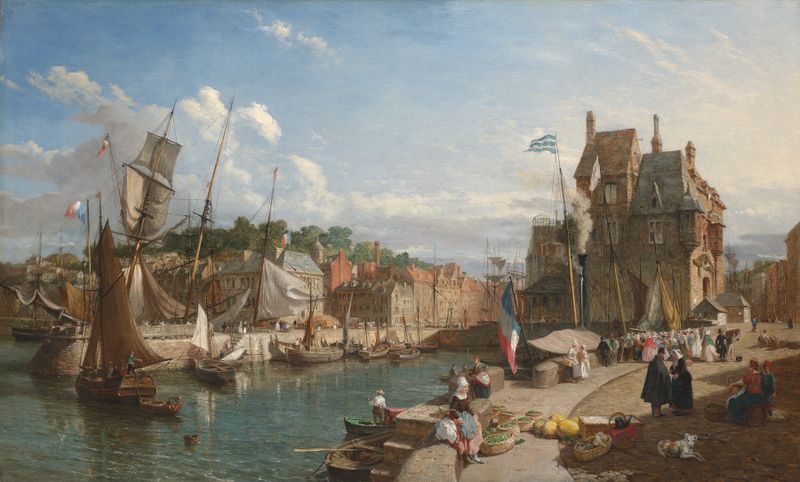
What if beauty was never meant to be finished? The fleeting nature of memory and the intricate layers of time intertwine in a dance that captivates the soul. Look to the left at the gentle curve of the coastline, where delicate brushstrokes evoke the lapping waves, shimmering under a soft, golden light. The artist masterfully employs a muted palette, the greens and blues harmonizing to create a tranquil atmosphere that invites contemplation. Notice how the distant cliffs rise majestically, their rugged forms contrasting with the delicate, ethereal sky, punctuated by wisps of clouds that seem to drift lazily across the canvas. As you absorb the scene, consider the emotional tension between the idyllic landscape and the human absence within it.
The solitary beauty of the vista suggests longing, perhaps a wistfulness for a past moment lost in time. Each stroke conveys a sense of nostalgia, as if capturing a fragment of memory that is always just out of reach. The juxtaposition of vibrant nature and the absence of humanity speaks to the idea that beauty persists even in solitude, emphasizing the transient nature of experience. In 1843, William Parrott painted Granville amid a flourishing era of Romanticism, where the sublime was celebrated through landscape art.
Living in England, Parrott was influenced by his contemporaries who sought to depict the emotional resonance of nature. During this period, the burgeoning industrial revolution contrasted sharply with the pastoral beauty, prompting artists like him to explore the delicate balance between man and the natural world.