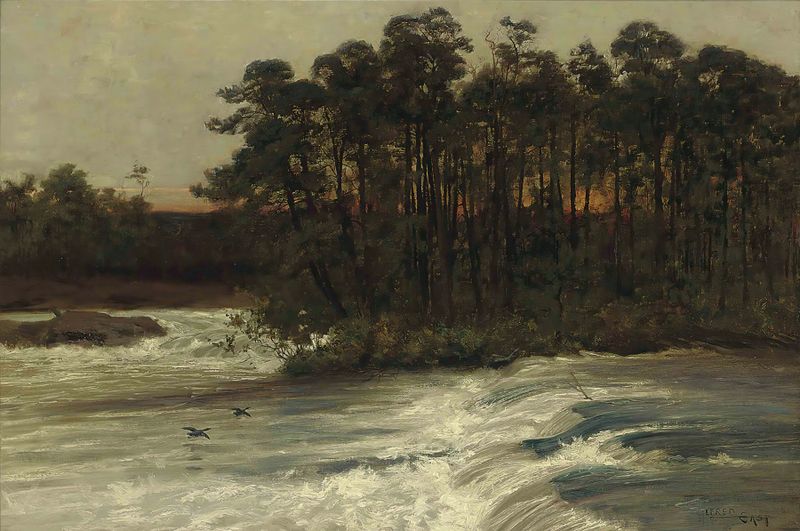
Grazing Sheep, Summer — History & Facts
Could a single brushstroke hold eternity? In the realm of innocence, moments unfurl like soft petals under the sun's gentle caress, revealing the simplicity and beauty of pastoral life. Look to the left at the verdant hills, where a peaceful flock of sheep grazes under an expansive sky. The artist's deft brushwork captures the lush greens and shimmering whites of the sheep as they become one with the landscape. Notice how the dappled light dances across the canvas, illuminating the subtle texture of the grass, a play between shadow and daylight that conveys a sense of tranquility and harmony.
The composition invites the eye to wander through the idyllic scene, where every stroke seems to echo the whispers of nature. Yet beneath this serene exterior lies a profound contrast between fragility and resilience. The sheep, innocent and vulnerable, represent a fleeting moment in time, while the vast, eternal landscape looms large, evoking both comfort and solitude. The soft palette suggests warmth and nostalgia, yet hints at the transitory nature of life—each sheep a fleeting brushstroke in the grand tapestry of existence. In 1906, the artist found himself immersed in the rural landscapes of England, drawing inspiration from the serene beauty that surrounded him.
During this time, East was a prominent figure within the British art scene, celebrated for his ability to convey the essence of nature with remarkable sensitivity. It was a period marked by a growing appreciation for impressionist techniques, and he skillfully employed these methods to evoke the innocence and tranquility found in the everyday, allowing viewers to experience a moment of peace captured forever on canvas.