
The Fly-Fisherman — History & Facts
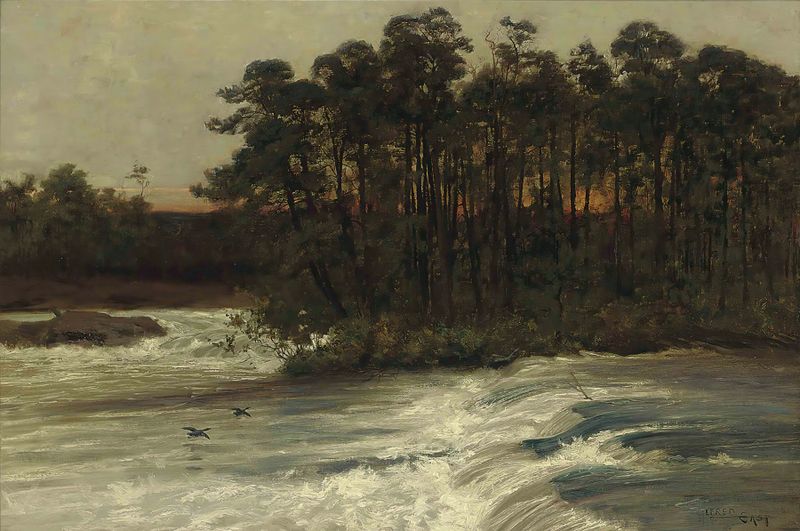
Can paint confess what words never could? In The Fly-Fisherman, a quiet struggle unfolds, steeped in the decay of nature and the fleeting moments of life. Look to the left at the solitary figure of the fisherman, poised in serene concentration, his silhouette stark against the shimmering water. The rich greens and muted browns of the landscape draw the eye, blending seamlessly with the dappled light that filters through the trees. Notice how the gentle ripples in the water reflect a delicate dance of colors, capturing the essence of a tranquil yet uncertain moment.
The artist’s brushwork evokes a sense of movement, as if time itself pauses, inviting us to witness the delicate balance between man and nature. Beneath the surface of this idyllic scene lies an undercurrent of decay—both in the physical world and the passage of time. The fisherman’s presence suggests a moment frozen before the inevitable change, reminding us of life’s transient beauty. The scattered leaves, hinting at the approach of autumn, symbolize the inevitability of decline, while the gentle lapping of water against the bank whispers of life’s cycles.
Each detail plays a part in revealing the tension between stillness and the relentless march of nature. During his career, Sir Alfred East painted The Fly-Fisherman at a time when he was heavily influenced by the Impressionists, seeking to capture the essence of landscapes rather than their exact representation. Working primarily in England, his focus on natural settings aligned with a growing enthusiasm for plein air painting. East's exploration of light and atmosphere reflects broader shifts in the world of art during the late 19th and early 20th centuries, a period marked by a search for authenticity in artistic expression.
More Artworks by Sir Alfred East
Browse all →
Château Gaillard, on the Seine
Sir Alfred East
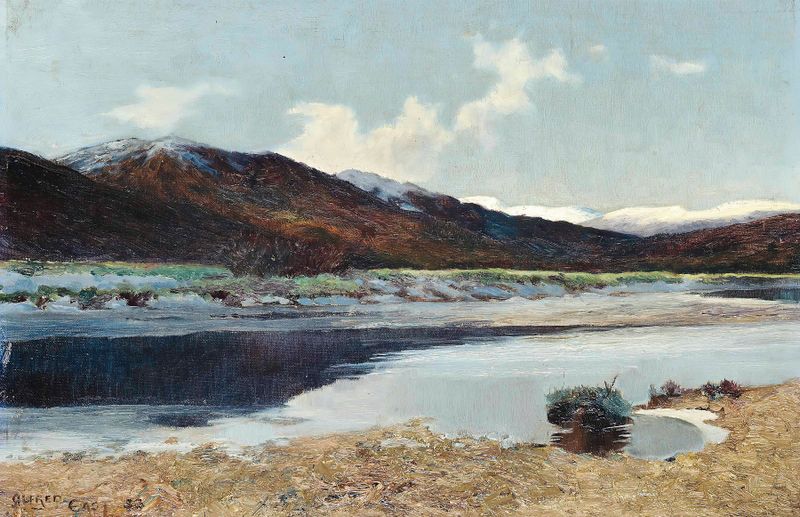
By The Water’s Edge, Loch Lomond, Scotland
Sir Alfred East
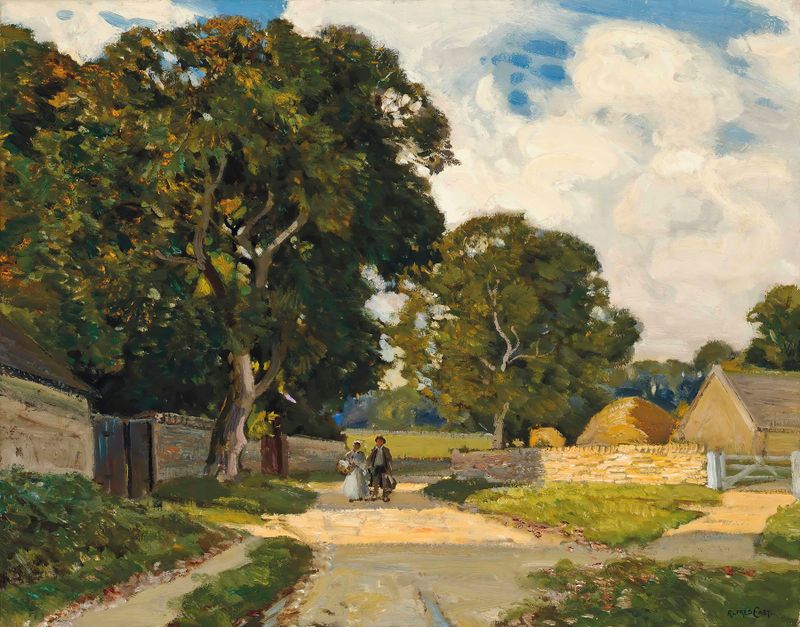
On The Tewkesbury Road
Sir Alfred East
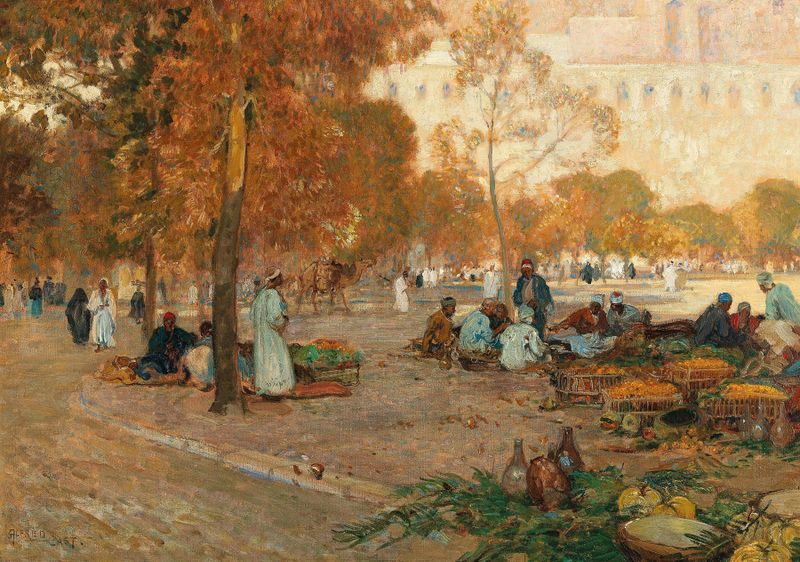
A Market Scene before the Citadel in Cairo
Sir Alfred East
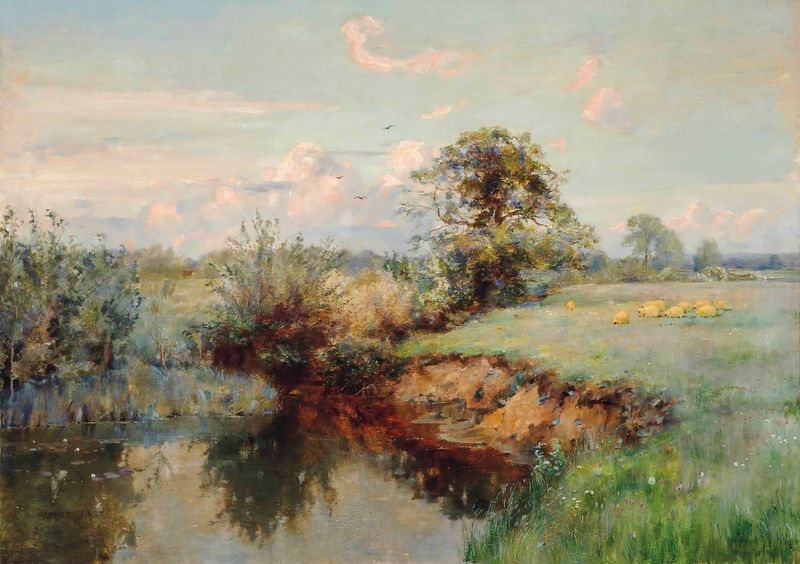
Grazing Sheep, Summer
Sir Alfred East

The Flatiron, New York
Sir Alfred East
Where Rapids Roar
Sir Alfred East





