
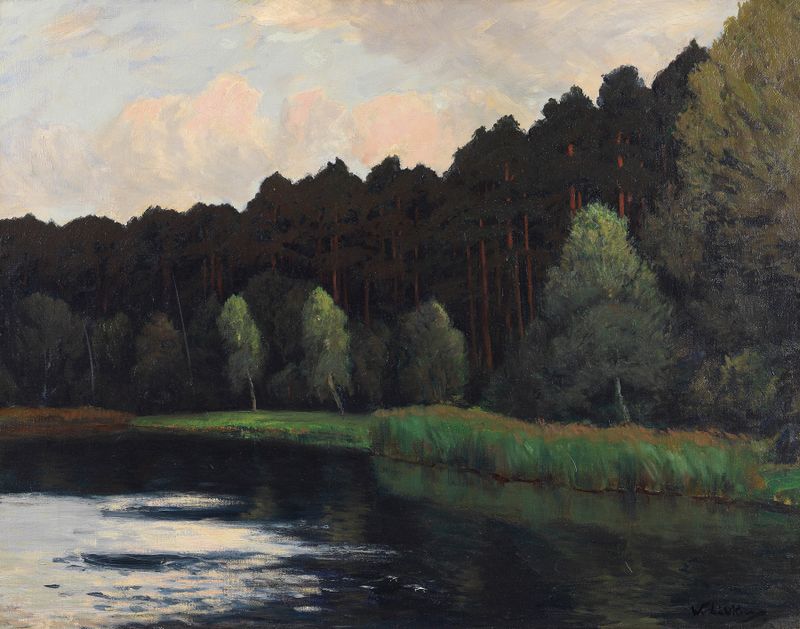
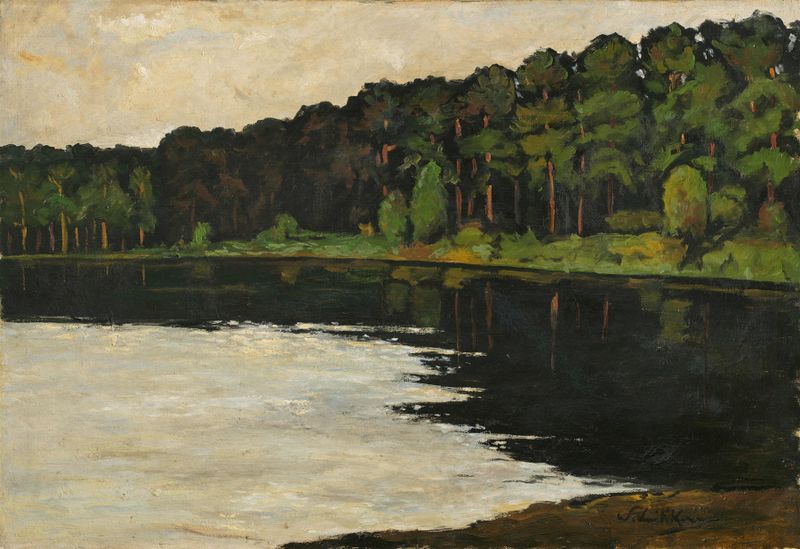
Grunewaldsee — History & Facts
Where does light end, and longing begin? This question resonates deeply within the soul, echoing the silent grief that permeates the landscape depicted in the painting. Look to the left at the delicate interplay of greens and blues, where soft strokes of paint blend to create a serene lake, its surface a canvas of muted reflections. Focus on the distant horizon, where wispy clouds cradle the gentle rise of hills, their contours defined by subtle gradations of color. Notice how the muted sunlight bathes the scene, creating an atmosphere that is both tranquil and melancholic, inviting the viewer to linger in contemplation. The emotional tension in the work emerges from the juxtaposition of calmness and sorrow.
The placid water, while inviting, holds an undercurrent of longing—a sense of something lost just beyond the horizon. Small details, like the solitary figure perched on the bank, reveal a personal sorrow, suggesting that even in beauty, there exists a profound sense of absence. The composition draws your eye toward the depths of the scene, evoking a sense of introspection that lingers long after the gaze has shifted. In the late 19th century, during the years he created this piece, the artist was immersed in the burgeoning Symbolist movement, which sought to convey emotional and spiritual truths through evocative imagery.
Living in Germany, Leistikow was influenced by the emerging fascination with nature and the inner landscape of the human experience, marking a transformative period in both his personal journey and the art world at large.
More Artworks by Walter Leistikow
Browse all →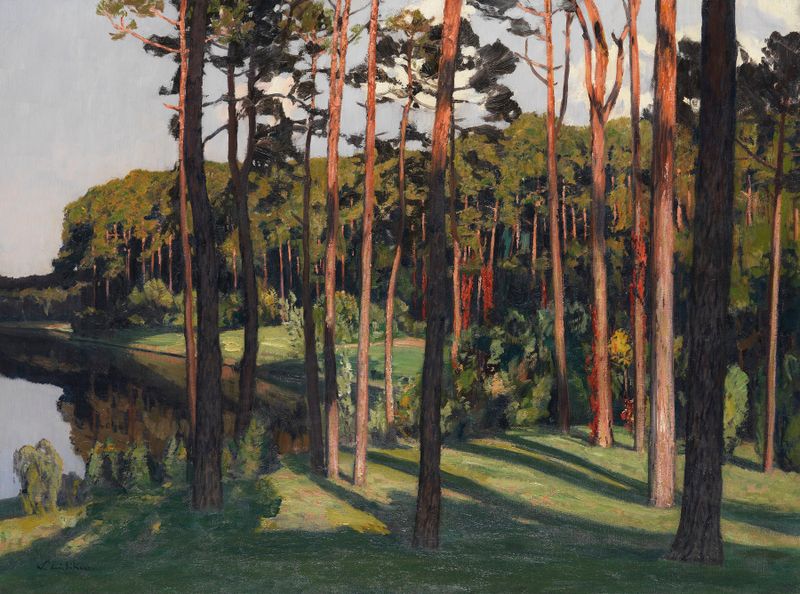
Märkische Landschaft
Walter Leistikow

Grunewaldsee
Walter Leistikow

Birken am Seeufer bei untergehender Sonne
Walter Leistikow
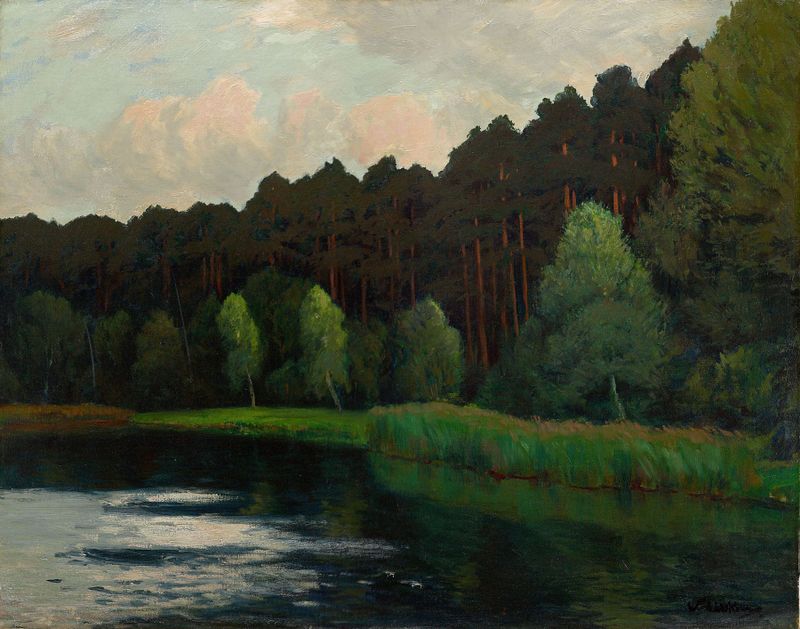
Märkischer See
Walter Leistikow
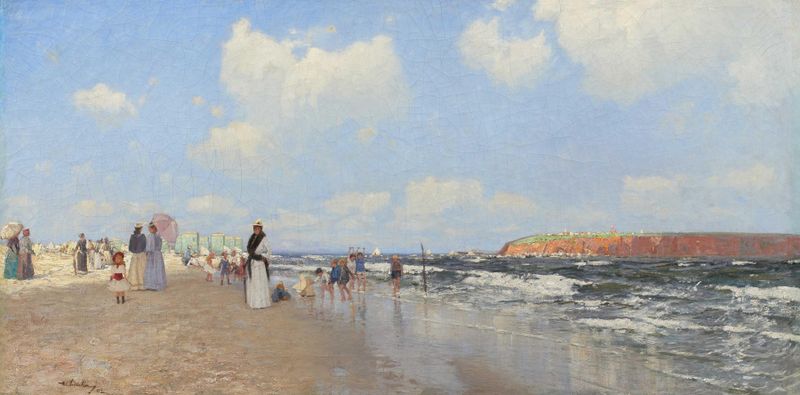
Strandpromenade von Helgoland
Walter Leistikow

Sailing Ships On The Baltic Sea
Walter Leistikow
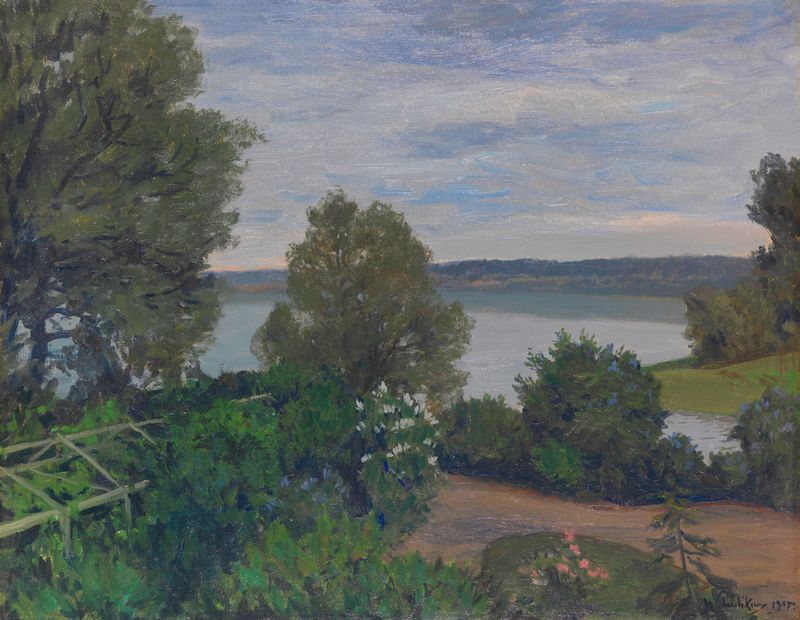
Garten in Grünheide
Walter Leistikow
Grunewaldsee
Walter Leistikow
Grunewaldsee am Morgen
Walter Leistikow
Motiv aus der Mark
Walter Leistikow





