Hamburg Ship — History & Facts
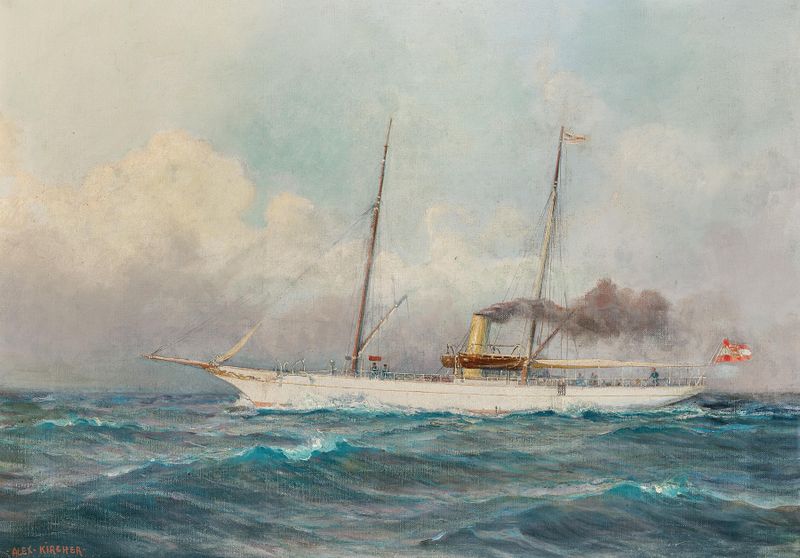
What if silence could speak through light? In Hamburg Ship, the delicate interplay of shadow and illumination whispers tales of isolation and madness, drawing the viewer into a world where chaos and calm coexist. Look to the left at the ship, its form stark against the muted hues of the harbor. Notice how the light dances upon the water, creating ripples that seem to echo the tumultuous emotions reflected in the vessel's silhouette. The precise lines of the ship contrast sharply with the amorphous shapes of the surrounding waves, invoking a sense of uncertainty and disarray.
The color palette, dominated by dark blues and grays, enhances the brooding atmosphere, while the subtle brightness of the sky hints at an impending storm—both literally and metaphorically. Amidst this tranquil yet tense scene, one can feel the weight of solitude permeating the air. The ship stands as a metaphor for madness, suspended in a moment of despair and longing. Its stillness speaks volumes, as if to suggest that the vastness of the sea carries secrets of those who dared to navigate through darkness.
The juxtaposition of the solid ship against the fluidity of the water serves as a reminder of the fragility of sanity amidst chaos, reflecting the internal struggles we often face. Created during an unspecified time in his career, the artist was navigating a complex artistic landscape where the boundaries between realism and abstraction were being challenged. Although little is known about Kircher, his work resonated with the emotional undercurrents of his time, capturing a moment where the weight of existence and the specter of madness intertwined.