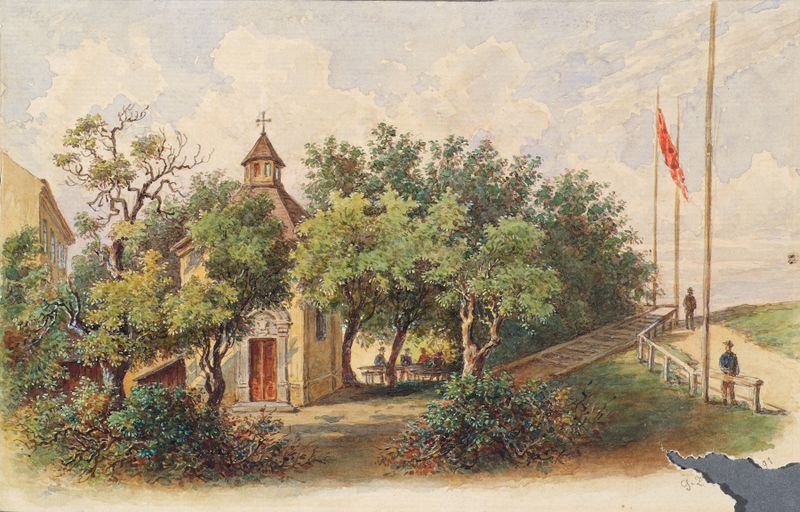
Haspel und Schaukel im Wurstelprater in Wien — History & Facts
Is this a mirror — or a memory? Underneath the chaos of life lies a deeper reflection of joy and nostalgia, waiting to be uncovered. Look to the left at the swirling shapes of laughter captured in the vibrant hues of reds and yellows, the joyous chaos of a carnival scene that leaps from the canvas. Notice how the bold brushstrokes create a sense of movement, as if the figures are caught in an ecstatic dance, while the intricate details of the carousel invite your eyes to explore the myriad of expressions that crowd the scene. The artist’s choice of colors pulsates with energy, echoing the exhilaration of a fleeting moment—one that seems almost tangible yet forever out of reach. Diving deeper, we find a juxtaposition of joy and fleetingness, encapsulated in the jubilant figures against a backdrop that hints at the ephemeral nature of celebration.
The shadows that carve through the bright colors suggest the lurking inevitability of time; laughter rises like smoke but dissipates just as quickly. Each face tells a story—their smiles are tinged with a bittersweet quality, perhaps echoing the chaos of life itself, a reminder that even in moments of joy, the specter of nostalgia lingers. In 1900, Gustav Zafaurek painted this vibrant scene amidst a Vienna that was pulsating with change. The city was at the heart of cultural evolution, where artistic movements began to intertwine and challenge traditional boundaries.
Zafaurek, immersed in this vibrant milieu, captured the spirit of the era—a blend of exuberance and uncertainty that defined both his life and the world of art during this transformative period.