
Haven van Vlissingen, met inkomende zeilschip — History & Facts
Who listens when art speaks of silence? In the tranquil embrace of Haven van Vlissingen, met inkomende zeilschip, the stillness of the harbor resonates with the weight of mortality. Look to the center, where the majestic sailing ship slices through the glimmering water, its presence both commanding and fragile. The light dances upon the waves, creating a shimmering pathway that guides the viewer’s gaze towards the distant shore, where buildings stand sentinel beneath a soft, overcast sky. The muted palette of blues and greys enhances a sense of calm, while subtle hints of warmth in the sails suggest fleeting moments of life and vigor. Within this moment lies a profound tension between permanence and transience.
The ship, a symbol of adventure and freedom, appears vulnerable against the expansive sea, a reminder of nature's vastness. Meanwhile, the quiet harbor, with its silent structures and absence of human figures, evokes the poignant awareness of absence, hinting at lives once lived in the bustling world, now hushed by time. This juxtaposition invites contemplation of our own journeys and the ephemeral nature of existence. Created between 1838 and 1894, the artist painted this work during a period of great change in the Netherlands, where maritime activities were central to the economy and identity.
As a member of the Dutch Romantic movement, he sought to capture the beauty of his homeland while grappling with the tension between human ambition and the inexorable march of time, reflecting both personal and societal narratives through his evocative landscapes.
More Artworks by Jacob Eduard van Heemskerck van Beest
Browse all →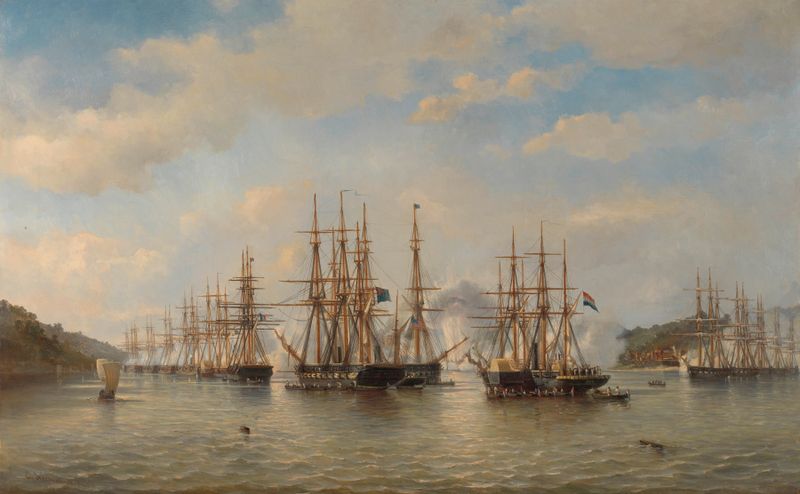
Dutch, English, French and American Squadrons in Japanese Waters during the Expedition led by the French Commander Constant Jaurès, September 1864
Jacob Eduard van Heemskerck van Beest

Redding op zee
Jacob Eduard van Heemskerck van Beest
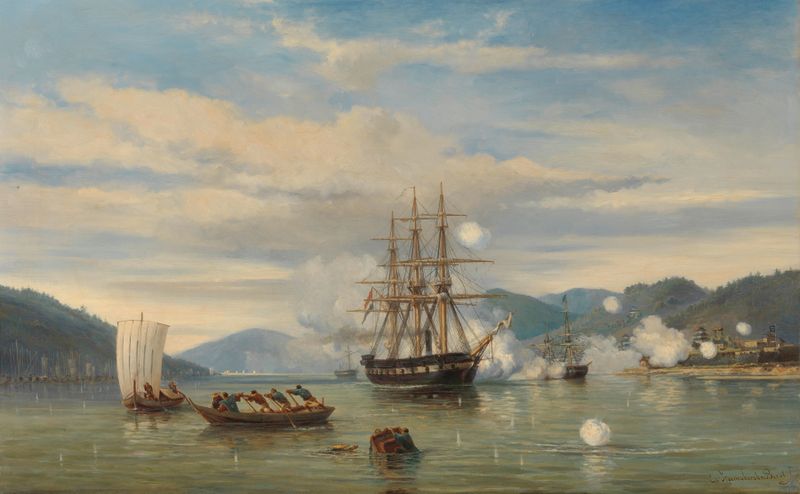
HMS Steam-Powered Battleship Medusa Opening the Shimonoseki Straits
Jacob Eduard van Heemskerck van Beest





