
HMS Steam-Powered Battleship Medusa Opening the Shimonoseki Straits — History & Facts
The battleship looms, a formidable titan cutting through the mist as dawn breaks, illuminating the Shimonoseki Straits. The tension in the air is palpable; each soldier stands alert, their breath mingling with the crisp morning fog. The ship's steam billows skyward, a symbol of progress and impending conflict, while the distant silhouettes of land appear as ghosts, waiting to awaken history. Look to the left at the robust hull of the Medusa, painted in deep navy and accented with copper and brass details that glimmer like promises of might.
Notice how the light dances across the surface of the water, creating a mirror of reflections that suggest both serenity and turmoil. The movement of the waves, rendered with a delicate touch, contrasts with the rigid structure of the battleship—each brushstroke a whisper of the power contained within this mechanical beast. Beneath the surface of this maritime scene lies a profound narrative about change and the tensions of modernity. The ship represents not just military strength but also the relentless march of technology, poised against the backdrop of an ancient land.
The contrast between the organic shapes of the waves and the angular lines of the battleship hints at the inevitable clash between tradition and the new world order, a moment frozen in time yet brimming with urgency. In 1864, the artist created this work during a period of significant naval advancements and shifting geopolitical dynamics. Living in the Netherlands, van Heemskerck van Beest was profoundly influenced by the era's technological innovations. His focus on steam-powered ships mirrored the changing tides of warfare and exploration, encapsulating a moment when the world was awakening to modernity, heralding both opportunity and conflict.
More Artworks by Jacob Eduard van Heemskerck van Beest
Browse all →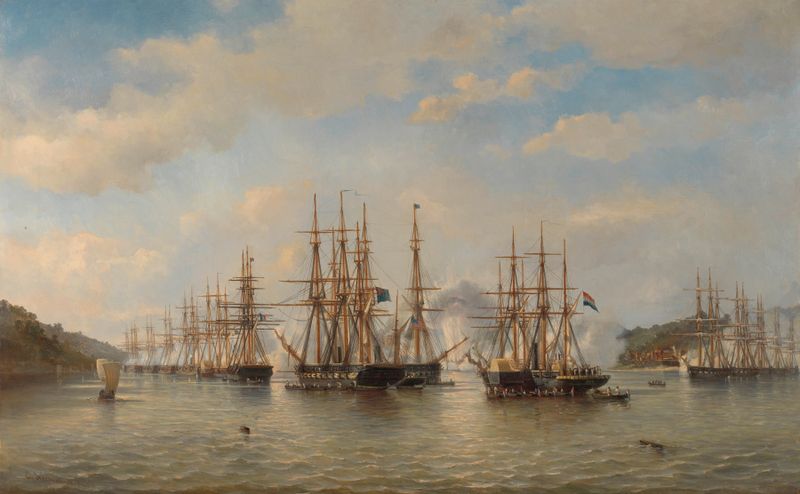
Dutch, English, French and American Squadrons in Japanese Waters during the Expedition led by the French Commander Constant Jaurès, September 1864
Jacob Eduard van Heemskerck van Beest

Redding op zee
Jacob Eduard van Heemskerck van Beest

Haven van Vlissingen, met inkomende zeilschip
Jacob Eduard van Heemskerck van Beest
More Historical Art
Browse all →
The Night Watch Militia Company of District II under the Command of Captain Frans Banninck Cocq
Rembrandt van Rijn

Lincoln Memorial
Henry Bacon

The Third of May 1808
Francisco de Goya

Isaac and Rebecca, Known as ‘The Jewish Bride’
Rembrandt van Rijn

The Charge of the Mamelukes (1814)
Francisco de Goya

De vier ruiters van de apocalyps
Albrecht Dürer