Hayes Common — History & Facts
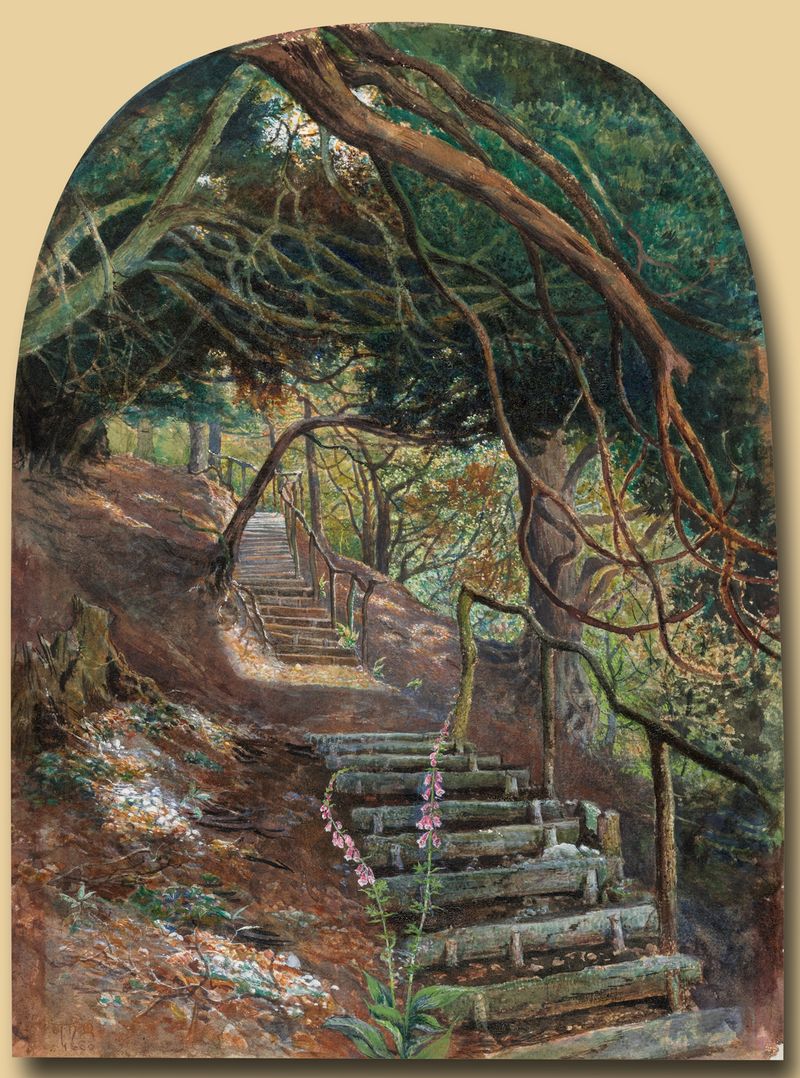
Could beauty survive in a century of chaos? This question lingers like a whisper in the shadows of Hayes Common, a work that wrestles with the tension between the natural world and human impact. Look to the foreground, where lush greenery unfurls under a soft, dappled light. The intricate brushwork captures each blade of grass and leaf with a tenderness that draws the eye, inviting the viewer to explore the delicate interplay of light and shadow. Notice how the palette shifts from vibrant greens to deeper, earthier tones as you move back through the composition, creating a sense of depth and inviting you into the tranquil scene. Yet within this idyllic landscape lies a deeper exploration of harmony and dissonance.
The serene beauty of the common might suggest a refuge, yet the absence of figures hints at an absence of life, evoking a sense of longing. The interplay between the untouched nature and the implications of encroaching civilization raises questions about preservation—are we witnessing a celebration or a lament for what might be lost? William Henry Millais likely created this piece during a period marked by rapid industrial change and artistic evolution. Active in the mid-19th century, he was part of the Pre-Raphaelite Brotherhood, a group that sought to challenge conventional art.
In a world on the cusp of modernity, his work reflects both an appreciation for the beauty of the past and a meditation on the future, capturing the restless spirit of his time.