On the East Lyn, North Devon — History & Facts
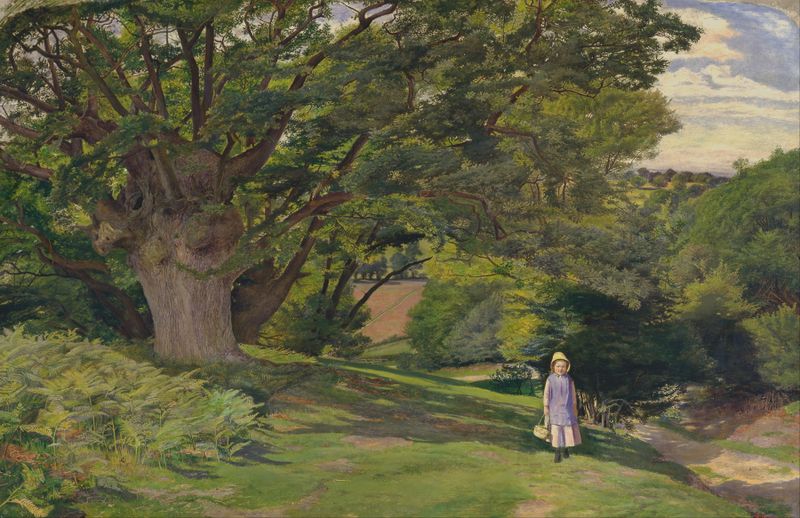
In a world that rushes forward, art becomes a vessel for nostalgia, capturing moments that slip through our fingers like grains of sand. Look closely at the center of the canvas, where a meandering river flows through a vibrant landscape. The lush greens and golden browns invite the viewer to breathe in the essence of nature, while soft light dances upon the water’s surface, reflecting the sky’s delicate blues. The meticulous brushwork breathes life into each leaf and ripple, drawing your gaze deeper into the serene tranquility of this idyllic setting. Hidden within the scene is a subtle interplay of light and shadow that speaks of duality — the tranquil beauty of nature juxtaposed with the relentless passage of time.
The figures seated by the riverbank, perhaps in quiet contemplation, evoke a sense of shared solitude, hinting at their stories and memories intertwined with the landscape. The rich color palette not only captures the physical beauty but also suggests an emotional resonance, prompting viewers to reflect on their own connections to places and moments lost. William Henry Millais painted this work around 1865, during a period marked by the Pre-Raphaelite movement's exploration of nature and emotion. Living in England, Millais was immersed in a world undergoing rapid industrialization, which stirred a longing for the pastoral and the timeless.
As he sought to fuse natural beauty with intricate detail, he expertly navigated the tension between progress and preservation, crafting a piece that remains a poignant reminder of creation and the beauty of remembrance.