Steps in a Garden — History & Facts
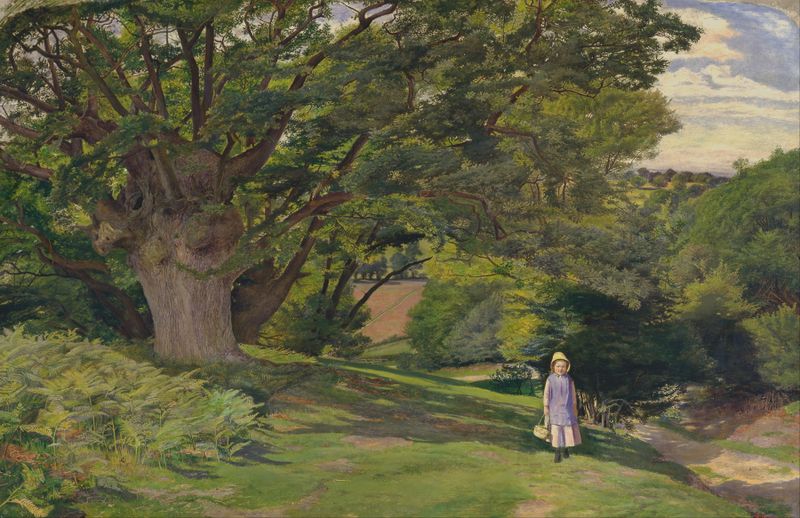
Sunlight filters through the verdant foliage, casting dappled shadows upon the cobblestone path. A young girl in a white dress, her hair a cascade of gold, kneels beside a flowerbed, lost in a moment of quiet contemplation. Nearby, a boy stands with a curious expression, his gaze fixated on her delicate hands, as if she holds the secret to an enchanting world beyond their garden. Look to the left at the girl’s gentle posture, her fingers delicately cradling a blooming flower.
Notice the care with which she tends to nature, each petal a testament to innocence and reverence. The soft palette of greens and yellows harmonizes beautifully with the rich earth tones of the path, creating an inviting yet serene atmosphere. The meticulous brushwork captures both the textures of the flowers and the subtle play of light that enhances their vibrancy. Beneath the surface lies a palpable tension between childhood exuberance and the inevitable passage of time.
The contrast between the blossoming flora and the two children hints at a fleeting innocence, suggesting that these moments are transitory and precious. The boy’s enraptured gaze reflects a yearning for understanding, a desire to grasp the beauty of existence even as it slips away, underscoring the theme of destiny woven into the scene. William Henry Millais painted Steps in a Garden in 1860, during a period marked by the Pre-Raphaelite movement's growing influence. Millais was deeply involved with this group, which sought to challenge conventional art through vibrant realism and emotional depth.
At this time, he was also navigating personal transformations, including his own rising fame and the complexities of artistic innovation, which reshaped the landscape of Victorian England.