Haymaking, a horsecart — History & Facts
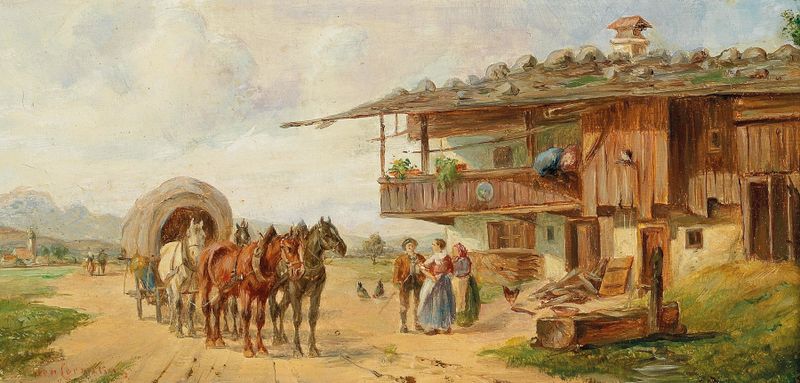
What secret hides in the quiet of the canvas? The stillness of a rural landscape often conceals stories of decay and renewal, whispering the passage of time through the rustling of hay. Look to the center where the weathered horsecart sits, its wooden frame etched with lines of age and neglect. The faded greens and browns of the surrounding fields blend into a hazy horizon, creating a sense of serene desolation. Notice how the light casts gentle shadows across the cart, drawing attention to the textures of its peeling paint and the lush, overgrown grass, each element a testament to life’s inevitable cycle of growth and decline. A poignant contrast exists between the vitality of nature and the stillness of human endeavor.
The cart, once a vessel of productivity, now stands as a monument to forgotten labor, each splinter and crack hinting at stories of harvest and toil. The soft brushwork evokes a bittersweet nostalgia, inviting viewers to reflect on their own experiences of loss and the silent beauty found in decay. In a period marked by the rise of modernism, this work emerged from an artist who absorbed the essence of rural life in a changing world. Created during a time when the art scene was shifting towards abstraction, the painting captures a moment of stillness amidst the whirlwind of progress, grounding itself in the memory of a simpler existence and the complexities of human connection to the land.