Post Coach — History & Facts
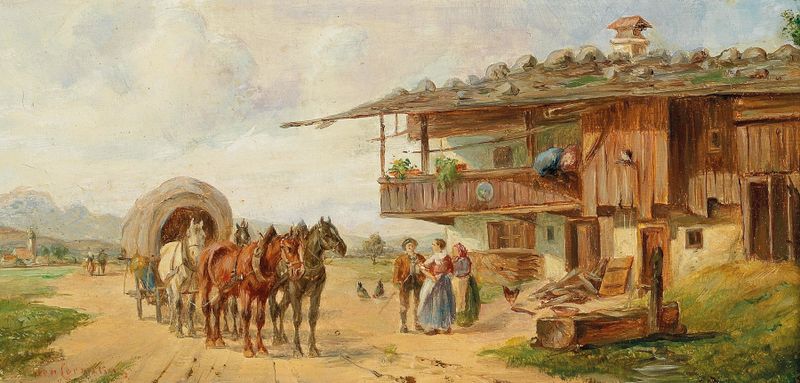
Where does light end, and longing begin? In the silence of a vanished moment, we find ourselves contemplating the delicate interplay between presence and absence. Focus first on the stark contrast of color; notice how the muted palette envelops the scene, enveloping the figures in a haunting atmosphere. The coach, poised at the edge of the canvas, draws the eye with its austere lines, suggesting movement yet remaining steadfast in its waiting. The soft luminescence filtering through the landscape evokes a sense of nostalgia, while the slight curve of the horizon hints at journeys untraveled.
Look closely at the gestures of the figures; their postures convey a poignant stillness, each lost in their own reverie, inviting questions about the nature of their longing. Within this tableau of stillness lies an emotional tension, a void that speaks volumes. The juxtaposition of the robust coach against the ethereal light suggests a dichotomy between the solidity of human endeavor and the ephemeral nature of desire. Shadows deepen around the figures, emphasizing their isolation while simultaneously drawing them together in shared contemplation.
This delicate balance amplifies the sense of yearning—what awaits at the end of their journey if they ever choose to embark? The artist created this work during a time when the art world was shifting, searching for new expressions beyond traditional boundaries. In the late 19th century, as movements like Impressionism began to flourish, artists like Müller-Cornelius sought to capture the emotional weight of fleeting moments. This piece, though undated, reflects the quiet introspection characteristic of his oeuvre, a pause amidst the frenetic energy of an evolving landscape in art.