Labung vor dem Bauernhaus am See — History & Facts
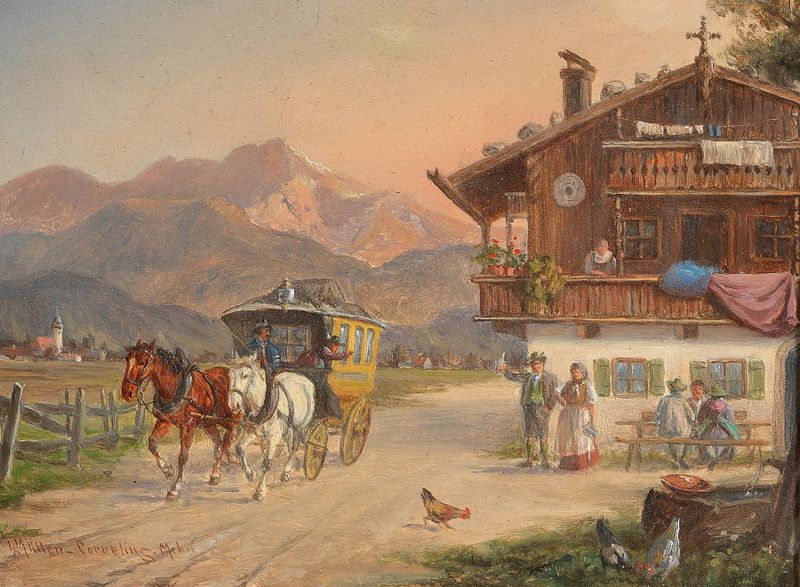
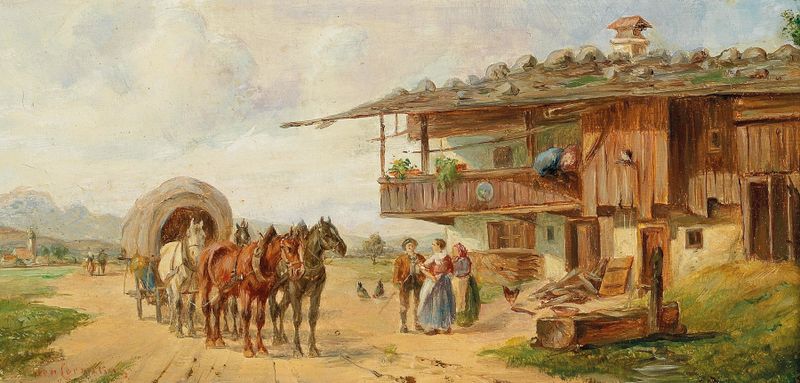
In the stillness of a forgotten moment, a quiet intensity lingers, inviting us to listen to what isn’t being said. Each brushstroke carries the weight of silence, revealing layers of emotion that echo long after the viewer departs. Focus first on the serene lake, whose glassy surface reflects not only the farmhouse but also the weight of the surrounding landscape. The muted colors—earthy browns and gentle greens—invite a sense of harmony.
Notice how the small details, like the delicate ripples in the water, contrast with the sturdy permanence of the structure, suggesting a dialogue between nature and human creation. The soft light filtering through the trees paints a nostalgic warmth, enveloping the scene in a gentle embrace. Hidden within the tranquility of this artwork lies a deeper tension between solitude and connection. The farmhouse, while grounded and solid, stands in stark contrast to the ephemeral beauty of the water and sky.
This interplay hints at the duality of existence—a reminder that life is a tapestry woven from moments of peace and the ache of isolation. The silence enveloping the scene resonates with the viewer, prompting introspection about their own experiences with solitude and belonging. During the time this piece was created, Müller-Cornelius found himself surrounded by a burgeoning appreciation for nature in art, marked by a movement that sought authenticity and emotional depth. Although the exact date remains unknown, the artist's exploration of rural landscapes reflects the period's growing fascination with the simplicity of life outside the urban bustle, capturing an era that wrestled with the balance between progress and preservation.