Haystacks at dusk — History & Facts
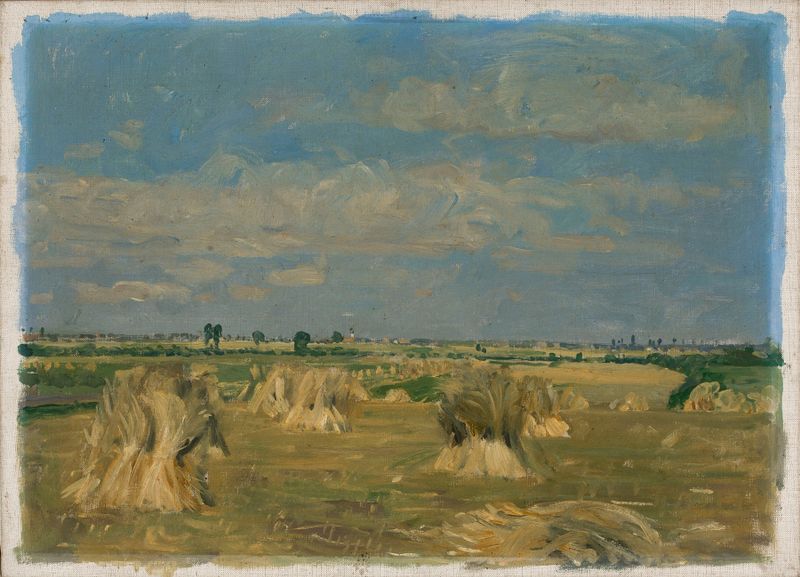
What if silence could speak through light? In the twilight hours, the world softens, revealing nature’s quiet beauty and the subtle awakening of day’s end. Focus first on the horizon, where a gentle gradient of warm oranges and cool purples meets the darkening sky. The haystacks, prominent in the foreground, are bathed in a tender glow, their golden hues contrasting against the encroaching shadows. The brushwork is loose yet deliberate, capturing the texture of the hay, while the atmospheric play of light invites the viewer into this serene moment.
Each stroke seems to breathe, echoing the tranquility that only dusk can bring. Delve deeper into the painting, and you’ll find rich contrasts hidden within. The juxtaposition of light and shadow speaks not only of the day’s end but of the cycles of life. The haystacks, symbols of harvest and labor, remind us of the fruitfulness of existence, now enveloped in the quietude of night.
There is a stillness here that invites reflection — a sense of peace where the energy of the day fades, and the promise of dreams begins to surface. Created during a period of introspection in his life, this work emerged from the artist's time in Germany, where he sought to express the beauty of rural landscapes. The late 19th century was marked by a growing appreciation for natural scenes and the intricacies of light, as artists began to explore more emotive representations of their surroundings. The choice to capture this tranquil moment demonstrates a profound understanding of both nature and the human experience, encapsulating a fleeting but significant moment in time.