Haystacks In A Russian Landscape — History & Facts
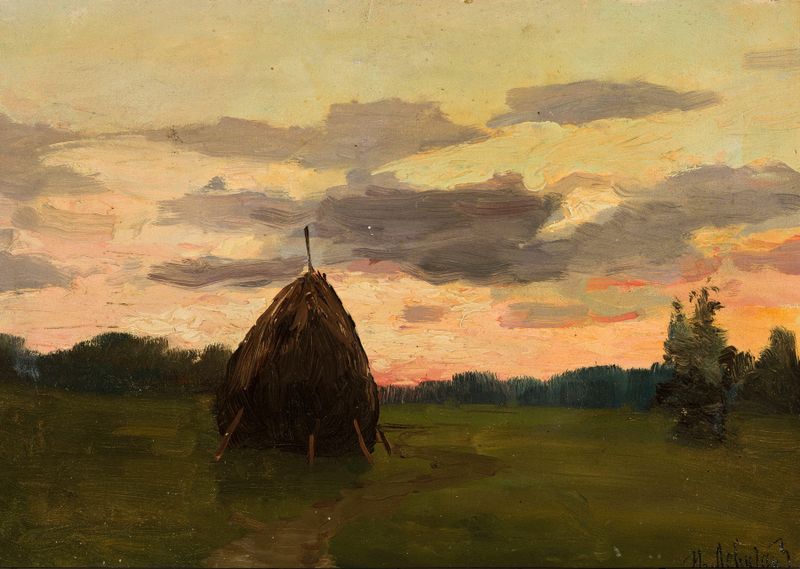
What if beauty was never meant to be finished? The fleeting nature of existence echoes through the landscape, whispering tales of decay and renewal. Look to the left at the gentle slopes adorned with vibrant haystacks, their warm ochres and greens embracing the fading light. The sun casts a soft glow, creating a contrast between the sun-drenched straws and the darkening shadows that encroach from the edges. Notice how the sky, tinged with delicate pastels, mirrors the tranquility of the scene, while thick impasto strokes give texture to the landscape, inviting the viewer to touch the canvas with their imagination. Beneath this serene surface lies an emotional tension; the juxtaposition of life and decay is palpable.
The haystacks, though robust, hint at their impermanence, reminding us that even in nature’s bounty, there is an inevitable decline. The stillness of the scene suggests a pause, a moment suspended in time, where both the beauty of the landscape and the reality of its transience coexist harmoniously. In the late 19th century, while exploring the Russian countryside, the artist captured this essence amidst personal and political upheaval. During this period, the art world was leaning towards realism and impressionism, shifting focus from grand historical themes to the beauty of everyday life.
This work emerged as Levitan sought to express the profound connection between nature and the human experience, giving voice to the silent narratives that unfold in the landscape around us.