Landscape with a haystack — History & Facts
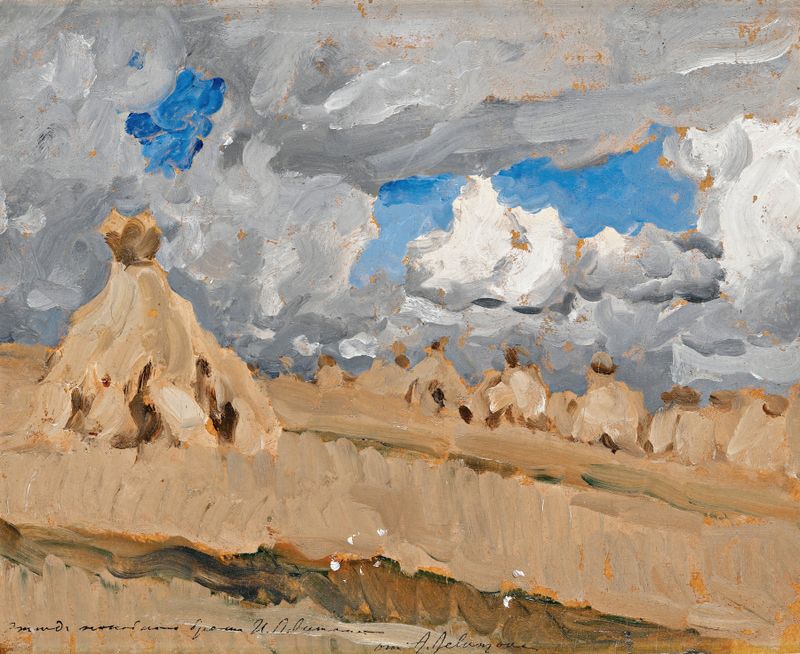
Could beauty survive in a century of chaos? Landscape with a Haystack invites us to ponder this very question, as it captures a fleeting moment of serene tranquility amid the tumult of human existence. Look to the horizon where the gentle sweep of the landscape melds seamlessly with the burnished gold of the haystack, its vibrant hues resonating with the warmth of late afternoon sun. The painter’s brushstrokes breathe life into the scene, each stroke a meditation on nature's rhythm. The soft blues of the sky contrast with the earthy tones of the fields, while a delicate play of light enhances the textures, guiding the viewer's eye to the quiet majesty of the haystack nestled against a backdrop of rolling hills. Beneath the surface, there lies a profound exploration of isolation and connection.
The solitary haystack symbolizes not only the labor of human hands but also the transient beauty of rural life, a reminder of the enduring cycle of seasons. The surrounding emptiness evokes a sense of longing, suggesting the void left by industrialization encroaching upon pastoral landscapes. Here, beauty exists in quiet defiance, standing as a testament to the resilience of nature's calm amidst the impending chaos. Created in 1886, this piece emerged during a period when Levitan was adapting to shifting cultural landscapes in Russia, wrestling with his identity as an artist amid the rise of urbanization.
The work reflects his dedication to capturing the Russian countryside, serving as both an escape and an exploration of personal and national identity during a time of great change in art and society.