View Near Yalta — History & Facts
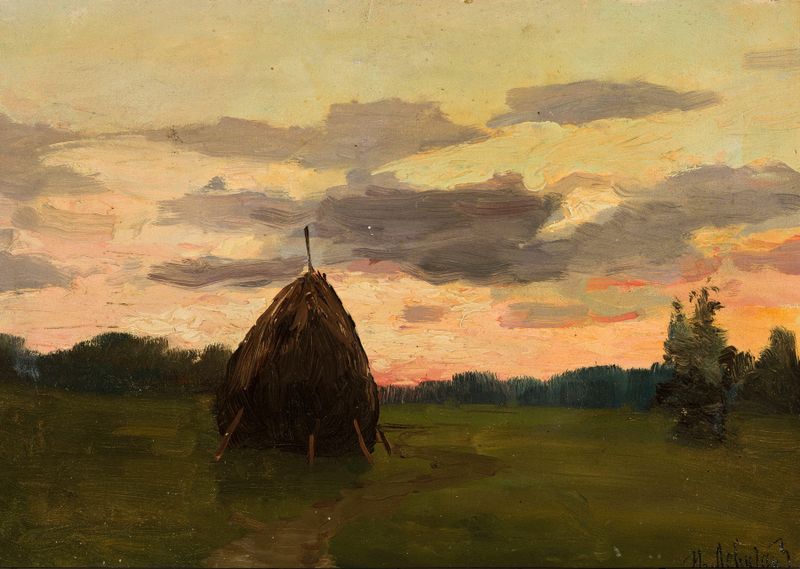
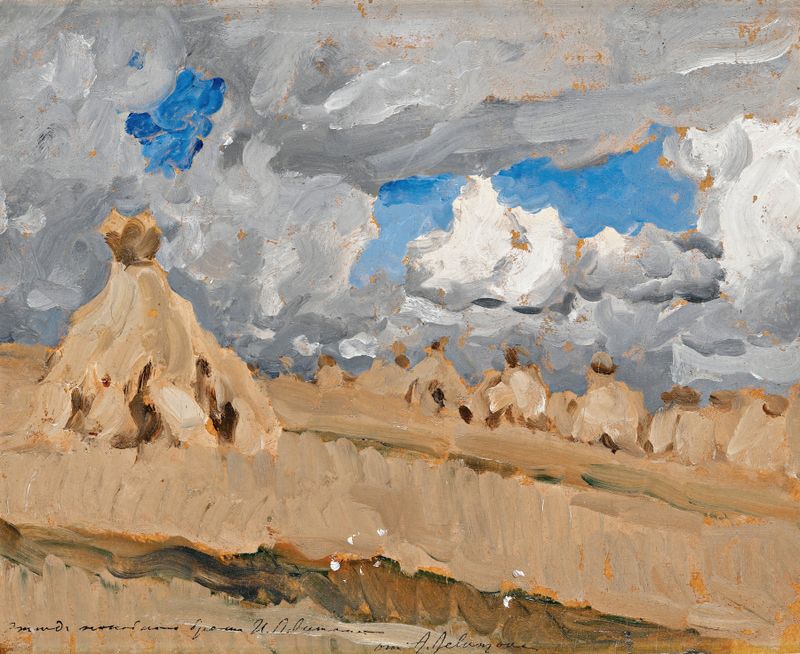
Can paint confess what words never could? In View Near Yalta, the essence of fleeting time captures the viewer, evoking a sense of nostalgia that lingers long after one has stepped away from the canvas. Look to the center, where the tranquil water mirrors the soft hues of a setting sun, its golds and blues blending seamlessly. The brushstrokes breathe life into the trees that frame the scene, their gentle curves guiding the eye toward the horizon. Notice the interplay of light and shadow, with dappled sunlight illuminating the foliage, creating a rich tapestry of color that captivates the senses.
Every detail, from the delicate waves lapping at the shore to the distant mountains, instills a feeling of serenity and invites contemplation. At first glance, the composition may seem idyllic, yet beneath its surface lies a tension between the stillness of nature and the transience of existence. The viewer may feel the weight of time pressing against them; the radiant sky fades into twilight, hinting at inevitable change. This juxtaposition between beauty and impermanence resonates deeply, reminding us that moments, like the colors on the canvas, are both breathtaking and fleeting. Isaac Levitan painted View Near Yalta in 1886 while on the southern coast of Crimea, a period marked by his exploration of landscapes infused with emotion.
At this time, he was establishing himself as a prominent figure in the Russian art scene, embracing themes of nature and introspection. The changing political and social landscape of Russia influenced many artists, including Levitan, pushing him to capture the deep emotional connections between people and their surroundings.