
Heemstede Manor — History & Facts
Can beauty exist without sorrow? In Johannes Janson's Heemstede Manor, the answer intertwines longing and elegance in a deliberate embrace. The painting invites us to ponder the narratives hidden within its refined strokes, where every corner of the canvas resonates with an unspoken yearning. Look first to the sprawling façade of the manor, anchored at the center, its stately columns gleaming under a soft, golden light. The meticulous detail in the architecture draws the eye, while the surrounding lush gardens whisper tales of nature’s tranquility.
Notice how the blue sky, dotted with delicate clouds, contrasts with the vibrant greens, creating a harmony that adorns the scene with an idyllic ambiance. The color palette feels both inviting and melancholic, reflecting a world where beauty coexists with a sense of nostalgia. Delve deeper into the subtleties: the way the garden paths seem to wander off, hinting at stories left untold, or how shadows play around the manor, suggesting the passage of time. This contrast between the pristine presentation of the estate and the encroaching wilderness signifies an inevitable decay, evoking a bittersweet tension.
In the delicate brushwork capturing nature's wildness against human artistry, we find a poignant reminder of fleeting moments, echoing the artist's own contemplations on beauty and the impermanence of life. In 1766, when this work was created, Janson was immersed in the Dutch Golden Age's rich artistic environment. Working in the Netherlands, a time marked by a resurgence of interest in landscape and architectural painting, he faced the personal challenges of an artist striving for recognition amidst a changing cultural landscape. The painting reflects not only his skill but also a deep engagement with the emotional landscape of his era, intertwining beauty with an underlying sense of loss.
More Artworks by Johannes Janson
Browse all →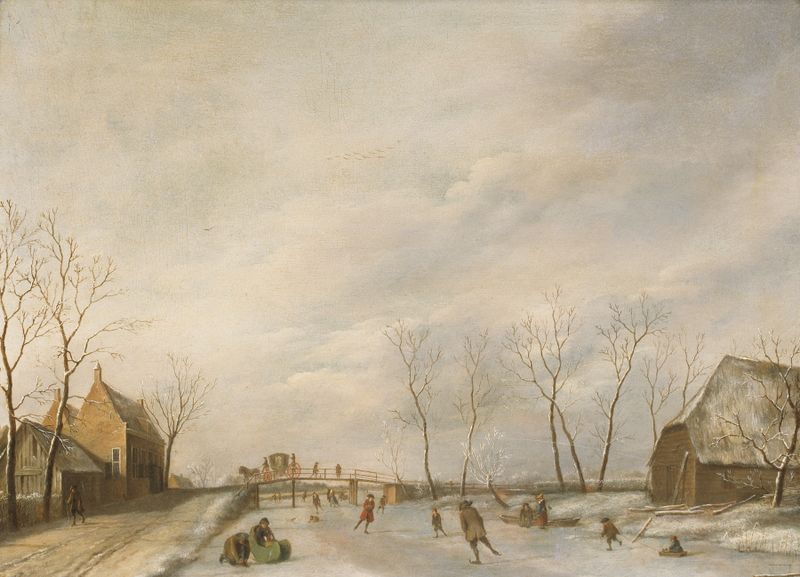


More Architecture Art
Browse all →
The statue of Liberty
Frédéric Auguste Bartholdi

View of Houses in Delft, Known as ‘The Little Street’
Johannes Vermeer

View of Houses in Delft, Known as ‘The Little Street’
Johannes Vermeer

The Cathedral in Rouen. The portal, Grey Weather
Claude Monet

The yellow house
Vincent van Gogh

The Church in Auvers-sur-Oise, View from the Chevet
Vincent van Gogh