A Formal Garden — History & Facts
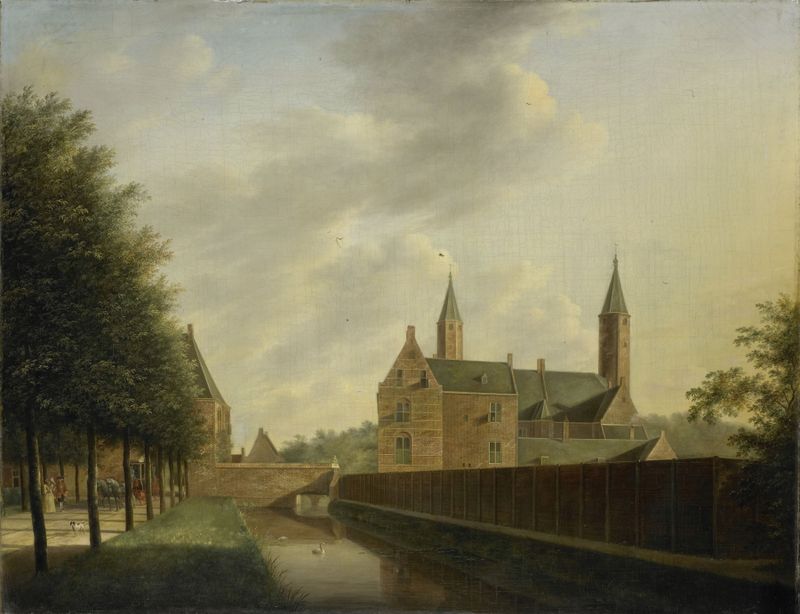
In the heart of a meticulously arranged garden, sunlight spills through the branches, illuminating a serene gathering. A group of elegantly dressed figures strolls amidst vibrant blooms, their laughter mingling with the soft rustle of leaves. The air is thick with the scent of flowers, as nature and human artistry intertwine in perfect harmony. Look to the center of the canvas, where an intricately designed path invites the eye to wander deeper.
Notice how the vibrant greens of hedges contrast with the pastel hues of blossoms, creating a visual symphony. Delicate brushwork captures the texture of petals, while the sunlight dapples across the scene, highlighting the meticulous balance achieved through symmetry in the layout. Every element feels intentional, drawing viewers into a world where nature is tamed yet thriving. The figures in the painting embody a duality of presence and absence, a balance between interaction and solitude.
Observe how one figure stands slightly apart, gazing at the flowers, reflecting the inner contemplation of beauty. This contrast between the lively group and the solitary moment provokes a deeper understanding of our relationship with nature—are we merely observers, or part of the garden's flourishing life? Furthermore, the rigid structure of the garden hints at the constraints of society, even as nature's wildness seeks to assert itself. Johannes Janson created A Formal Garden in 1766, amidst a flourishing artistic movement in Europe known for its adherence to classical ideals. Living in a time when Nature was seen both as a subject for reverence and an opportunity for human expression, he crafted this piece to reflect the harmony and balance sought in both art and life.
The era was marked by a growing fascination with gardens as symbols of order and beauty, making this work a testament to the period’s aesthetic values.