Winterlandschap — History & Facts
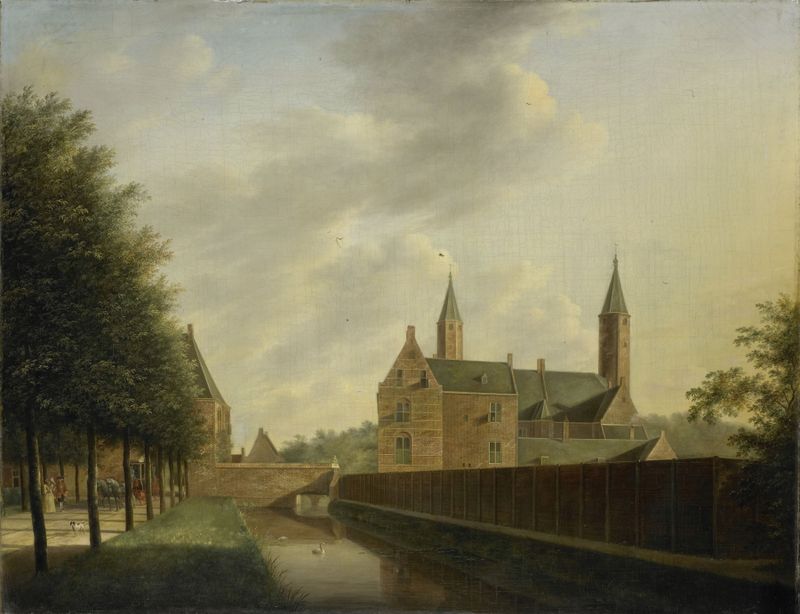
How does one capture the essence of nostalgia, where every lingering chill seems to echo stories of forgotten times? In the quiet of winter, we find a landscape that not only documents the frosted stillness but invites a deeper reflection on memory and loss. Look to the foreground, where the delicate brushstrokes render a blanket of snow, each flake a whisper of history. The soft blues and muted whites create a serene palette, with a soft glow illuminating the trees that stand like sentinels in the cold. Notice how the horizon, painted with soft hues of lavender and gray, draws your eye upward, suggesting a vast, uncharted sky that holds secrets yet to be unveiled. As you absorb the scene, consider the juxtaposition of the barren branches against the snowy expanse.
This tension reflects a duality—beauty intertwined with desolation, a reminder that even in isolation, there is profound grace. The gentle slope of the hills beckons contemplation, inviting viewers to ponder what lies beneath the surface, just out of reach. Each element speaks to the passage of time, a silent witness to the fleeting nature of life itself. Johannes Janson created Winterlandschap during a period when landscapes were evolving into both personal and universal expressions in art.
Though the exact date remains unknown, his work reflects a deep engagement with emotional resonance in nature, characteristic of the late 19th century. During this time, artists were increasingly exploring themes of solitude and nostalgia, mirroring the broader societal shifts of an era grappling with modernity.