Heidelandschaft bei Klein-Sassen in der Rhön — History & Facts
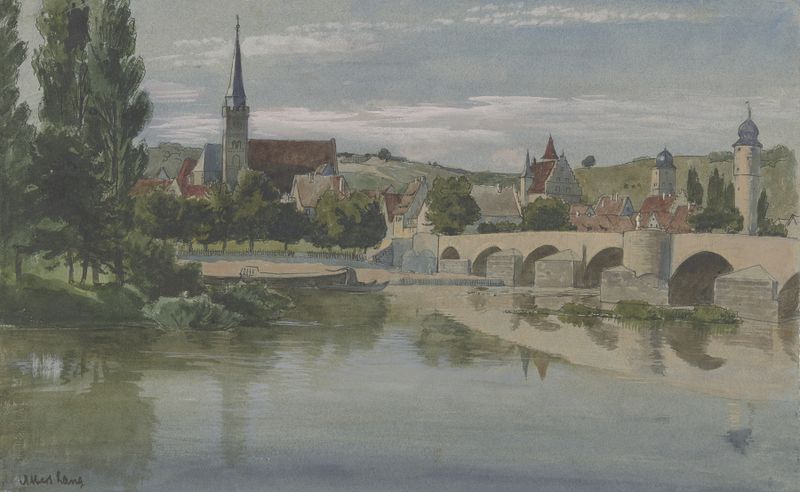
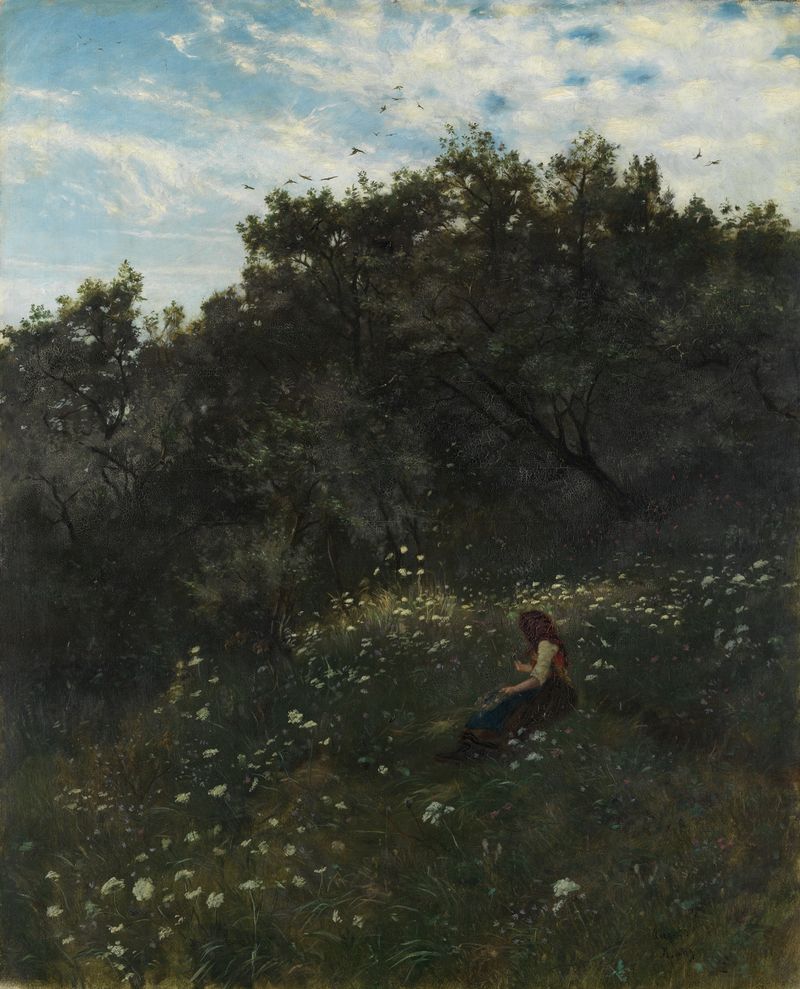
Is this a mirror — or a memory? In Heidelandschaft bei Klein-Sassen in der Rhön, the landscape rises before us, beckoning with the beauty of a serene yet unsettling vista. It invites contemplation, blending the gentle allure of nature with an undercurrent of violent change, a reminder that landscapes can hold histories both beautiful and tragic. Look to the foreground, where the details of wildflowers glide into view — their vibrant hues clash against the muted greens and browns of the fields that extend into the distance. Focus on the rolling hills, each stroke carefully crafted to evoke the texture of the earth, while the sky transitions into twilight.
The use of light, soft yet piercing, captures the moment just before dusk, blurring the lines between tranquility and unrest, as shadows lengthen and a sense of foreboding lingers. Here, the contrasts are rife: the peacefulness of the lush scenery juxtaposed with an underlying tension, hinting at the violence of change wrought by industry or conflict. The viewer may sense a yearning for the untouched, a nostalgia that hangs heavy in the air. Each blade of grass and distant tree stands witness to the evolution of this landscape, suggesting the unseen history beneath its surface, where nature's beauty coexists with the remnants of human intervention. In 1873, Albert Lang created this work during a period of profound transformation in Europe, as the Industrial Revolution reshaped both society and the natural world.
Living in the heart of Germany, Lang was influenced by the burgeoning Romantic movement, which celebrated the beauty of landscapes while grappling with the implications of their alteration. This painting embodies that duality, capturing a moment where beauty and violence intersect in the shifting tapestry of life.