Landschaft bei Lerici — History & Facts
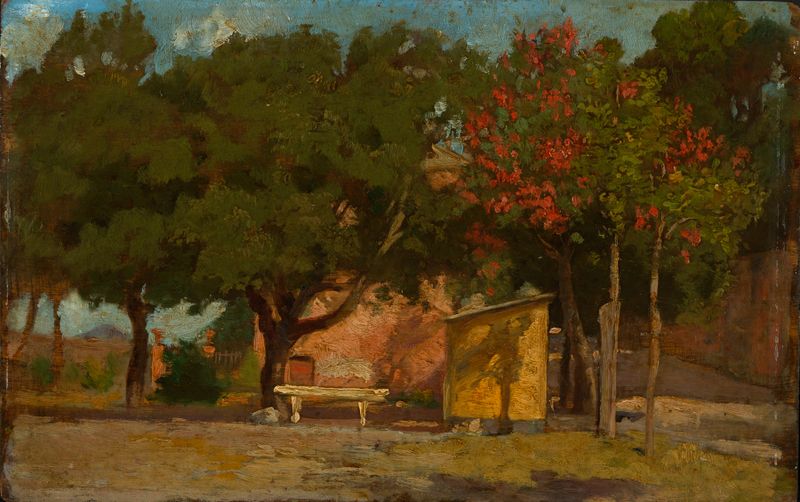
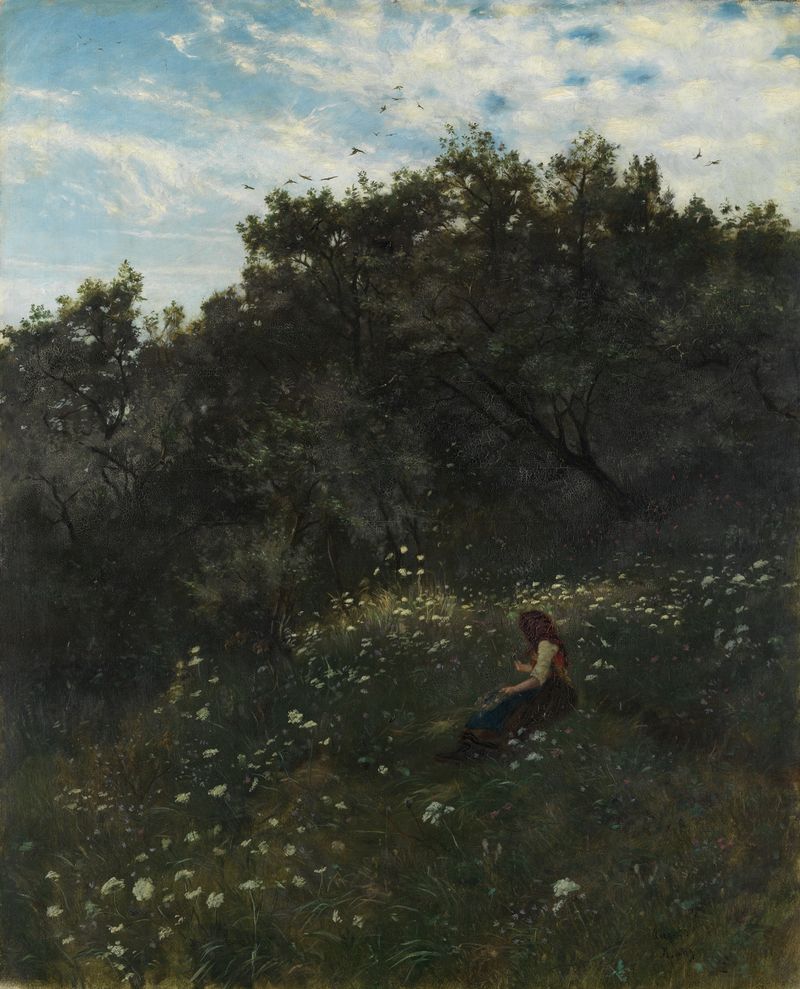
Who listens when art speaks of silence? In Landschaft bei Lerici, the stillness of the landscape whispers truths that resonate deeply within the viewer's soul. Look to the horizon first, where the soft blues and greens of the sky and sea blend seamlessly, creating a serene backdrop. Notice how the gentle brushstrokes capture the undulating hills and the distant shoreline, inviting you to wander its curves. The delicate interplay of light and shadow reveals textures in the foreground, where lush vegetation meets the tranquil waters, suggesting a harmony that invites contemplation. Beneath this idyllic surface lies a juxtaposition of tranquility and absence.
The absence of human figures reinforces a sense of solitude, prompting reflection on nature's unyielding presence. The subtle variations in color intensity evoke a mood of quiet introspection, suggesting that within this landscape lies not only beauty but also an unspoken narrative of longing and peace. This emotional resonance mirrors the complexities of both intimacy and distance in our relationship with nature. In 1874, during a time of significant change in the art world, Albert Lang painted this scene while living in Italy.
The Impressionist movement was gaining momentum, emphasizing light and color over realism. Lang, influenced by this shift, created works that encapsulated the subtleties of his environment, often capturing the essence of stillness in a rapidly transforming world.