Heiligenblut — History & Facts
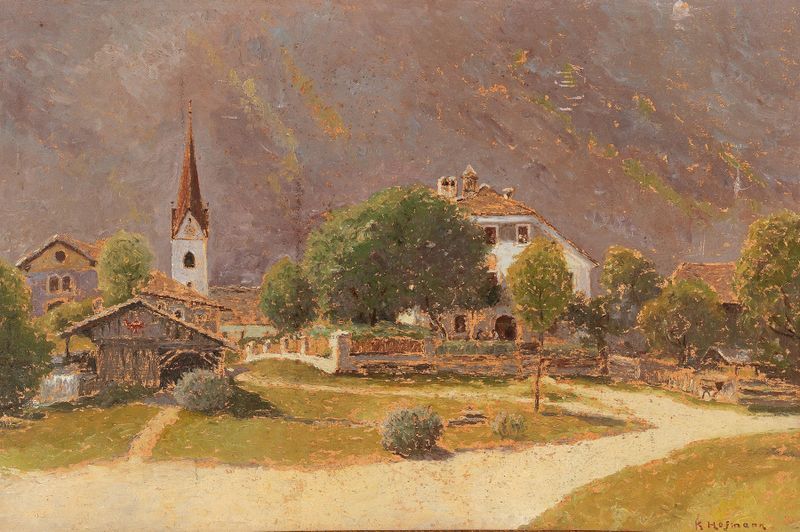
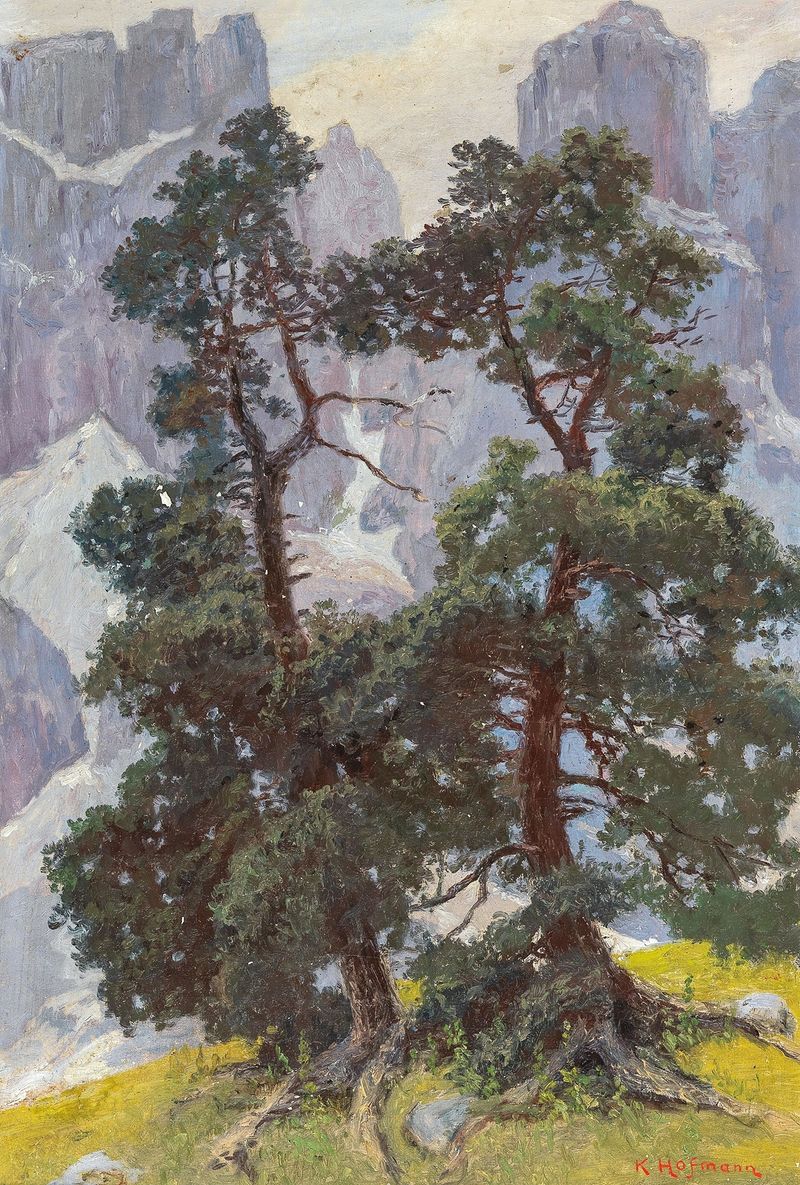
When did color learn to lie? The vibrant hues of Heiligenblut transport us to a moment suspended in time, where the veracity of nature dances with the artist’s imagination. Look to the left at the ethereal glow of the mountains, their towering peaks kissed by the sun’s embrace. Notice how the bold blues and greens intertwine, creating a tapestry of life and light. The artist employs a palette that shifts from the deep, earthen tones of the valley to the striking whites and grays of the snow-capped summits, drawing the viewer’s eye upward and inviting contemplation of the vastness above. Beneath its picturesque surface, the painting encapsulates a tension between serenity and grandeur.
The delicate play of light suggests the fleeting nature of time, as shadows cast by the mountains loom over the valleys—a reminder that beauty is often transient. The juxtaposition of the pastoral village against the formidable backdrop serves as a metaphor for human vulnerability in the face of nature’s immensity. Created during the early 20th century, Heiligenblut reflects Karl Hofmann's exploration of Alpine landscapes while living in Germany. This period was marked by a burgeoning interest in impressionism and a desire to capture emotion through landscape.
Hofmann’s work embodies the spirit of his time, as artists sought to bridge the gap between realism and the emotional undercurrents of color and form.