Herbstlicher Park Mit Einer Treppe — History & Facts
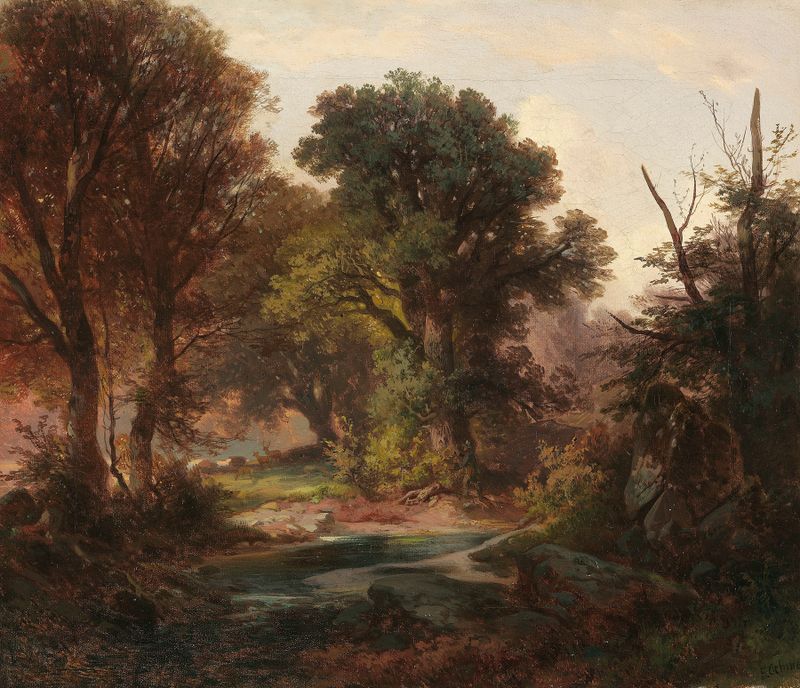
Can paint confess what words never could? The quietude of autumn whispers through the brushstrokes, each color a sigh, each shadow a memory waiting to be unearthed. Look to the center, where a worn staircase winds its way into a park draped in earthy hues. Notice how the deep greens and warm ochres blend with the cool blues of the sky, evoking a transition both serene and somber. The trees stand taller than the stairway, their branches heavy with leaves touched by the season’s change, while the texture of the foliage invites the viewer to step into this moment, if only for a heartbeat. Beyond the surface, the painting wrestles with themes of nostalgia and solitude.
The staircase symbolizes a journey, perhaps upward towards brighter days, yet it seems also to lead into a quiet abyss of reflection. The absence of figures emphasizes the solitude inherent in autumn—a time of change and decay—where beauty is tinged with a bittersweet yearning. Each element, from the fallen leaves to the dense foliage, plays a role in weaving a narrative about the transience of life itself. Around the time this piece was created, Oehme was immersed in the artistic movements typical of early 20th-century Germany, notably influenced by Romanticism and the emerging Expressionist ethos.
His work sought to capture the essence of landscapes, reflecting the emotional undercurrents of the human experience. While the exact date of this particular artwork remains unknown, it embodies the artist's exploration of nature and its profound impact on the soul during a period marked by both personal and societal upheaval.