Watermill — History & Facts
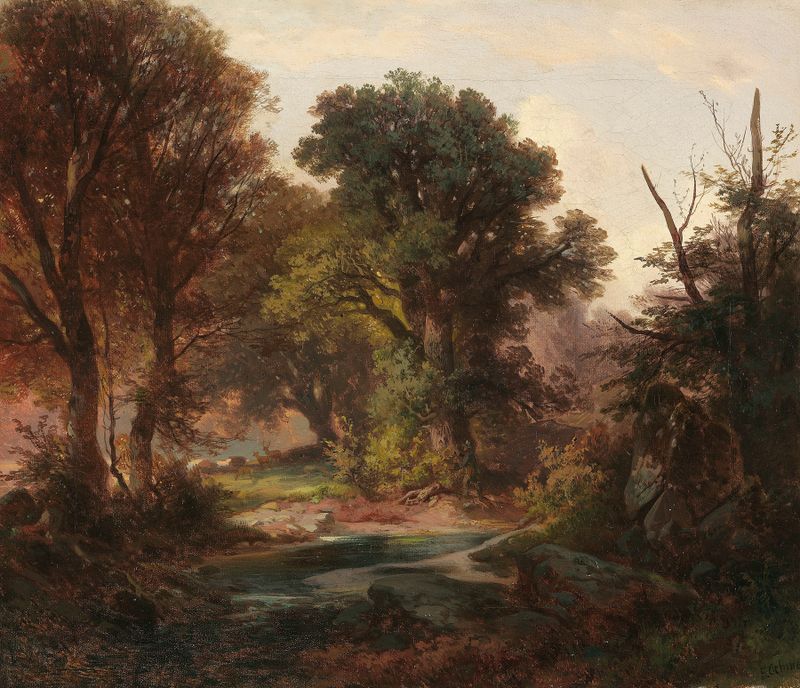
Could a single brushstroke hold eternity? In Watermill, the delicate interplay of nature and humanity captures an ecstasy that resonates through every inch of the canvas. Look to the left at the gentle cascade of water flowing energetically over the mill, its white froth dancing in the sunlight. Notice how Oehme captures the soft greens and browns of the surrounding landscape, reflecting the warmth of a late afternoon as golden rays seep through the trees. The perspective draws your eye toward the mill's rustic structure, where the textured strokes imply movement, infusing the scene with a palpable rhythm. The painting embodies a contrast between tranquility and vitality.
The stillness of the trees and the mill serves as a backdrop to the dynamic water, emphasizing the life force that sustains both nature and industry. The vibrant palette elicits a sense of harmony, yet the unseen labor of the mill speaks to a deeper narrative of human endeavor against the backdrop of an ever-pulsating natural world. Each brushstroke seems to echo the joy and toil that coexist in this serene landscape. In 1870, Oehme was deeply immersed in the Romantic tradition that celebrated the beauty of nature and the sublime experience of life.
Working in Germany, he was influenced by the growing industrialization of his surroundings, which marked a transition in art, reflecting both nostalgia and hope for the future. This piece encapsulates that dichotomy while showcasing his unique ability to marry emotion with landscape, inviting viewers into a moment that feels simultaneously timeless and ephemeral.