
Het stoomschip met hulpzeilvermogen ‘Iris’ — History & Facts
In the careful play of shadow and light, we encounter the silent dialogue between a ship and the elements that surround it. What truths lie in the contrasts of light and dark, urging us to delve deeper into the unseen? Focus first on the shimmering water, where gentle ripples catch the reflections of the vessel. Notice how the light dances across the surface, illuminating the sturdy hull of the ship, while softer shadows envelop its sails.
The interplay of gradients in color—deep blues, warm ochres—brings a vibrancy that hints at both power and fragility, drawing the viewer's eye to the harmonious balance of nature and human craftsmanship. Peering closer, one finds a profound commentary on industry and isolation. The ship, a marvel of human innovation, stands in stark contrast to the vast stillness of the water, evoking both a sense of adventure and an existential solitude. The shadows cast by the sails whisper tales of journeys begun and destinations unknown, symbolizing not just the physical voyage but also the passage through time and memory. In 1901, Mohrmann painted this work during a period of rapid industrial change in Europe, where steam power was revolutionizing transport.
Living in the Netherlands, he was witnessing first-hand the transformation of maritime activities. Amidst this evolving landscape, the artist captured not only a vessel but the very essence of an era teetering between tradition and modernity, a snapshot of a world in flux.
More Artworks by John-Henry Mohrmann
Browse all →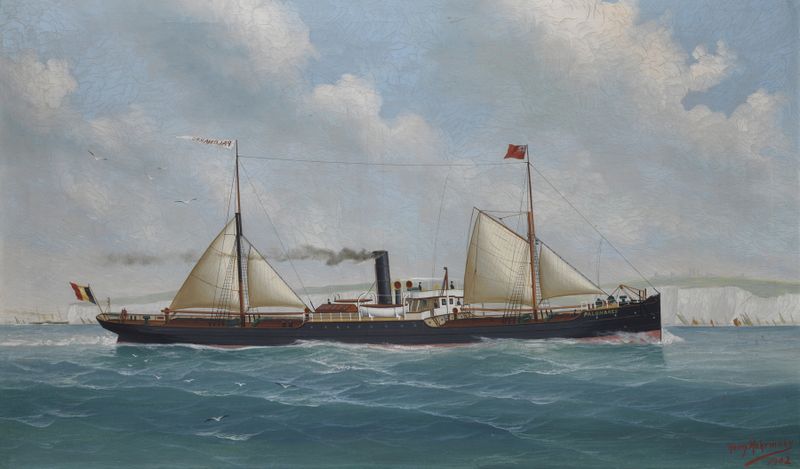
Stoomschip met hulpzeilvermogen ‘Palomares’
John-Henry Mohrmann

Het stoomschip ‘Leopoldville’ voor de Antwerpse rede
John-Henry Mohrmann
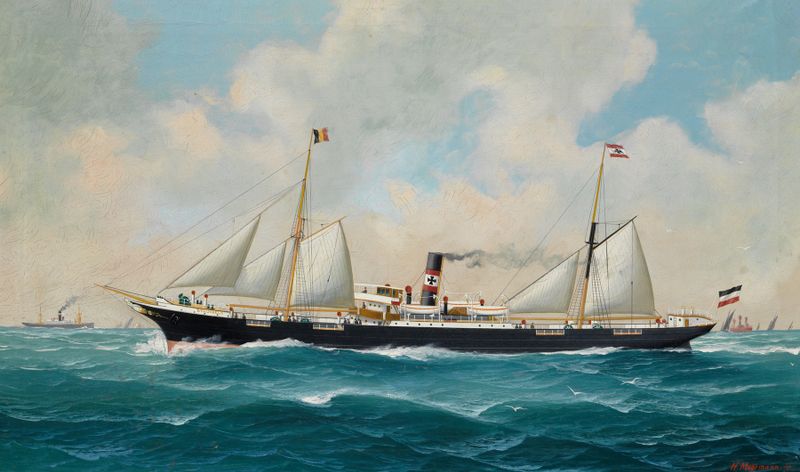
Het stoomschip met hulpzeilvermogen ‘Braunfels’
John-Henry Mohrmann
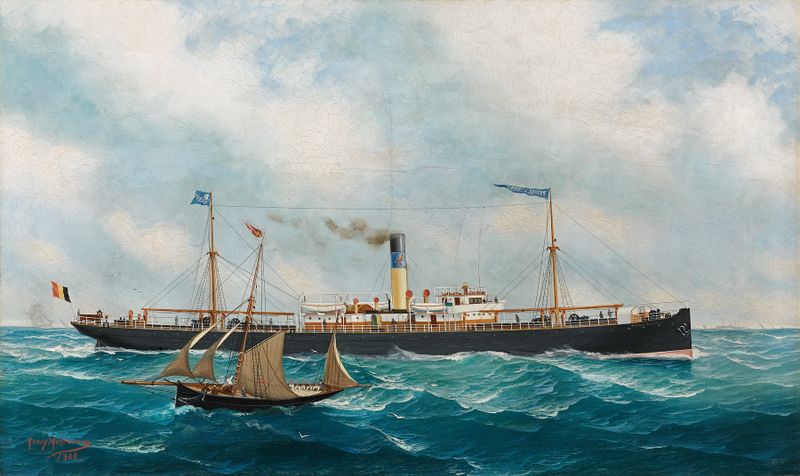
Het stoomschip Prince Albert met vooraan een kotter onder zeil
John-Henry Mohrmann
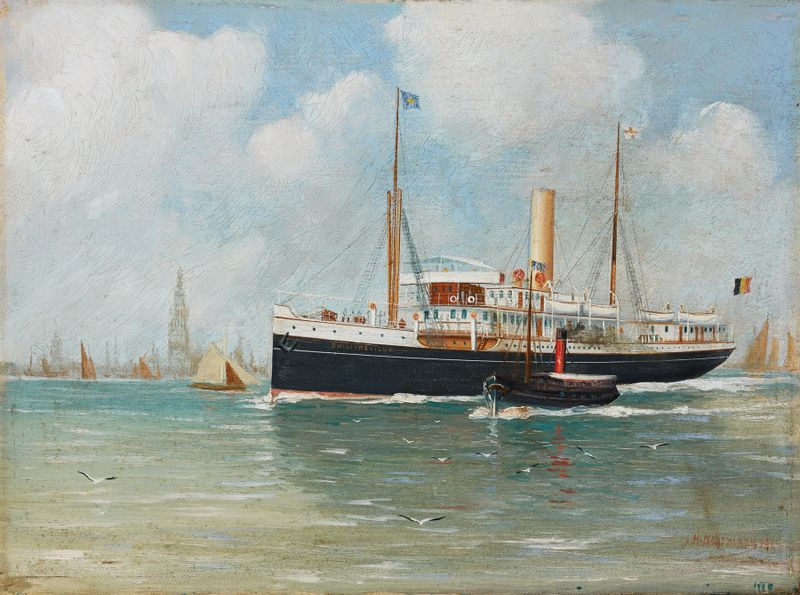
Het stoomschip ‘Philippeville’ voor de rede van Antwerpen
John-Henry Mohrmann

Het stoomschip ‘Stanleyville’ voor de rede van Antwerpen
John-Henry Mohrmann
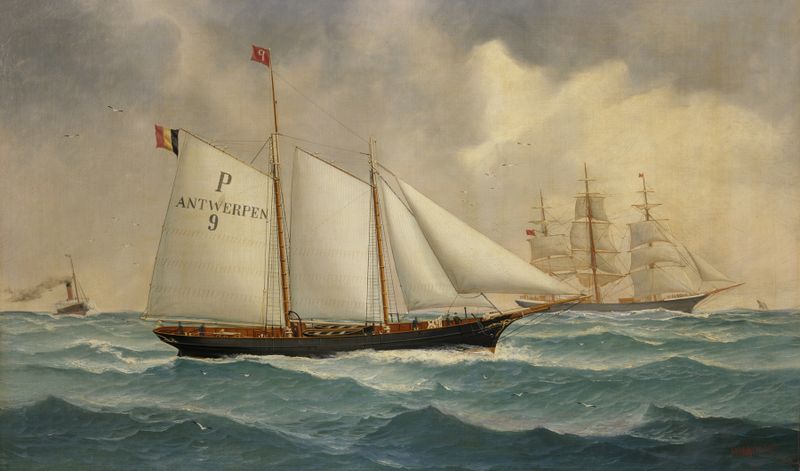
Loodsschoener 9 van het Belgisch loodswezen
John-Henry Mohrmann

Viermastbark en opleidingsschip ‘L’Avenir’
John-Henry Mohrmann
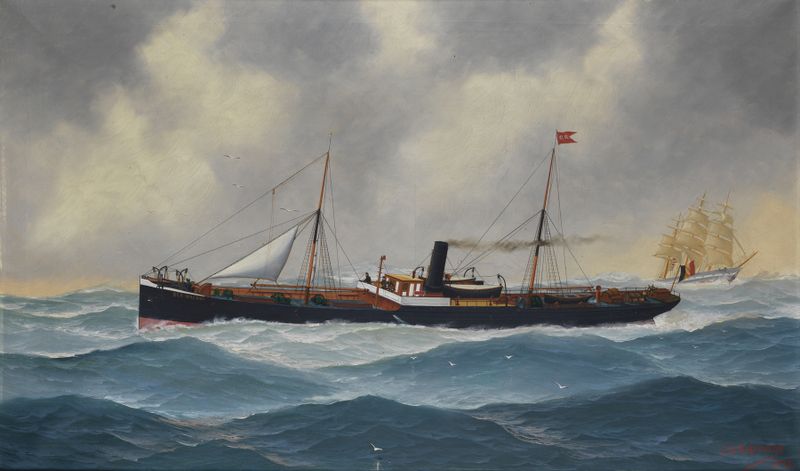
Het stoomschip ‘Ben Macdui’ op woelige zee
John-Henry Mohrmann
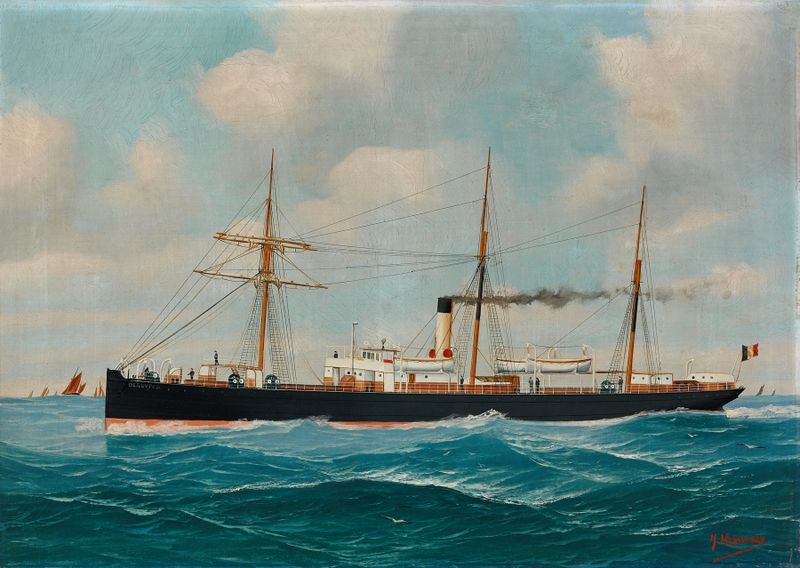
Het stoomschip met hulpzeilvermogen ‘De Ruyter’
John-Henry Mohrmann





