
Het stoomschip met hulpzeilvermogen ‘De Ruyter’ — History & Facts
Could beauty survive in a century of chaos? In Het stoomschip met hulpzeilvermogen ‘De Ruyter’, the essence of maritime elegance is captured amidst the tumult of progress. The painting invites viewers to explore a harmonious convergence of technology and nature, evoking a sense of tranquility that feels almost utopian against the backdrop of a rapidly changing world. Look to the left at the steamship, its sturdy hull gracefully cutting through the waters. Notice how the billowing sails catch the light, a subtle play of whites and blues that evokes both power and serenity.
The delicate interplay of shadow and light creates depth, allowing the ship to emerge as a proud figure amidst a wide expanse of shimmering sea. The soft palette conveys a feeling of hope, while the meticulous attention to detail reflects the artist's deep respect for the maritime tradition. Yet, beneath the surface, tensions emerge: the juxtaposition of steam power against the simplicity of sail evokes a dialogue between innovation and nostalgia. The ship's trajectory hints at a journey, suggesting both adventure and the inevitable passage of time.
The tranquil water surrounding it mirrors not only the vessel’s form but also the uncertainty of the future, as it steers into the unknown. Each brushstroke holds a reflection of ambition and the fragility of beauty in an era marked by evolution. John-Henry Mohrmann painted this work in 1894 during a period of industrial transformation in the Netherlands. While advancements in technology were reshaping society, the artist was deeply connected to his maritime roots, frequently depicting the Dutch nautical life.
This painting reflects a moment when the artist grappled with the intersection of innovation and tradition, capturing the essence of a world on the brink of modernity.
More Artworks by John-Henry Mohrmann
Browse all →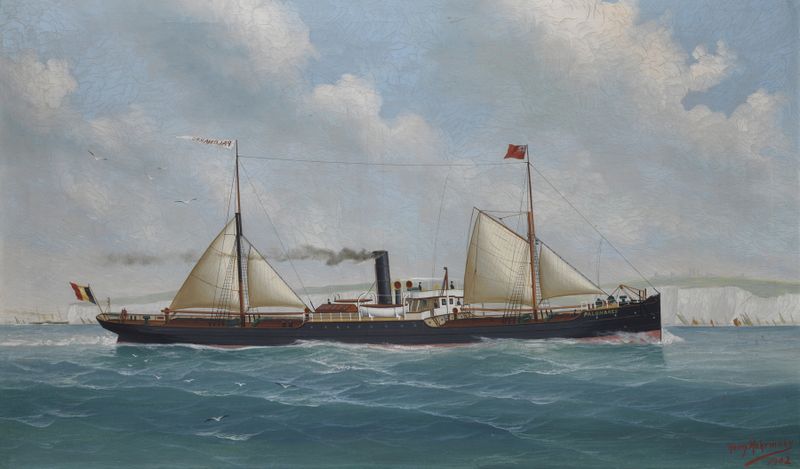
Stoomschip met hulpzeilvermogen ‘Palomares’
John-Henry Mohrmann

Het stoomschip ‘Leopoldville’ voor de Antwerpse rede
John-Henry Mohrmann
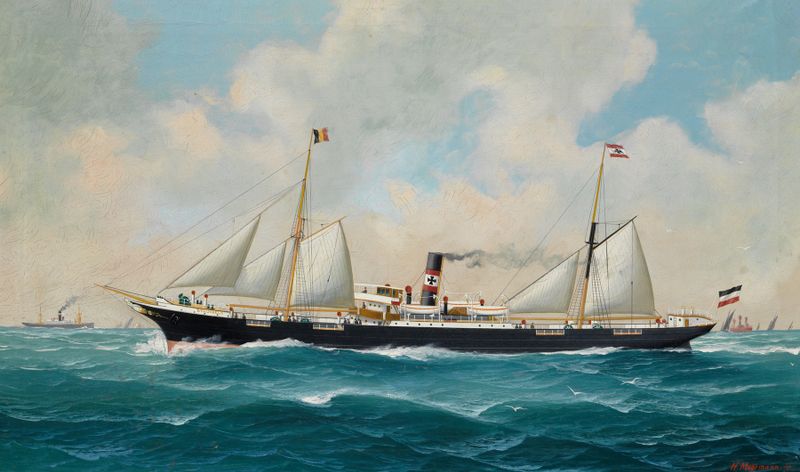
Het stoomschip met hulpzeilvermogen ‘Braunfels’
John-Henry Mohrmann
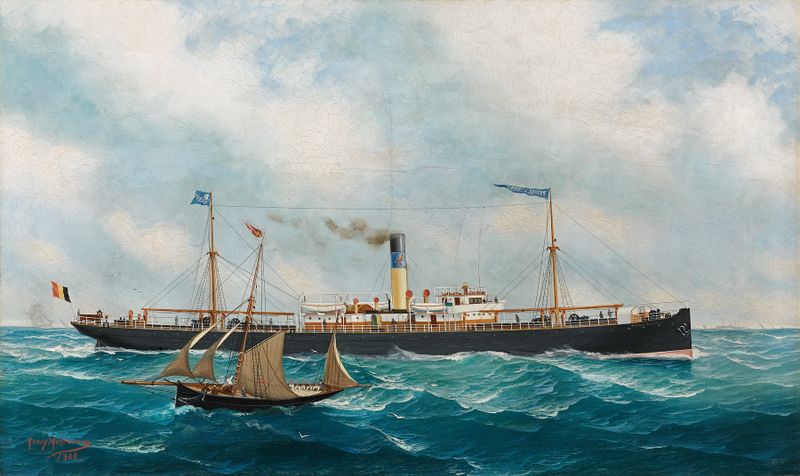
Het stoomschip Prince Albert met vooraan een kotter onder zeil
John-Henry Mohrmann
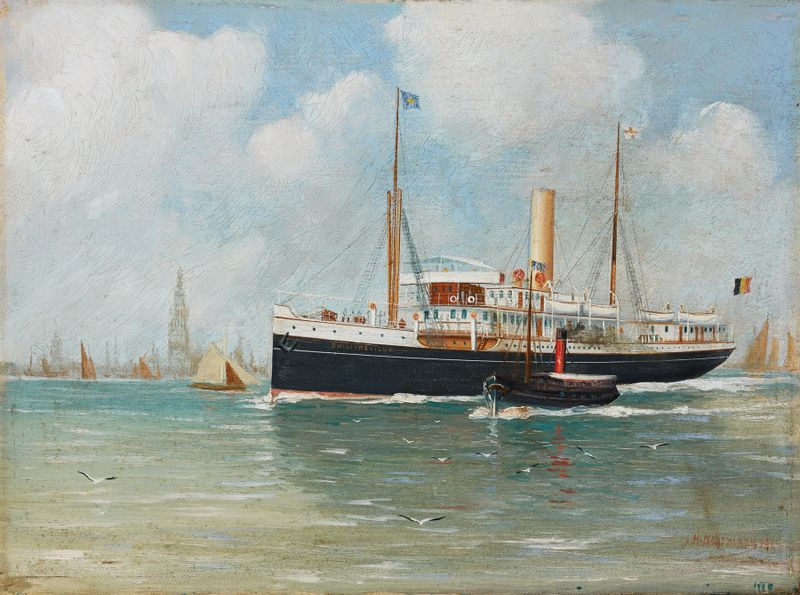
Het stoomschip ‘Philippeville’ voor de rede van Antwerpen
John-Henry Mohrmann

Het stoomschip ‘Stanleyville’ voor de rede van Antwerpen
John-Henry Mohrmann
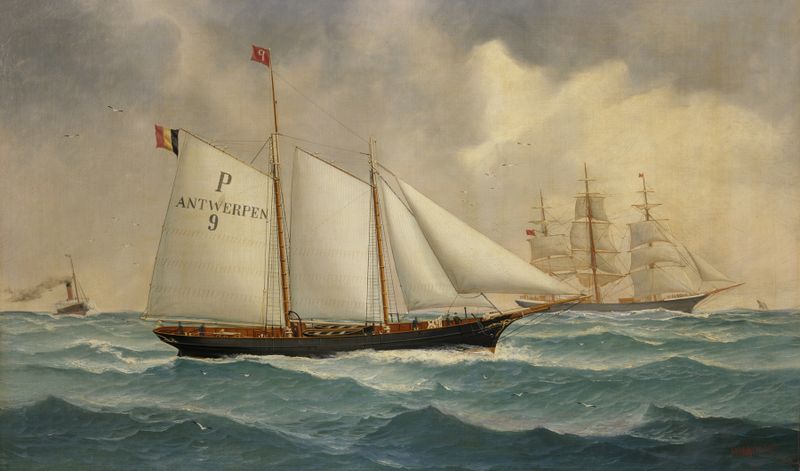
Loodsschoener 9 van het Belgisch loodswezen
John-Henry Mohrmann

Viermastbark en opleidingsschip ‘L’Avenir’
John-Henry Mohrmann
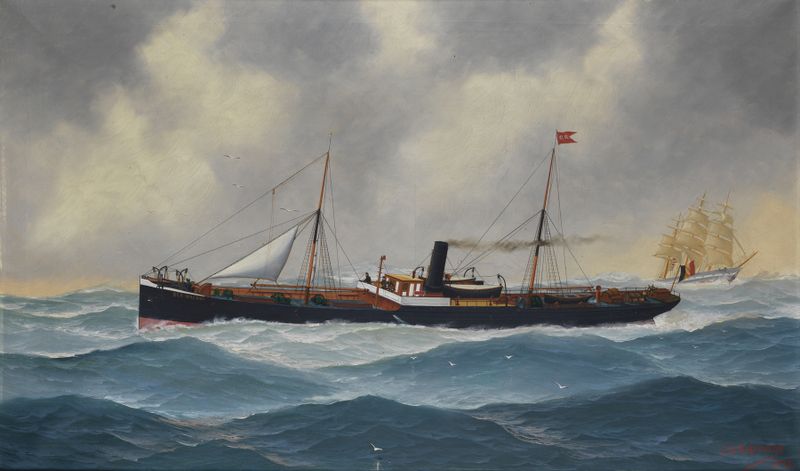
Het stoomschip ‘Ben Macdui’ op woelige zee
John-Henry Mohrmann
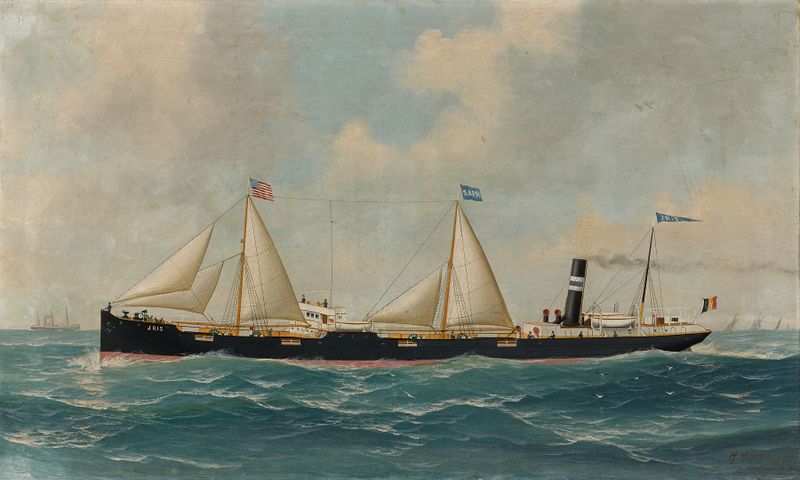
Het stoomschip met hulpzeilvermogen ‘Iris’
John-Henry Mohrmann





