Heuernte — History & Facts
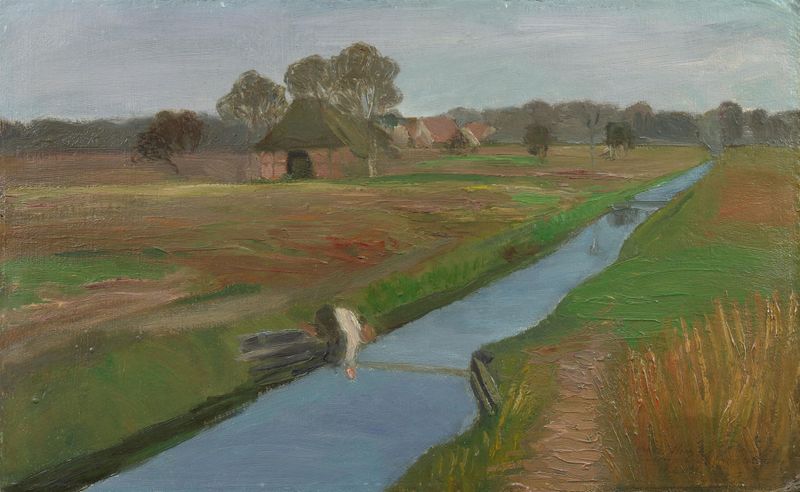
In the delicate interplay of light and form, transformation emerges as a quiet force shaping our perception of nature and labor. Look to the left at the rhythmic sway of golden fields, where sun-drenched strokes of yellow and green converge. The gentle brushwork captures the movement of hay as it is gathered by laborers, their forms harmoniously blending with the landscape. Notice how the soft sunlight weaves through the scene, illuminating the workers’ determined expressions, casting shadow and texture that bring depth to their toil. The juxtaposition of vibrant earth tones against the serene azure sky evokes a sense of balance, yet hints at the labor behind seasonal change and harvest.
Each figure, with their unique gesture, embodies the essence of collective effort, revealing a deeper narrative of community and resilience. The convergence of color and form suggests an eternal cycle—life, work, and the transformative nature of the seasons. Fritz Mackensen created Heuernte in 1909, a period marked by artistic experimentation and a growing interest in the harmonies of rural life. At this time, Mackensen was deeply engaged with the Worpswede artist colony in Germany, where he explored the connections between humanity and the natural landscape.
As industrialization loomed, his work sought to capture the enduring spirit of agrarian existence, reflecting both personal and societal transformations within an evolving world.