
Heuvellandschap met industrie — History & Facts
Who listens when art speaks of silence? In Lodewijk Schelfhout's Heuvellandschap met industrie, the landscape echoes with an unsettling stillness, a reflection on decay that invites contemplation beyond its muted tones. Look to the horizon where rolling hills meet the industrial structures, faintly outlined against a brooding sky. Notice how the somber palette of browns and grays intertwines, evoking a sense of weariness in both nature and man-made forms. The delicate brushstrokes showcase the texture of the landscape, while the stark contrast of the industrial elements disrupts the pastoral peace, hinting at an uneasy coexistence. As you delve deeper, consider the emotional tension between the serene hills and the looming factories.
The juxtaposition of organic shapes and rigid lines speaks to the encroachment of industry on the natural world, a metaphor for the broader themes of progress and loss. The sparse, nearly empty spaces in the composition echo the silence of decay, urging the viewer to reflect on what has been sacrificed for modernization. In 1913, Schelfhout painted this work during a period of rapid industrialization in the Netherlands, where the balance between nature and human endeavor was increasingly challenged. At this time, he sought to capture the essence of an evolving landscape, grappling with the implications of change in both his life and the wider artistic dialogue.
More Artworks by Lodewijk Schelfhout
Browse all →
Hollands landschap met boerderij en weiland
Lodewijk Schelfhout
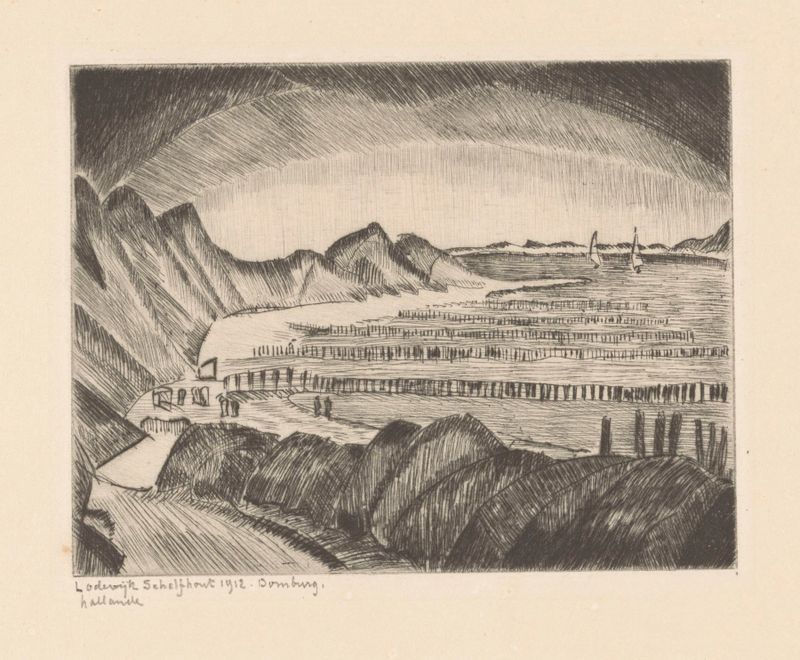
Strand van Domburg Plage de Dombourg
Lodewijk Schelfhout
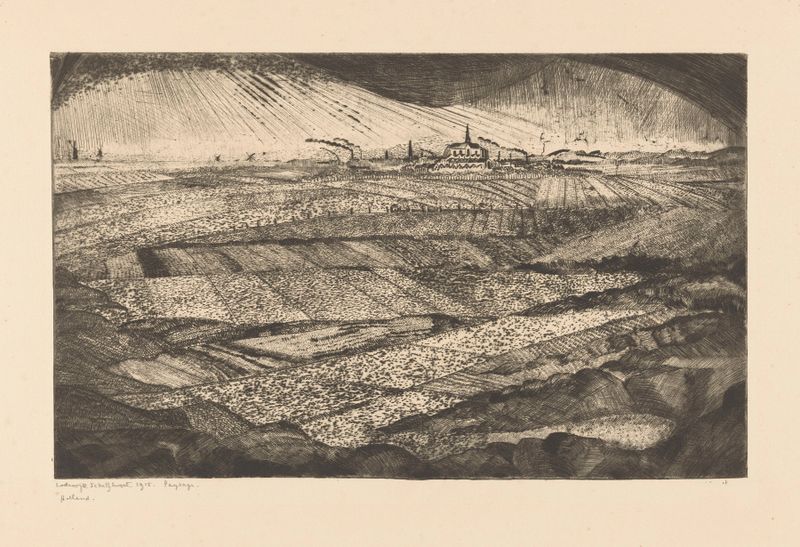
Paysage
Lodewijk Schelfhout
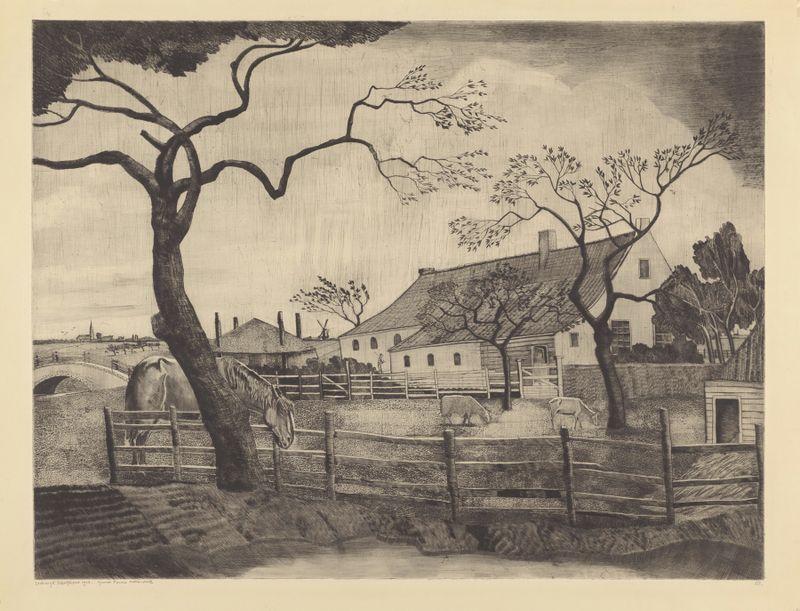
Boerderij met vee in Holland
Lodewijk Schelfhout
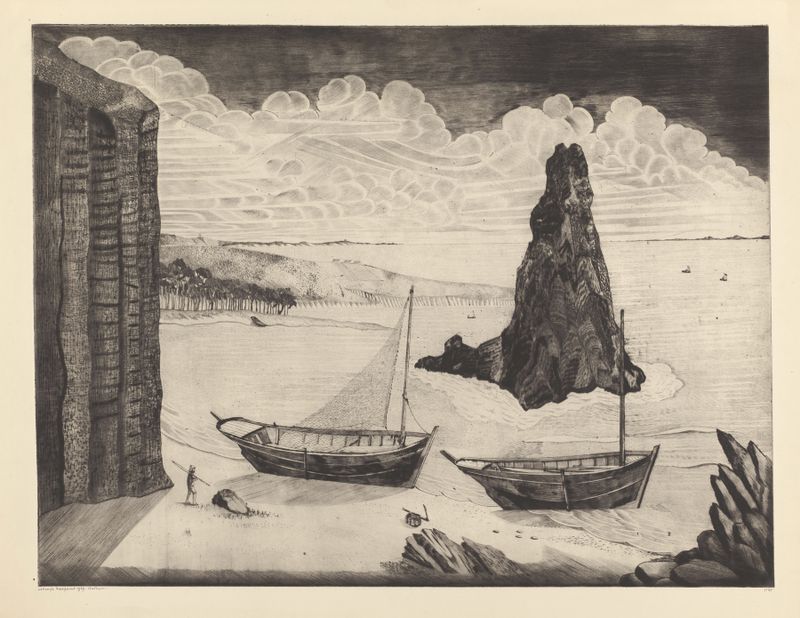
Twee afgemeerde schepen op een strand
Lodewijk Schelfhout
Herder met een kudde schapen in een heuvellandschap
Lodewijk Schelfhout
Meer in een heuvellandschap Le Lac
Lodewijk Schelfhout

Heuvellandschap met sparren
Lodewijk Schelfhout

Berglandschap met aquaduct L’Aqueduc
Lodewijk Schelfhout

Ploegende boer met een os bij Etikhove
Lodewijk Schelfhout





