High mountain massif in snow — History & Facts
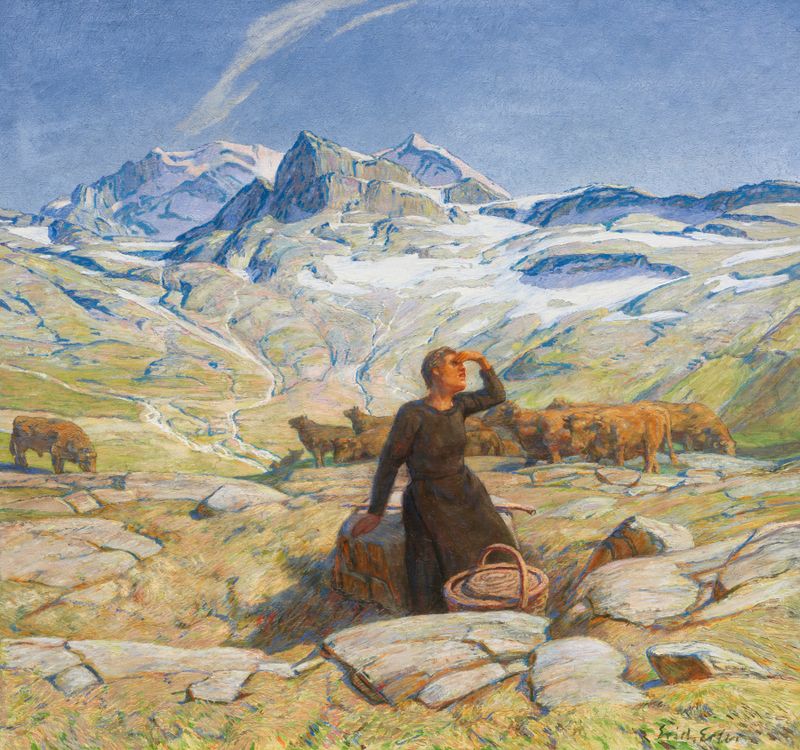
The stillness of a snow-covered landscape invites reflection, evoking transformation in both nature and the self. In this serene expanse, the high mountain massif stands as a testament to resilience, cloaked in a layer of pure, white snow that glistens under the sun’s gentle embrace. Look to the left at the sharp peaks rising majestically, their rugged edges softened by a fresh blanket of snow. Notice how the cool blue undertones contrast with the warm light filtering through the clouds, lending a sense of depth and perspective to the scene.
The artist employs a subtle gradation of whites and blues, creating a tranquil yet powerful atmosphere, as if the mountains whisper secrets of both beauty and isolation. Hidden within the vastness lies a delicate tension between solitude and harmony. The untouched snow suggests a fresh beginning, a blank canvas where nature renews itself, while the looming mountains signify the weight of age and experience. Each crevice and ridge tells a story of struggle against the elements, symbolizing the duality of existence — the serene beauty of the landscape juxtaposed with the isolation felt by those who traverse it. In 1899, Erich Erler painted this piece in a period marked by his growing prominence in the German landscape movement.
At a time when art was increasingly reflecting personal experience and emotional depth, he sought to capture nature’s grandeur and its transformative powers. This work emerges from a world grappling with change and innovation, reflecting both the artist’s inner journey and the broader cultural shifts of the late 19th century.