Hilly Landscape near Wageningen — History & Facts
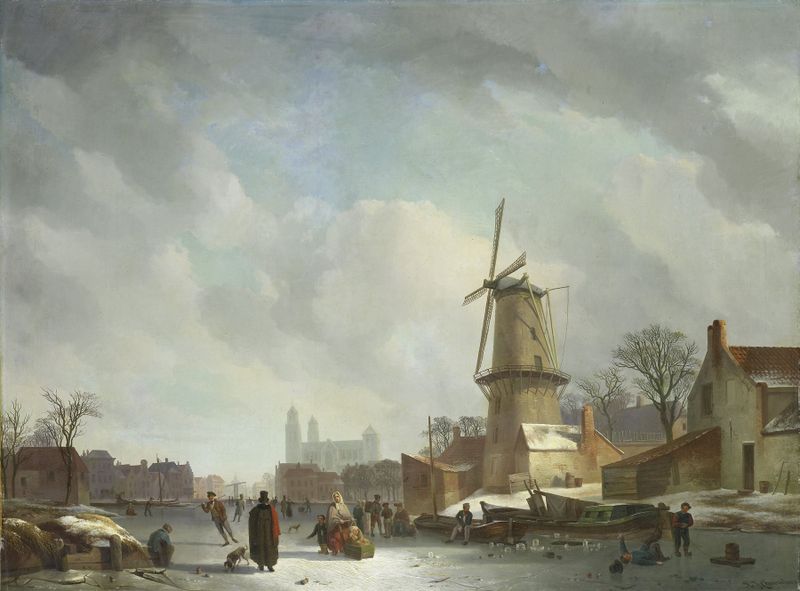
Could beauty survive in a century of chaos? In a world filled with upheaval, how do quiet landscapes whisper tales of resilience and serenity? Look to the left at the undulating hills that cradle the horizon, each slope a gentle wave of green and gold. The airy sky above bursts with soft brushstrokes of blue, contrasting the richly textured earth below. Notice how light dances across the fields, illuminating patches of wildflowers that seem to nod in the breeze, lending a vibrant life to the tranquil scene.
The composition invites the eye to wander, pulling us into a serene embrace where nature flourishes undisturbed. Hidden within the lush greenery are echoes of a deeper meaning — the hills, while idyllic, symbolize both stability and change, a reminder of the constant ebb and flow of life. The interplay of light and shadow speaks to the resilience of nature, suggesting that amid turmoil, beauty can quietly endure. Each stroke of paint holds a narrative of hope, urging the viewer to reflect on the relationship between humanity and the natural world, especially in times of uncertainty. In the early 1830s, Couwenberg created this landscape during a period marked by dramatic shifts in Europe, with political revolutions and social upheaval reverberating across the continent.
Living in the Netherlands, he found solace in the rural beauty around him while establishing his identity as a painter. This work exemplifies the romantic ideals prevalent during his time, capturing not only the aesthetic allure of the Dutch countryside but also a profound sense of peace amid the chaos of the age.