
Hirte am Gollinger Wasserfall — History & Facts
Could a single brushstroke hold eternity? In Hirte am Gollinger Wasserfall, the artist captures a fleeting moment steeped in melancholy, evoking the soul's yearning for connection and serenity amid nature's majesty. Look to the left where the shepherd stands, a solitary figure etched against the cascading waters. Notice how the soft greens of the surrounding foliage cradle him, while the sharp blues and whites of the waterfall contrast with his earth-toned attire. The gentle play of light creates a luminous halo around his head, drawing the viewer’s eye and emphasizing his contemplative pose.
Every brushstroke reveals not just a scene, but an atmosphere rich in emotion and depth, inviting a pause in the viewer’s hurried life. As the water tumbles down, it seems to carry with it the weight of the shepherd’s solitude, a visual metaphor for the burdens we carry. The juxtaposition of the serene landscape with the shepherd's stillness speaks to a shared human experience—longing and reflection amidst beauty. The subtle ripples in the water mirror the complexities of his thoughts, suggesting that tranquility can coexist with inner turmoil, lending a poignant depth that resonates universally. Varrone painted Hirte am Gollinger Wasserfall in 1864, during a period marked by the rise of Romanticism in art.
Living in a changing Europe, he was influenced by the burgeoning appreciation for nature's emotional landscapes. This piece reflects both personal and artistic growth, embodying the era's exploration of individual experience within a grand, often overwhelming, natural world.
More Artworks by Johann (Giovanni) Varrone
Browse all →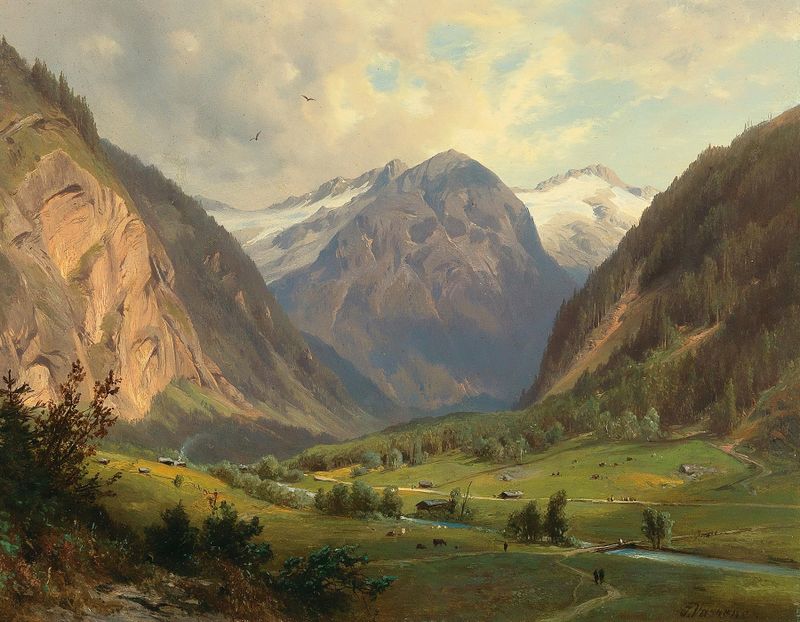
Das Kötschachthal mit dem Böcksteinkogel mit der Himmelswand bei Wild, Bad Gastein
Johann (Giovanni) Varrone
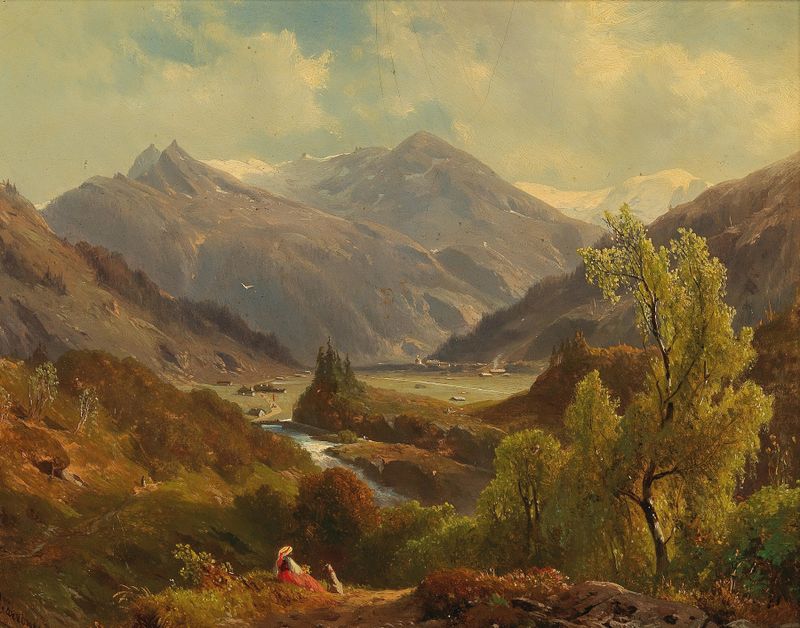
The Böcksteiner Valley with the Rathausberg, Wildbad Gastein, Upper Austria
Johann (Giovanni) Varrone
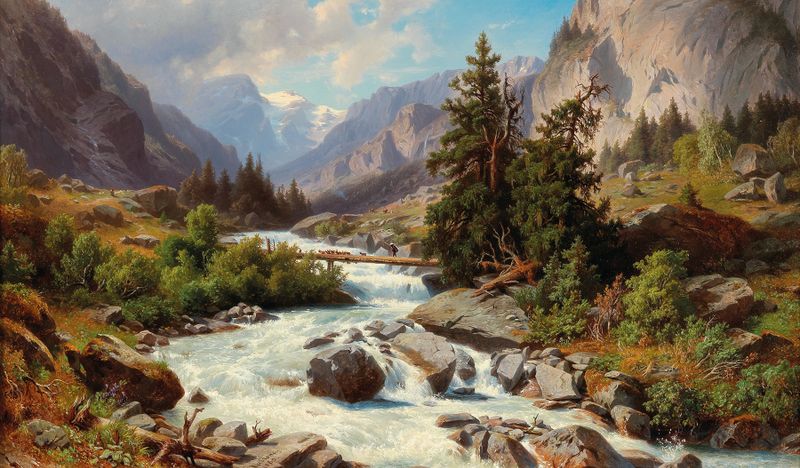
A view of the Ankogel near Bad Gastein
Johann (Giovanni) Varrone
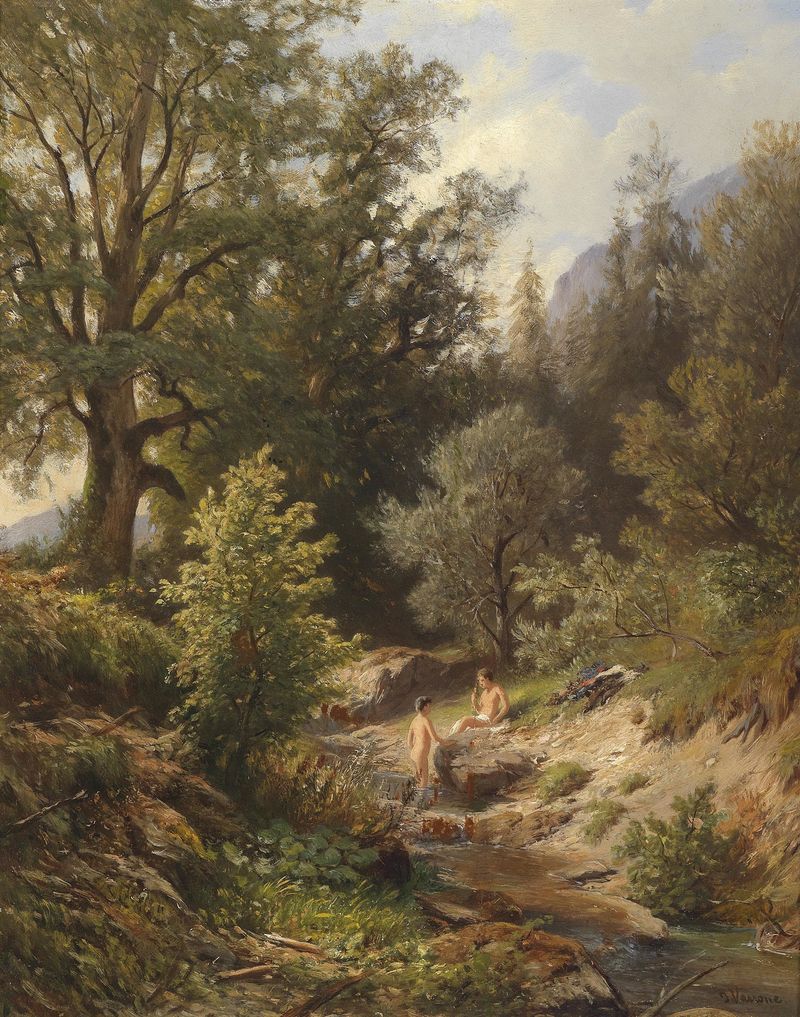
Badende Knaben am Bachufer
Johann (Giovanni) Varrone
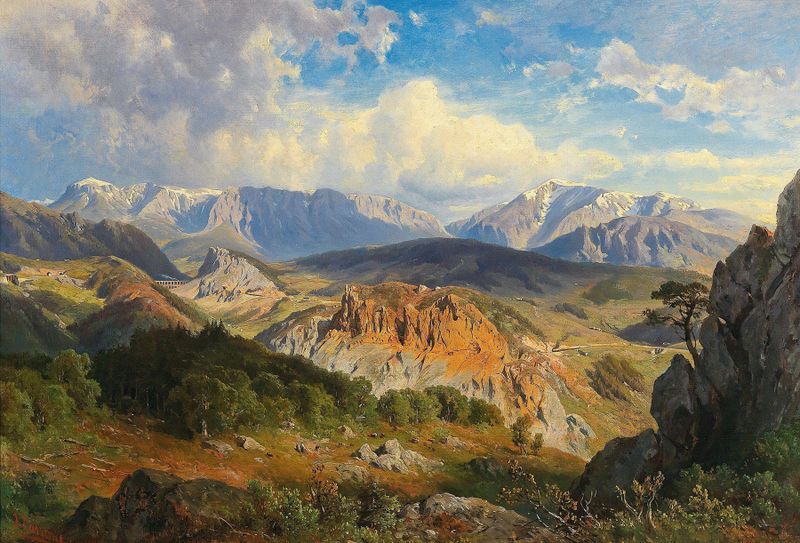
View of the Rax and Schneeberg mountains
Johann (Giovanni) Varrone
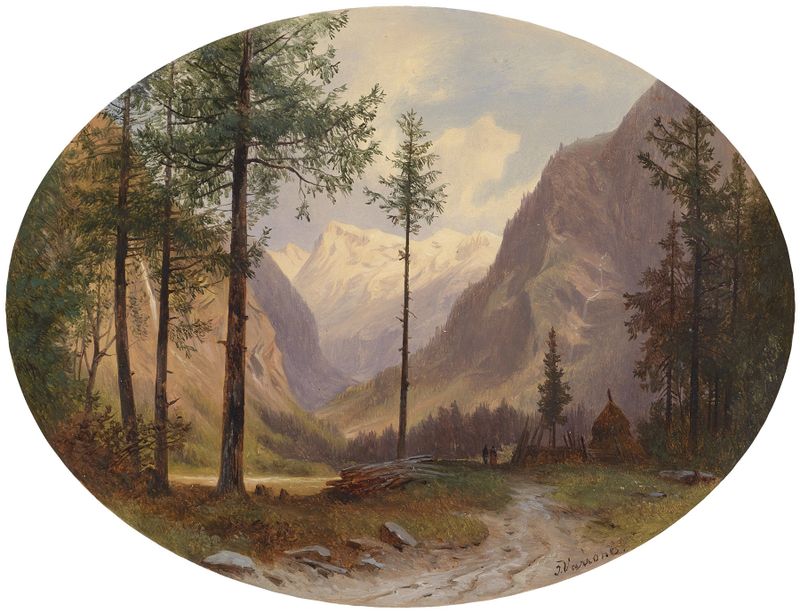
Anlaufthal
Johann (Giovanni) Varrone

Übergang über den Wasserfall
Johann (Giovanni) Varrone
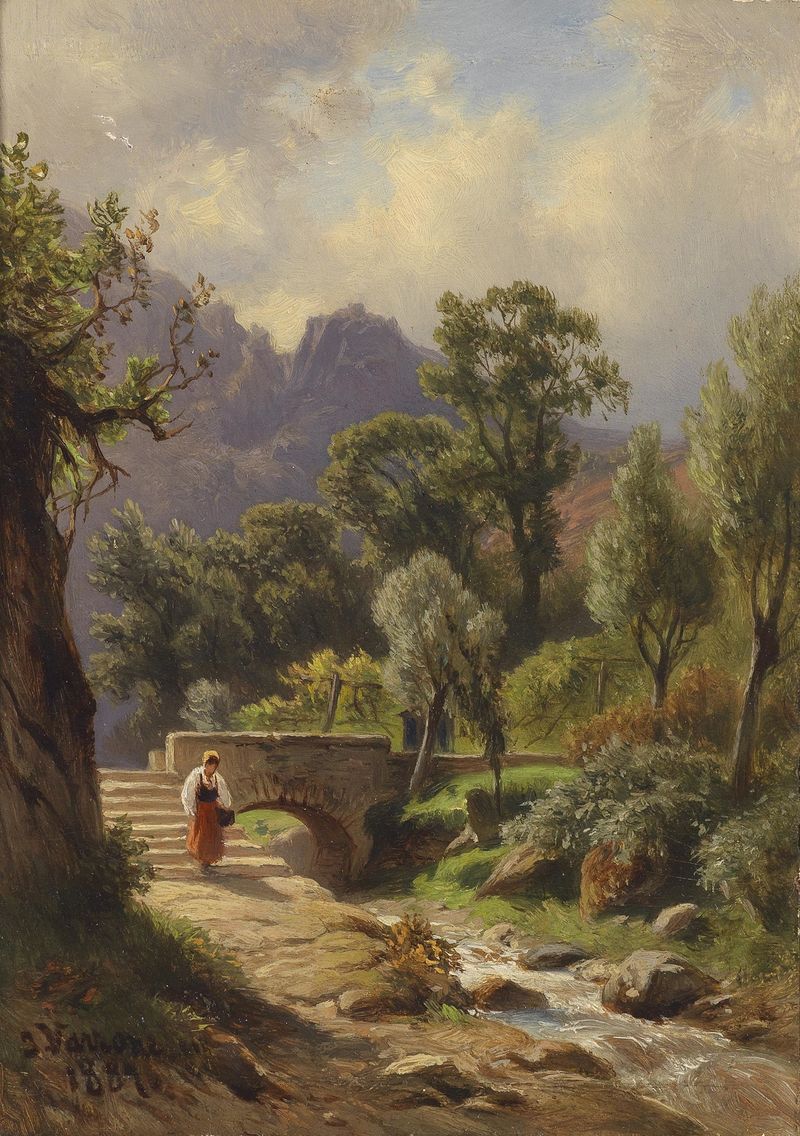
Am Heimweg
Johann (Giovanni) Varrone





