
The Böcksteiner Valley with the Rathausberg, Wildbad Gastein, Upper Austria — History & Facts
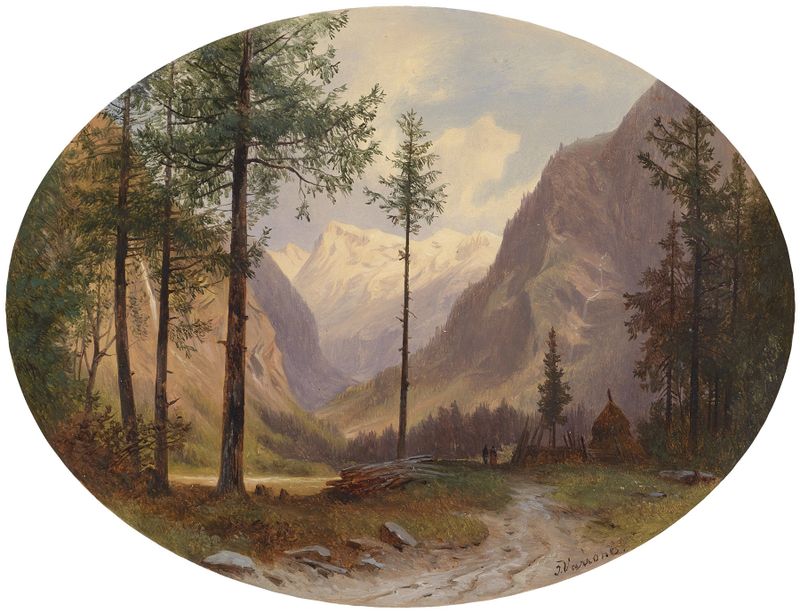
In the stillness of the Böcksteiner Valley, a quiet transformation unfolds, where nature and humanity intertwine, whispering tales of the past to those who pause to listen. Focus on the gentle undulations of the landscape, particularly the way the delicate brushstrokes depict the rolling hills. Notice how the light dances over the vibrant greens and earthy browns, revealing the subtle textures that breathe life into each blade of grass. The contrast of the dark architectural lines of the Rathausberg against the soft pastel sky pulls your gaze upward, evoking a sense of balance between the serenity of nature and the mark of human presence. Dig deeper into the emotional landscape by observing the small details — the interplay of light and shadow across the valley, perhaps representing the duality of growth and decay.
The viewer cannot help but feel a tension between the serene beauty of the untouched wilderness and the looming structure of civilization. This dichotomy captures a moment of quiet reflection, suggesting that identity is shaped not only by the land but also by the encroaching influence of humanity. The painting emerged from the mind of Johann Varrone during an undefined period rich in artistic exploration. While the exact date remains uncertain, the artist was likely influenced by the Romantic movement, which emphasized the sublime beauty of nature and the profound emotions it evokes.
At that time, artists were beginning to move away from strict academic styles, seeking a connection with the natural world that would resonate with viewers on a deeper, more personal level.
More Artworks by Johann (Giovanni) Varrone
Browse all →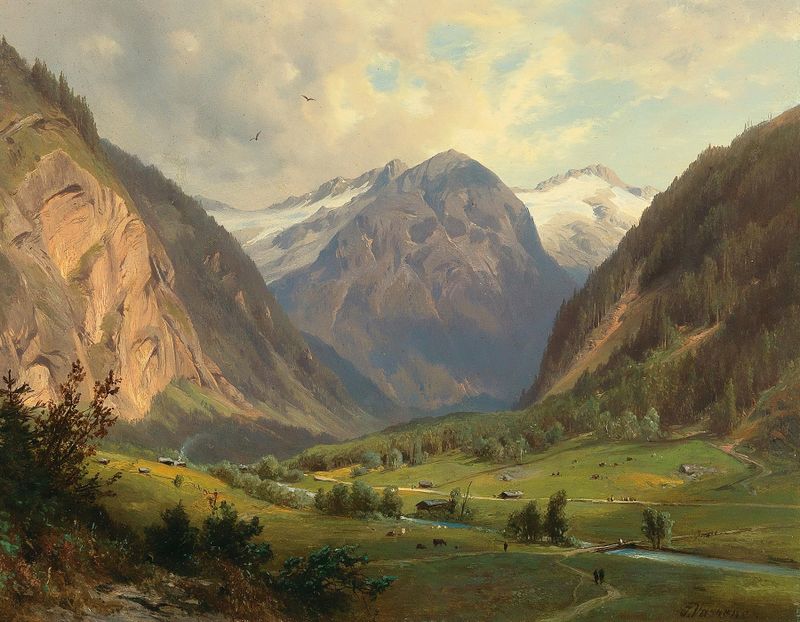
Das Kötschachthal mit dem Böcksteinkogel mit der Himmelswand bei Wild, Bad Gastein
Johann (Giovanni) Varrone
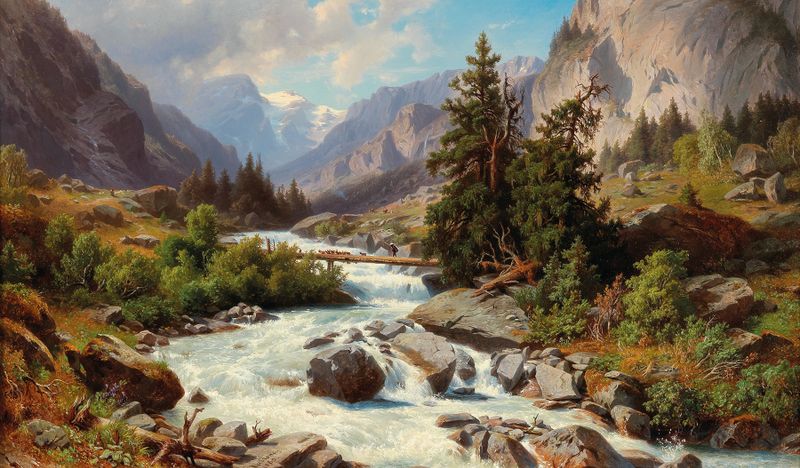
A view of the Ankogel near Bad Gastein
Johann (Giovanni) Varrone
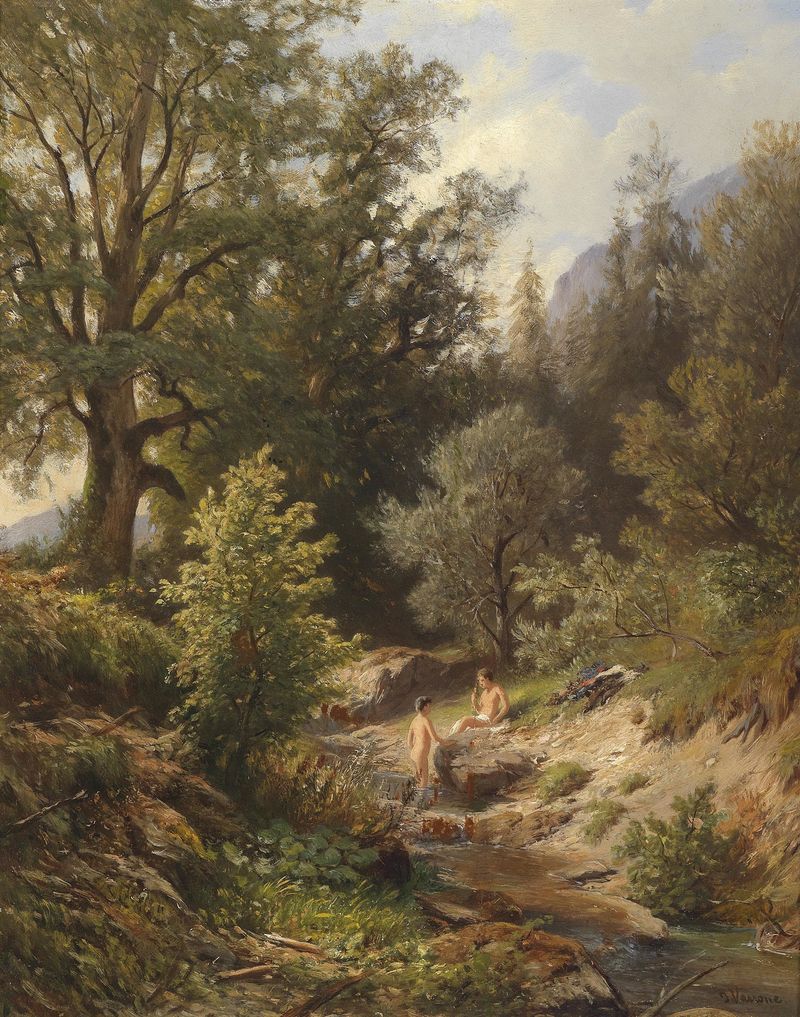
Badende Knaben am Bachufer
Johann (Giovanni) Varrone
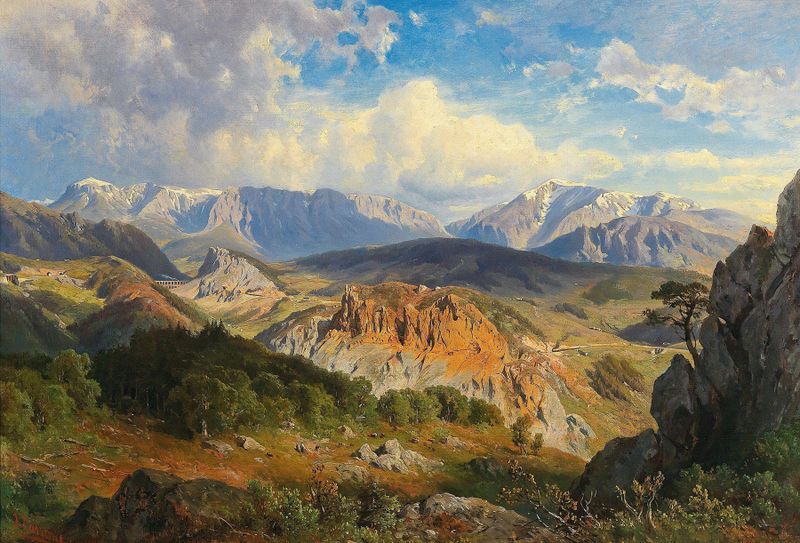
View of the Rax and Schneeberg mountains
Johann (Giovanni) Varrone
Anlaufthal
Johann (Giovanni) Varrone
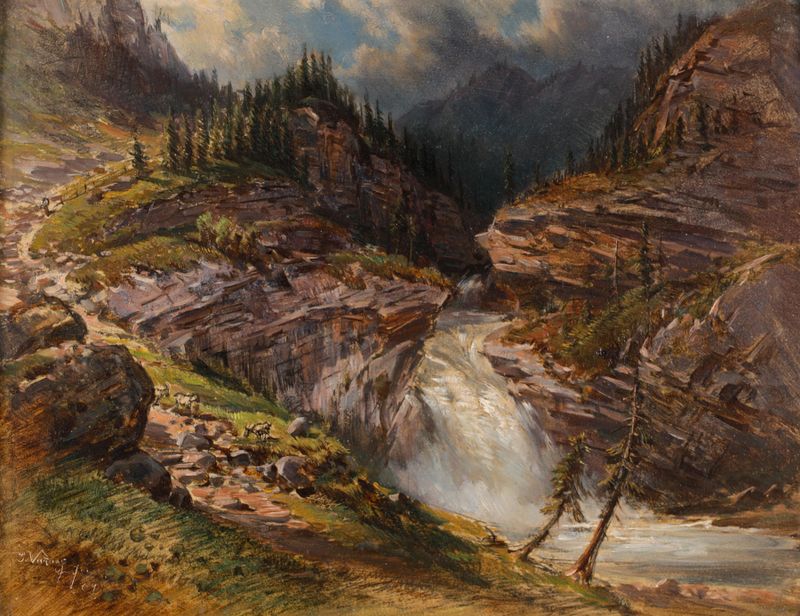
Hirte am Gollinger Wasserfall
Johann (Giovanni) Varrone

Übergang über den Wasserfall
Johann (Giovanni) Varrone
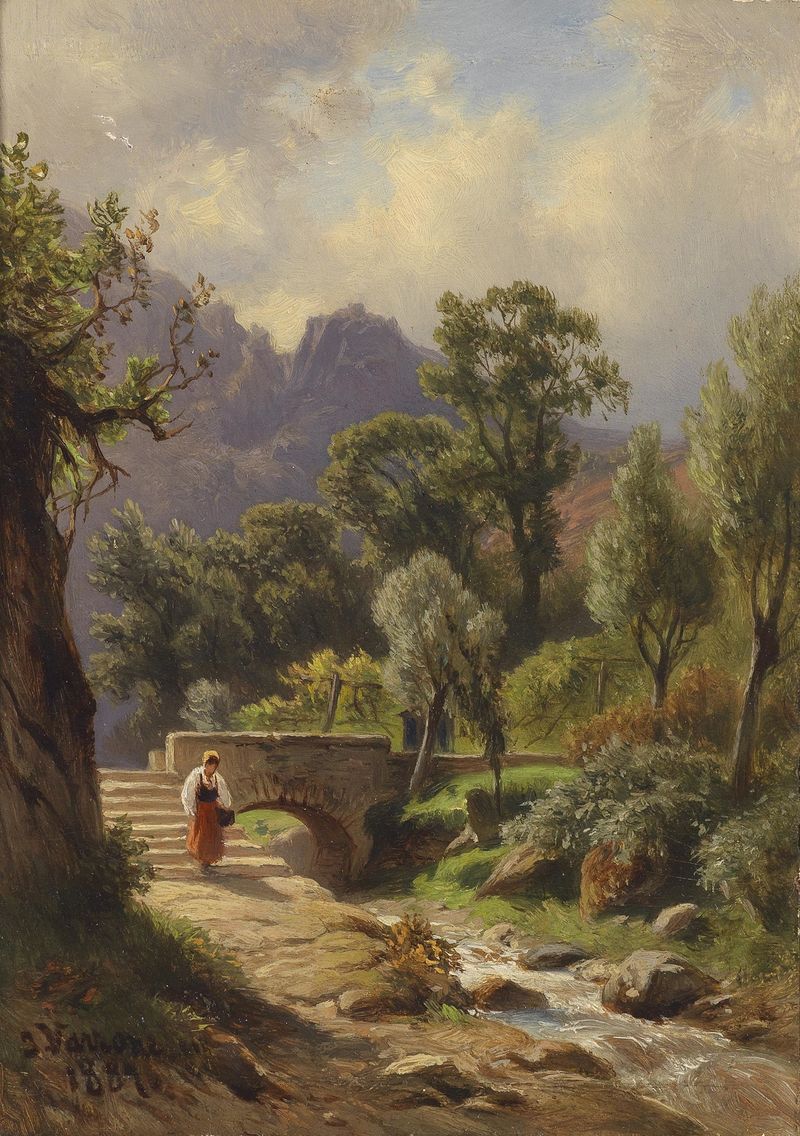
Am Heimweg
Johann (Giovanni) Varrone





