
Hirten fahren mit einem Wagen durchs Wasser, rechts eine Hirtin, die sich die Füße wäscht, bei einer weißen Kuh — History & Facts
Could a single brushstroke hold eternity? In Hirten fahren mit einem Wagen durchs Wasser, Aert Schouman encapsulates a moment where nature and the human experience intertwine, inviting the viewer to pause and reflect on creation itself. Look to the center of the canvas, where the wagon, laden with figures, glides through a shimmering pool. Notice how the delicate ripples and reflections in the water dance with the light, a gentle interplay that enhances the scene's tranquility. The soft palette of greens and blues envelops the pastoral setting, while the contrasting white of the cow stands out, echoing purity and simplicity against the natural backdrop.
Each stroke breathes life into the landscape, making the viewer feel the coolness of the water and the warmth of the day. In the background, a shepherdess kneels, washing her feet, embodying a fleeting moment of respite amidst labor. This small act of self-care amidst the pastoral toil serves as a subtle reminder of our need for balance, between duty and personal solace. The presence of the cow, serene and watchful, hints at the interdependence between humans and nature, grounding the scene in a sense of harmony and connection.
The painting, rich in detail, juxtaposes the busyness of the figures against the stillness of the surrounding water, evoking a meditative quality that transcends time. During the late 18th century, Schouman was immersed in the Dutch Golden Age's revival of naturalism while painting this piece. Living in the Netherlands, he was part of a community that celebrated pastoral scenes, reflecting a societal shift toward appreciating the beauty of everyday life. As art moved towards capturing the essence of nature and human experiences, this work stands as a testament to that era's creative spirit and the artist's personal vision.
More Artworks by Aert Schouman
Browse all →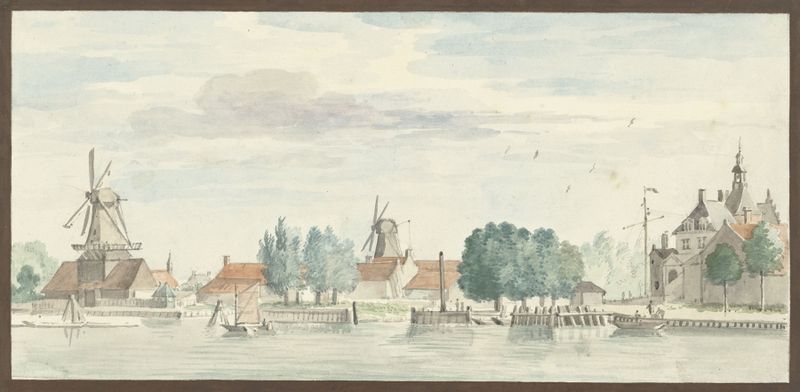
Gezicht op Dordrecht met de Rietdijkspoort en windmolens
Aert Schouman
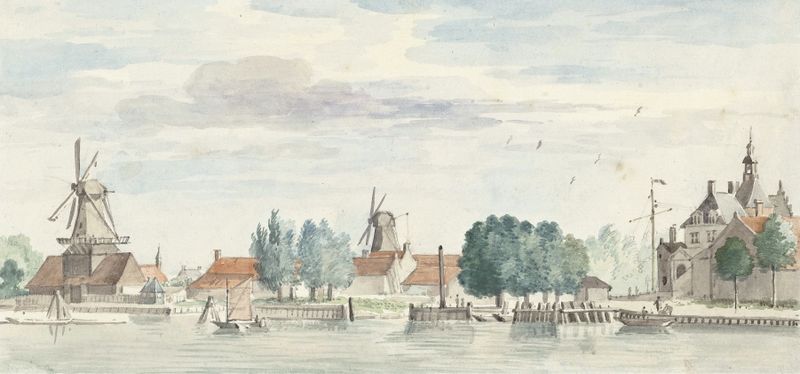
Gezicht op Dordrecht met de Rietdijkspoort en windmolens
Aert Schouman
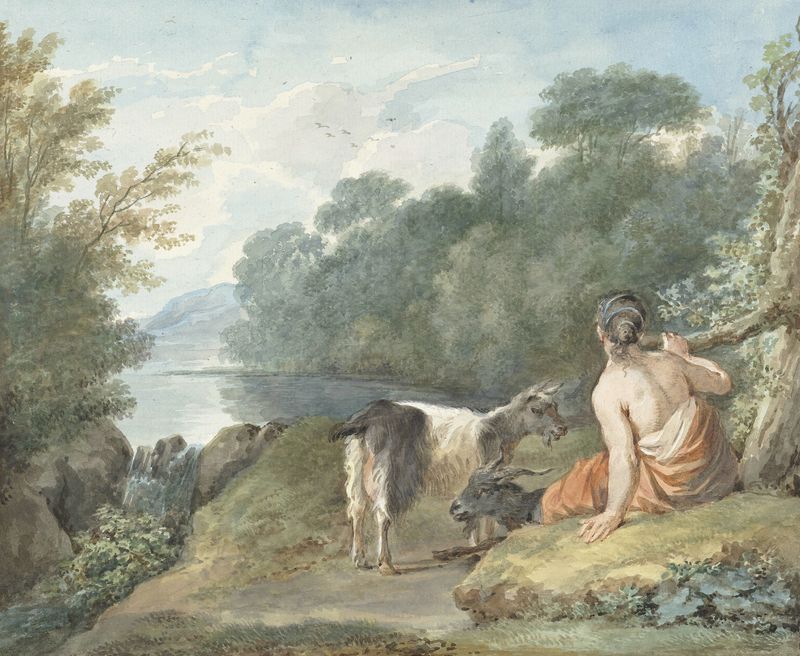
Herderin met geiten in een landschap met een meer
Aert Schouman

Gezicht op de bevroren Merwede bij Moerdijk
Aert Schouman

Zeilschepen op de rivier bij Dordrecht
Aert Schouman

Het kasteel en school te Wouw
Aert Schouman
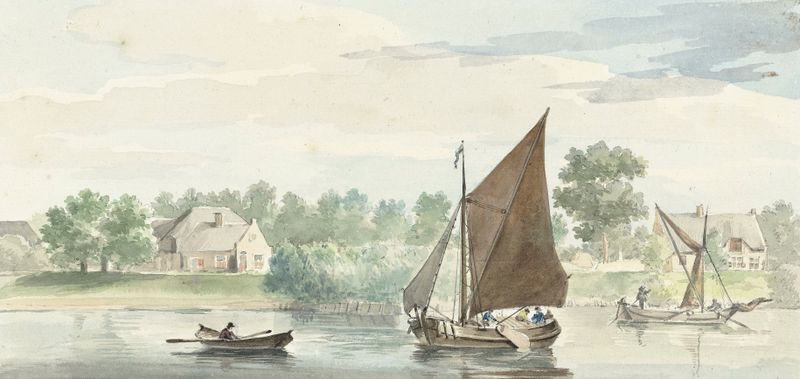
Zeilend schip op de Beneden Merwede bij de Papendrechtse dijk
Aert Schouman

Het dorp ‘s-Gravezande
Aert Schouman

Het kasteel Ter Hooge op Walcheren
Aert Schouman
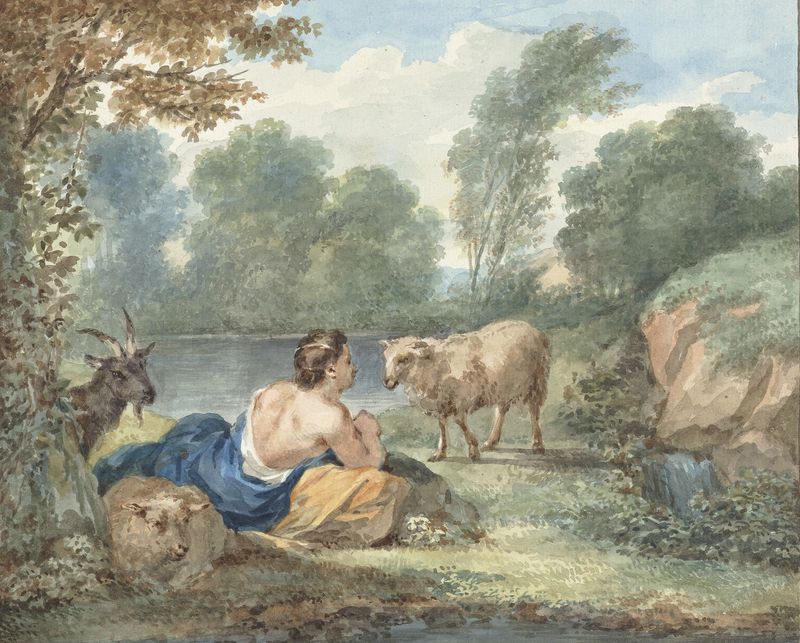
Herderin met schapen in een landschap met een meertje
Aert Schouman





