Hjemvendende fiskere modtages på Hornbæk Strand — History & Facts
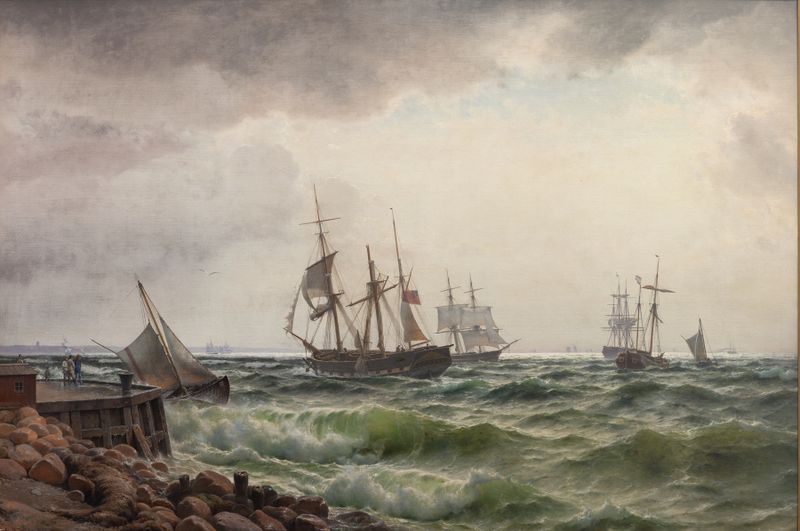
In a world ravaged by decay, what treasures of memory can art truly preserve? Look closely at the scene of returning fishermen, positioned at the center of the canvas. Their weathered faces and crinkled hands tell stories of toil, illuminated by the soft, golden light of dusk seeping through the clouds. Notice the muted palette of earth tones enveloping the figures, contrasting sharply with the vibrant hues of the sea, as if the water itself is a reminder of life’s relentless passage.
This interplay of color and light not only highlights the fishermen's labor but also evokes a poignant sense of nostalgia. Beneath the surface, this work suggests a deeper narrative—the tension between livelihood and the inevitable decline of nature. The fishermen’s expressions reveal exhaustion, hinting at both pride in their daily catch and sorrow for an ocean that may one day yield less. The gentle waves lap at the shore, yet they seem to whisper secrets of a changing world, foreshadowing loss amidst the rhythm of life.
Each brushstroke conveys a struggle against decay, as the once bountiful sea now bears witness to the fragility of existence. Created during a time of significant political and social upheaval in Denmark, this piece was painted between 1848 and 1891. Neumann immersed himself in capturing the essence of coastal life, reflecting the struggles faced by communities dependent on the sea. In an era marked by industrialization, the artist sought to preserve the authenticity of a way of life that was threatened, resonating with audiences who yearned for connection to their heritage.