
Holtet, Mandal — History & Facts
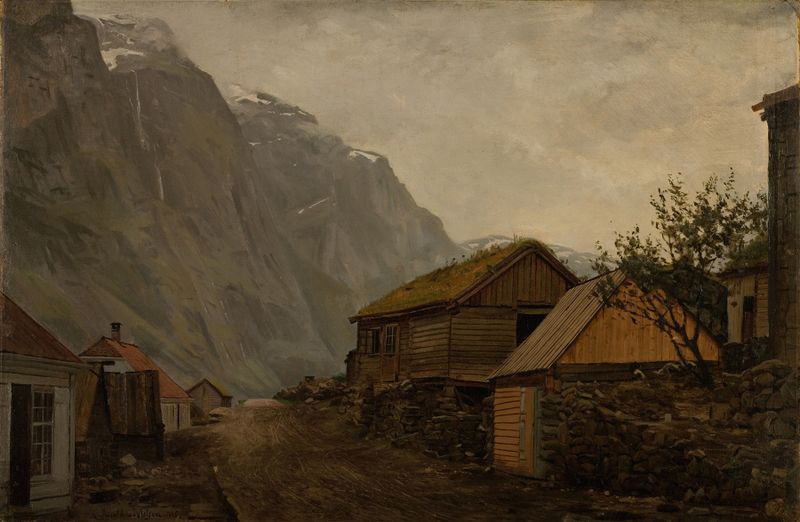
Can beauty exist without sorrow? Holtet, Mandal evokes a haunting stillness that suggests the fragility of joy amidst nature's grandeur. It reveals a landscape where the serene beauty of the surroundings dances uneasily with an undercurrent of fear, leaving viewers pondering the complexities of human emotion in harmony with the world. Look to the left at the delicate interplay of light and shadow, where the rising sun casts a warm glow over the verdant hills. Notice how the artist employs vivid greens and soft browns, allowing the landscape to feel alive yet imposing.
The gentle brushstrokes create a textured surface that invites you to explore every inch, while the looming mountains in the background instill a sense of grandeur, hinting at both the beauty and the potential peril of untamed nature. In this artwork, contrasts reveal deeper insights; the tranquil water reflects the sky yet conceals depths beneath its surface. The juxtaposition of the idyllic landscape with rugged cliffs suggests a tension between serenity and the formidable power of nature. Each detail whispers the fragility of human existence—a reminder that behind every corner of beauty lies the potential for fear and loss. Amaldus Nielsen created Holtet, Mandal in 1858 during a period when Norwegian art was transitioning towards Romanticism, celebrating the profound connection between humanity and nature.
Living in a time of increasing industrialization, he sought to capture the untouched landscapes of his homeland, aiming to evoke both admiration and introspection regarding the human spirit's place within the natural world.
More Artworks by Amaldus Nielsen
Browse all →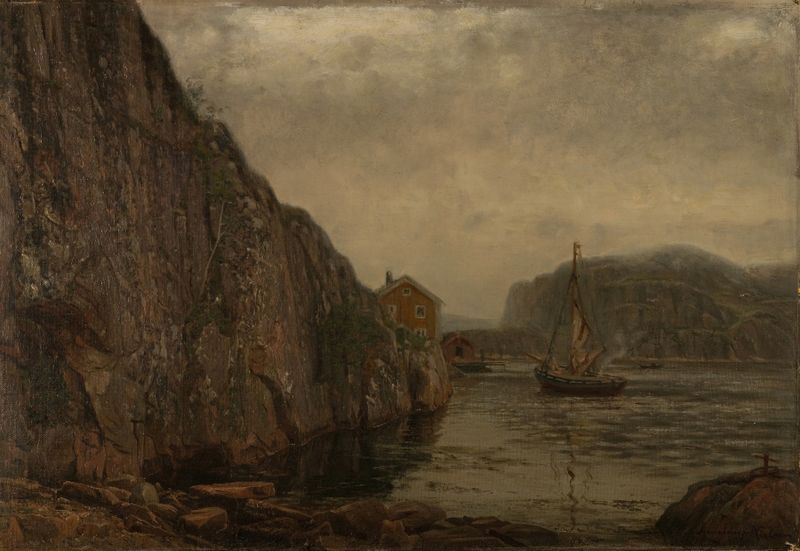
Skjærgård, Ny-Hellesund
Amaldus Nielsen
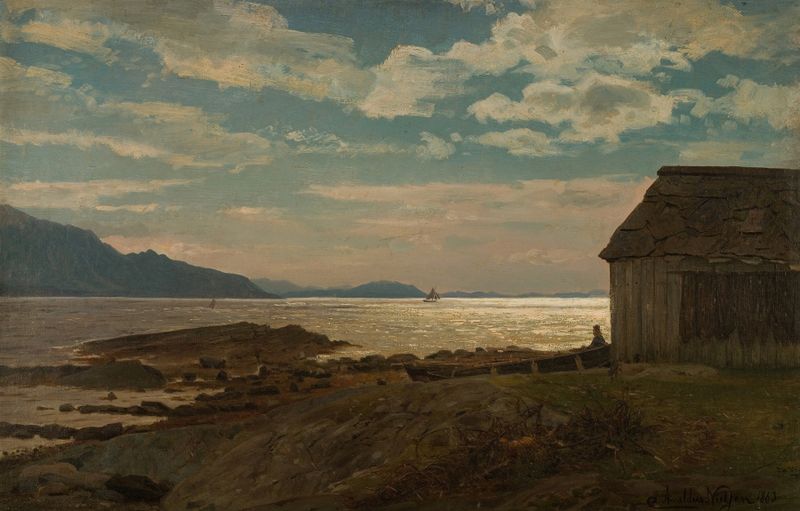
Fra Ølvestranden, Hardanger
Amaldus Nielsen
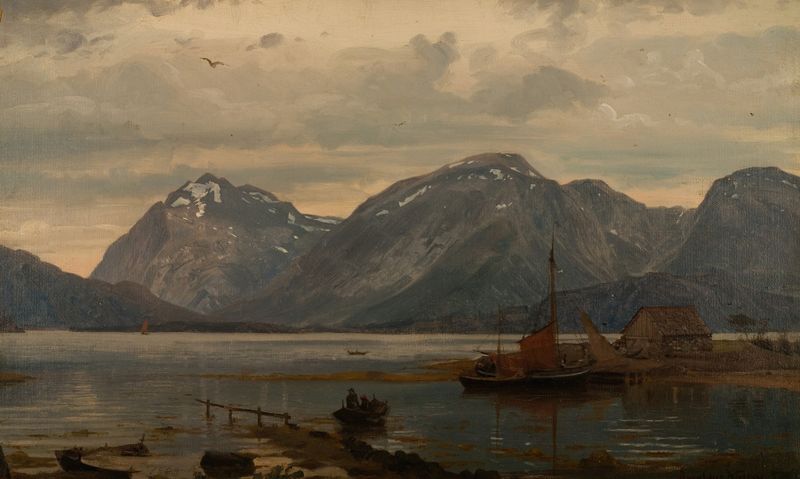
Fra Englafjellene, Hardanger
Amaldus Nielsen
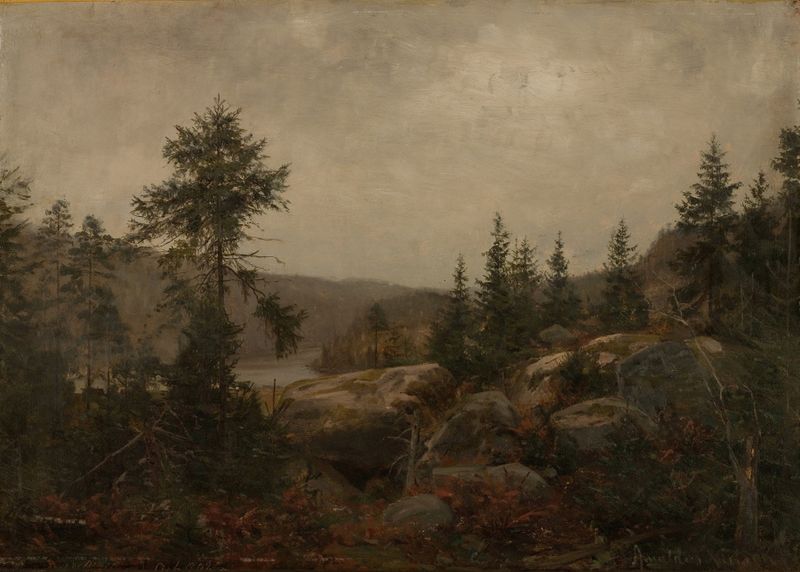
Duskregn . Gården Foss, Mandalselven
Amaldus Nielsen
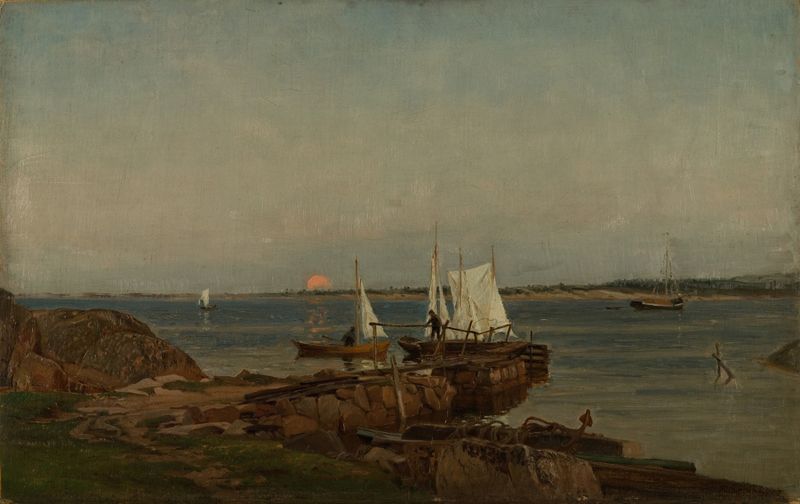
Sommernatt, Hvaler
Amaldus Nielsen
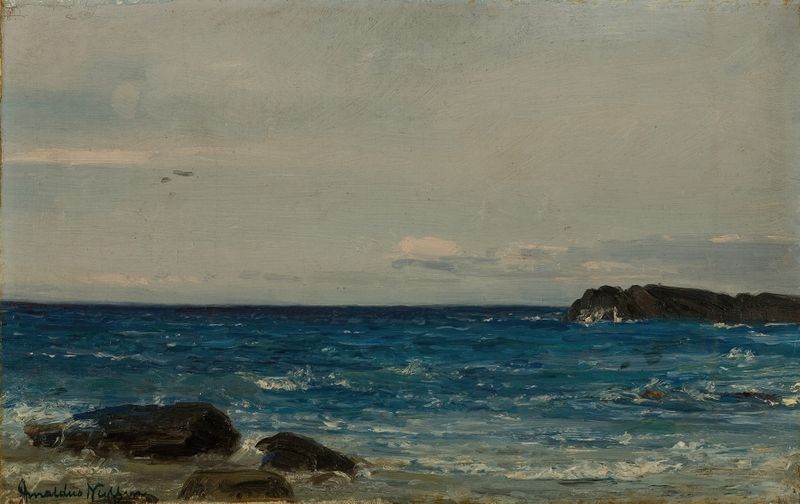
Fra Jæren
Amaldus Nielsen
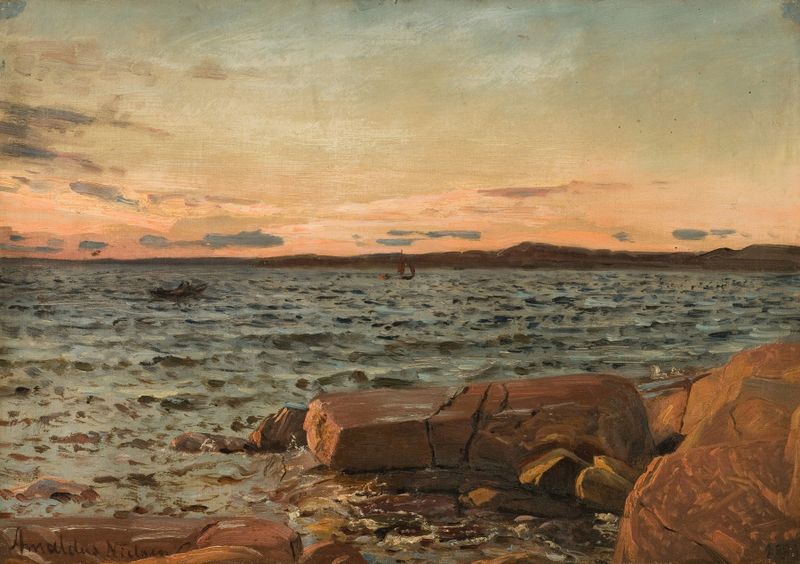
Solgangsvind, Hvaløene
Amaldus Nielsen
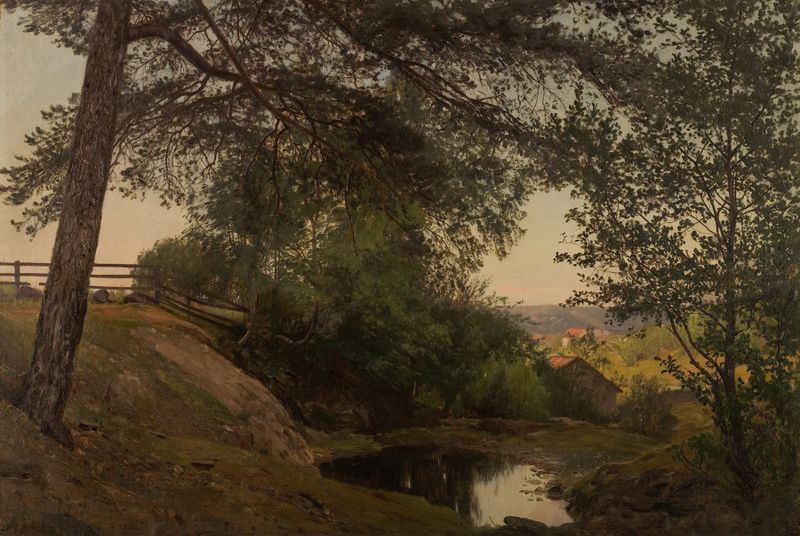
Mellom trærne. Lervik, Stord
Amaldus Nielsen

Båtbyggeri, Lillesand
Amaldus Nielsen
Regnstemning, Gudvangen
Amaldus Nielsen





